Assessing a lot when not every item is visible
A partly visible lot should be assessed as a mix of confirmed objects and unknown contents. Do not let a large quantity turn missing information into imagined value.
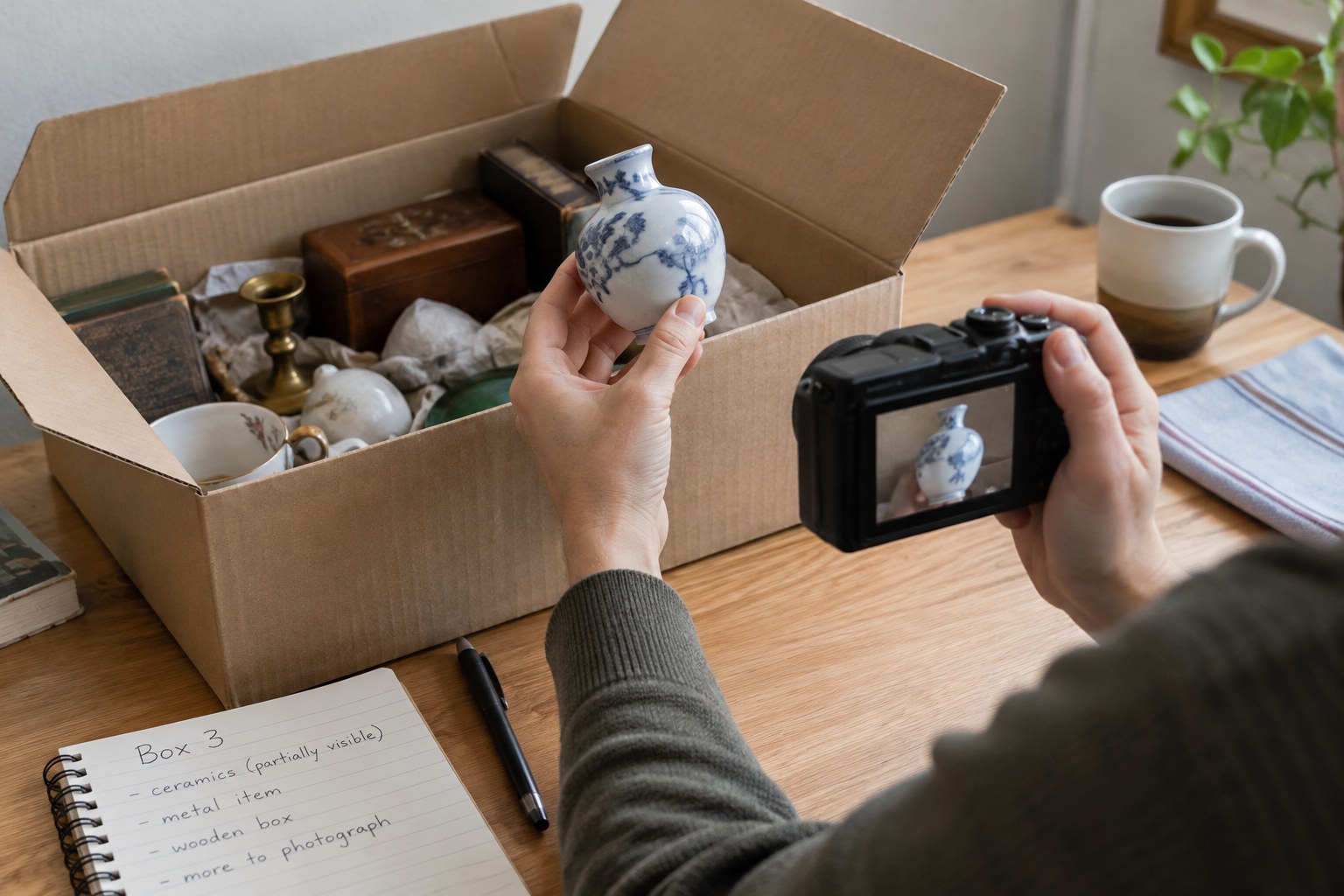
Map what the photographs actually show
Make a list of identifiable pieces and mark which sides or details are visible. Separate objects you can recognise from those only partly exposed. A stack of cards or comics does not reveal every item beneath the top layer, and a box full of models may conceal missing parts or unrelated pieces. Keep the seller's stated count distinct from your own visual count.
Check whether several photographs show the same objects rearranged. It is easy to count one distinctive piece twice when a lot has been photographed from different angles. Use a simple reference number for each confirmed object and note where it appears. This turns the images into evidence you can compare rather than a general impression of abundance.
Ask for a manageable clarification
Request a written contents list or photographs of the concealed groups laid out separately. Prioritise the items central to your decision instead of asking for a full professional catalogue of a modest lot. Ask whether duplicates, incomplete pieces, packaging and accessories are included in the stated count. Those categories can change what a large number means.
If the seller cannot provide more detail, record that limitation. Do not interpret reluctance as proof of wrongdoing, but do not treat it as evidence that the hidden items are desirable either. The buying decision must still work with the information available. A speculative purchase is a different choice from a documented addition to a collection.
Value the confirmed usefulness, not an imagined surprise
Identify which confirmed items you would keep and why. Consider the space and work required for duplicates, incomplete pieces and unwanted material. Do not assume everything else can be resold quickly or for a particular amount. If your budget depends on that resale, the unknown contents have become an unsupported financial assumption.
Compare the total delivered cost with a smaller, clearly described purchase that meets the same collecting need. A lot may still be appealing for study or sorting, but that purpose should be explicit. Decide how much uncertainty you are comfortable accepting before making an offer, rather than revising the limit upward because the box looks full.
Preserve the agreed scope
Before payment, confirm that the photographed objects and the written list define the exact lot to be supplied. Save any exclusions and condition qualifications. If the offer is explicitly uninspected, keep that wording in your records rather than later remembering it as a complete collection.
On arrival, photograph the arrangement and compare the contents with the confirmed list before distributing them into storage. Record newly identified objects separately from the items promised. This preserves a clear distinction between what you bought on evidence and what you discovered afterward.


