
Storage & care 091
Creating a collection record you can maintain
The most useful inventory is one you will update after an ordinary purchase, not just during a weekend of ambitious organising.
Read the guide23 guides · Page 1 of 2
The most useful inventory is one you will update after an ordinary purchase, not just during a weekend of ambitious organising.
Read the guide
An object number should remain useful when you move a collection, rename a category or discover that an attribution was wrong.
Read the guide
A folder full of sharp photographs is not an inventory if you cannot tell which object, view or date each file represents.
Read the guide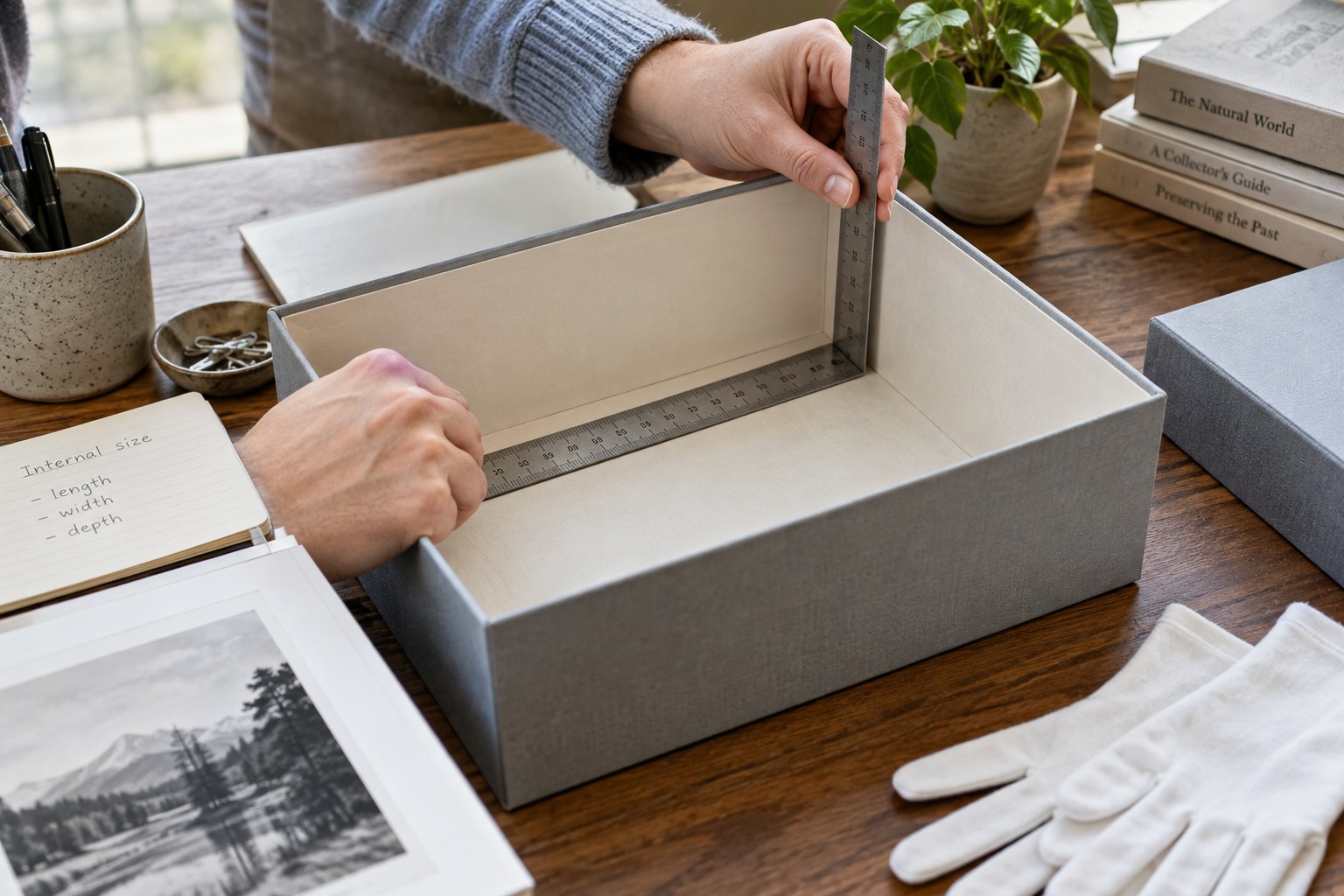
A box can look generous on a shelf and still be too small inside. Measure the contents as they will actually be stored, including their individual enclosures.
Read the guide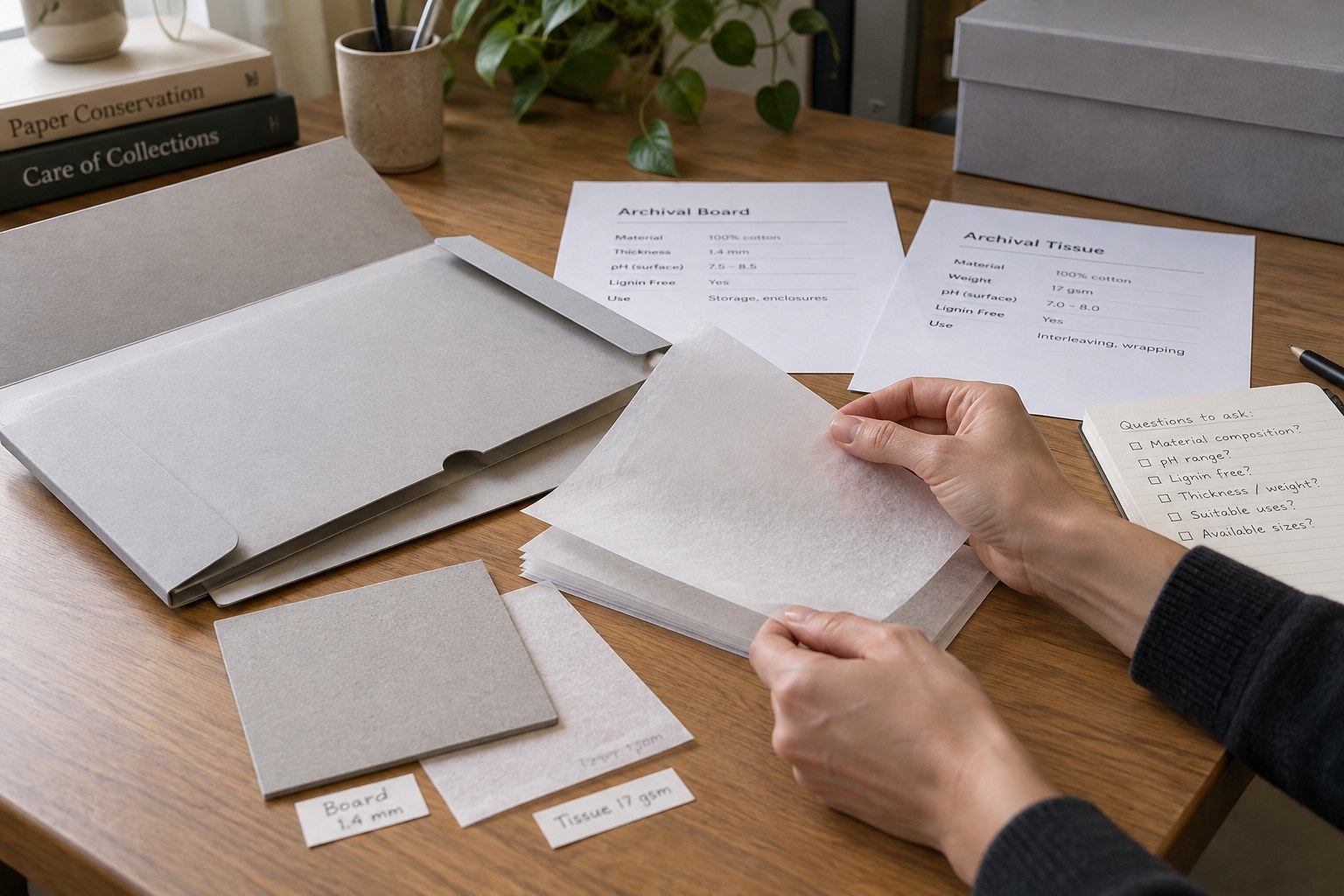
The word archival is a starting point for questions, not a complete specification. Ask what a product is made from and which objects it is intended to house.
Read the guide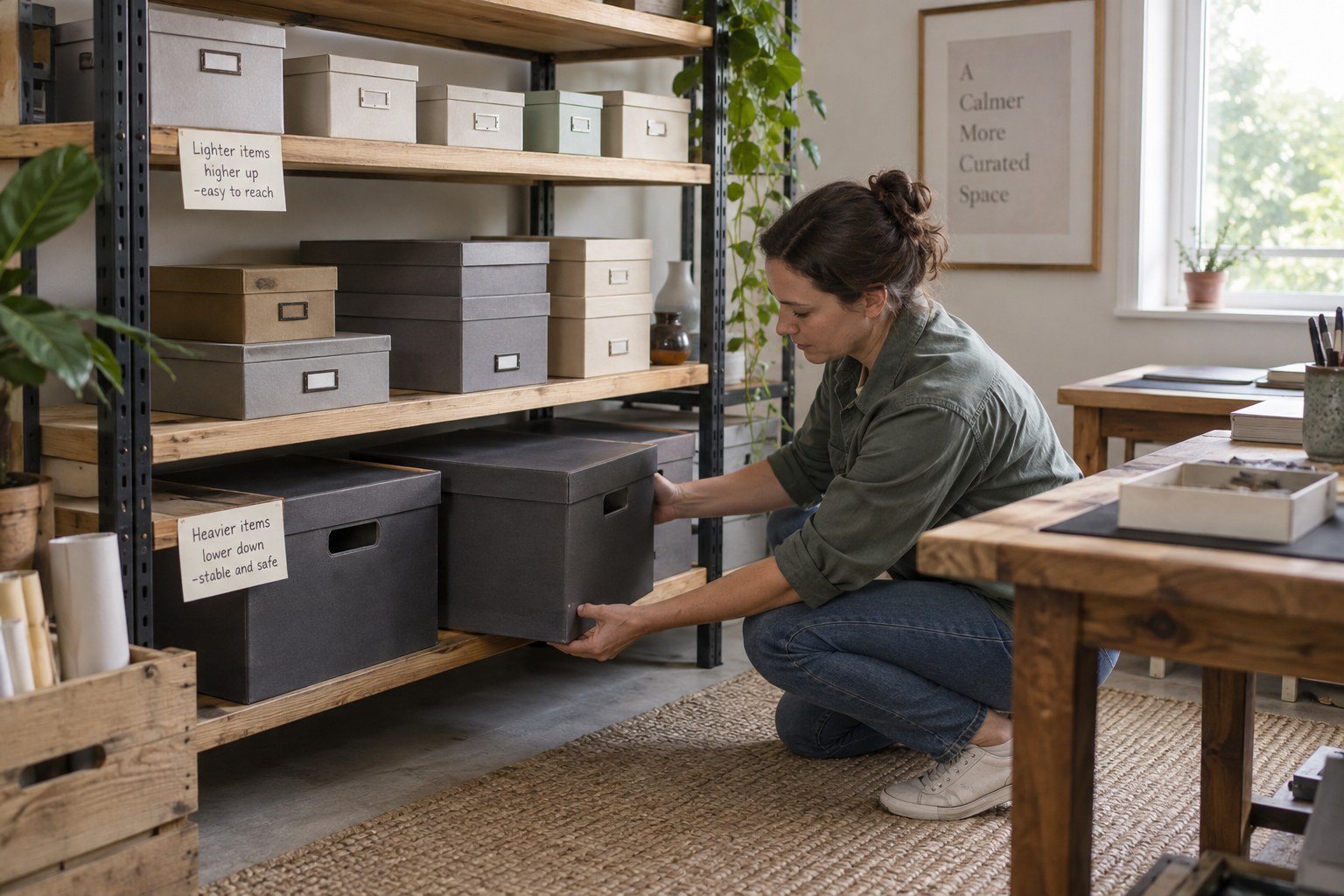
A shelf plan needs to explain how the collection will be lifted, opened and returned. Available length alone does not tell you whether the arrangement is usable.
Read the guide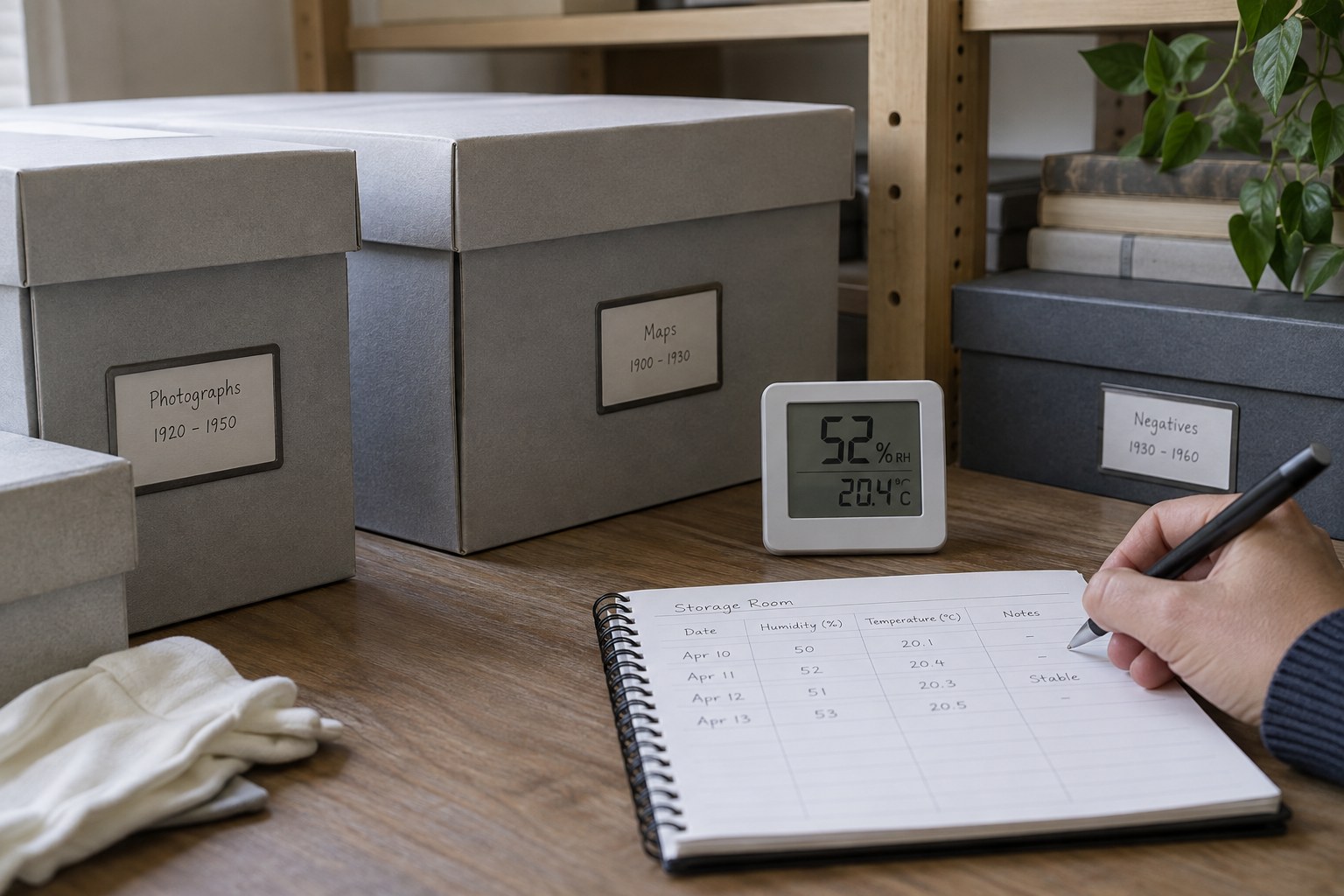
A humidity record is most useful when it explains where the measurement came from and what happened nearby. One isolated reading cannot describe a room’s behaviour.
Read the guide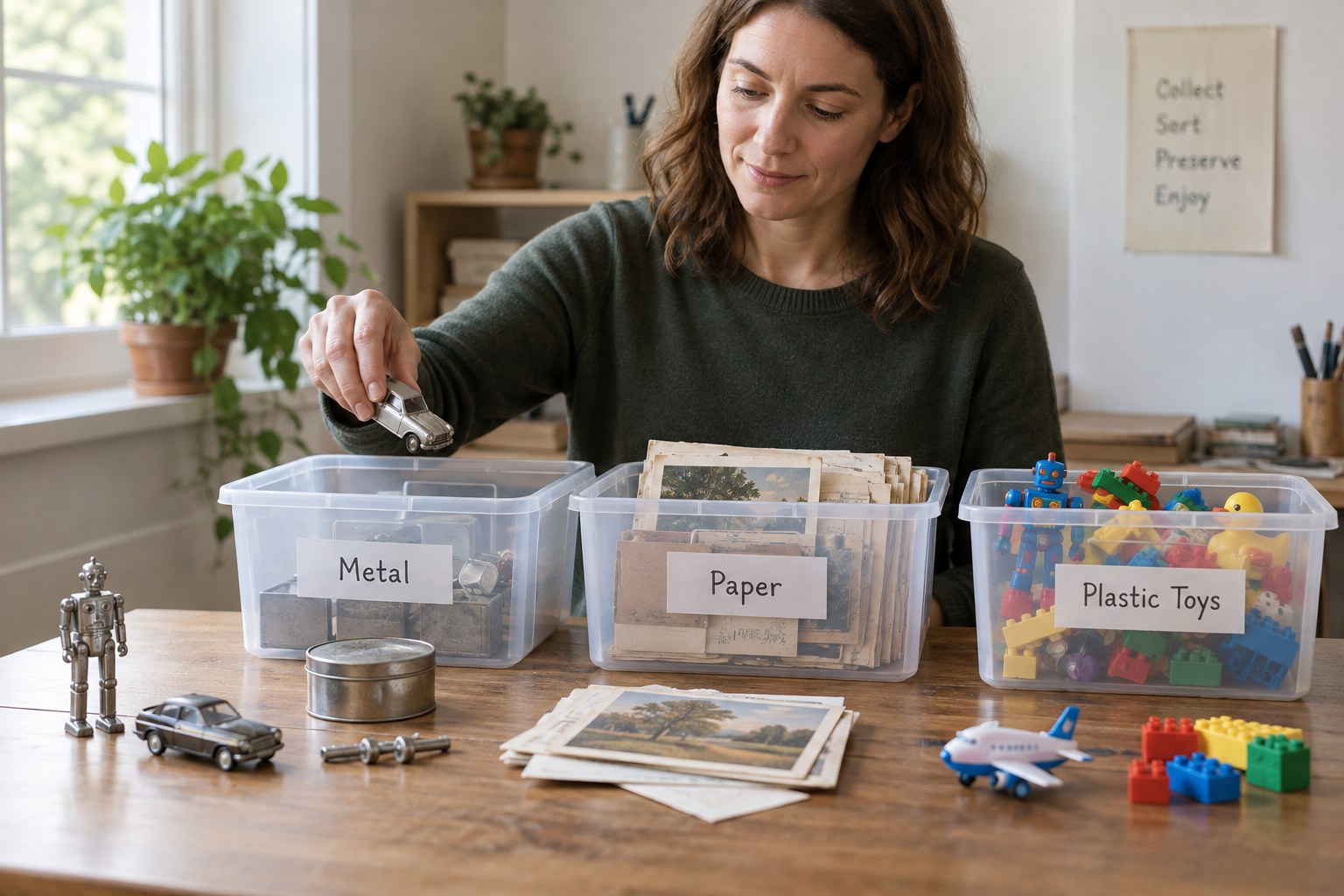
A mixed collection can share an inventory without sharing every enclosure. Separate storage decisions by material, condition and contact, while preserving the relationships that make the group meaningful.
Read the guide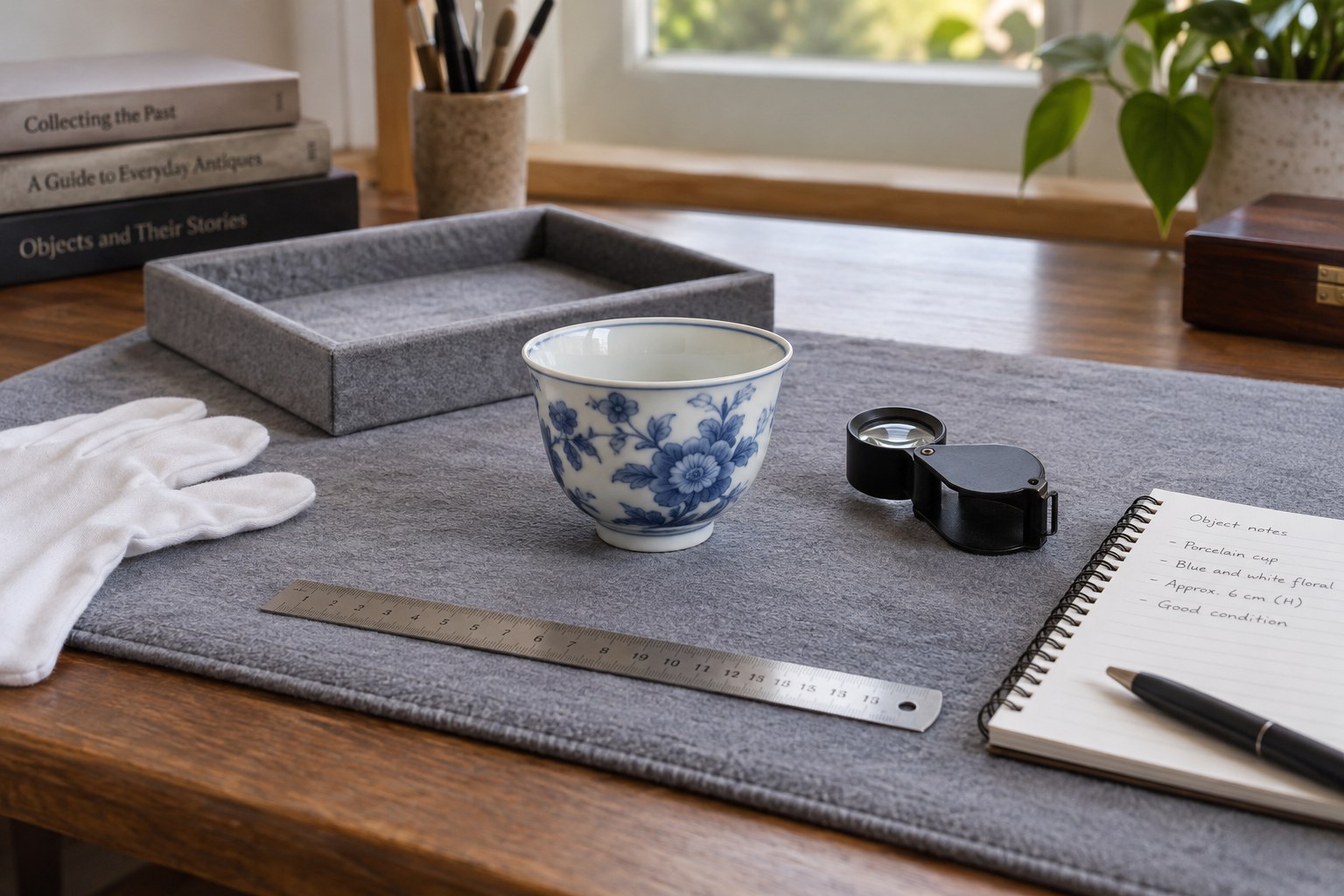
A prepared table gives every object a safe place to arrive, rest and leave. Arrange the work around the examination you intend to do before bringing out the collection.
Read the guide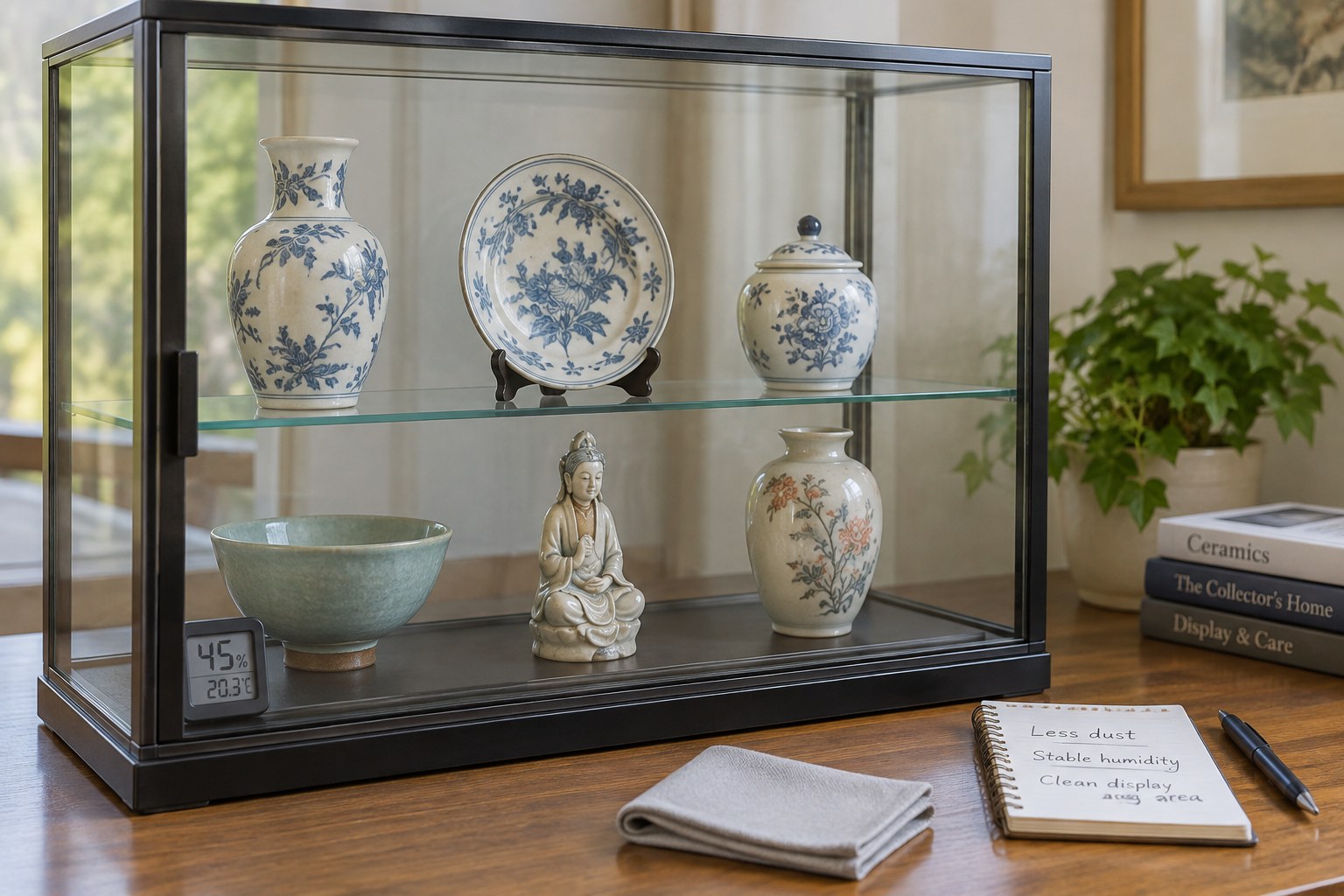
A display case reduces exposure only as part of a workable routine. Investigate how dust enters and clean the empty case without transferring the cleaning process to the objects.
Read the guide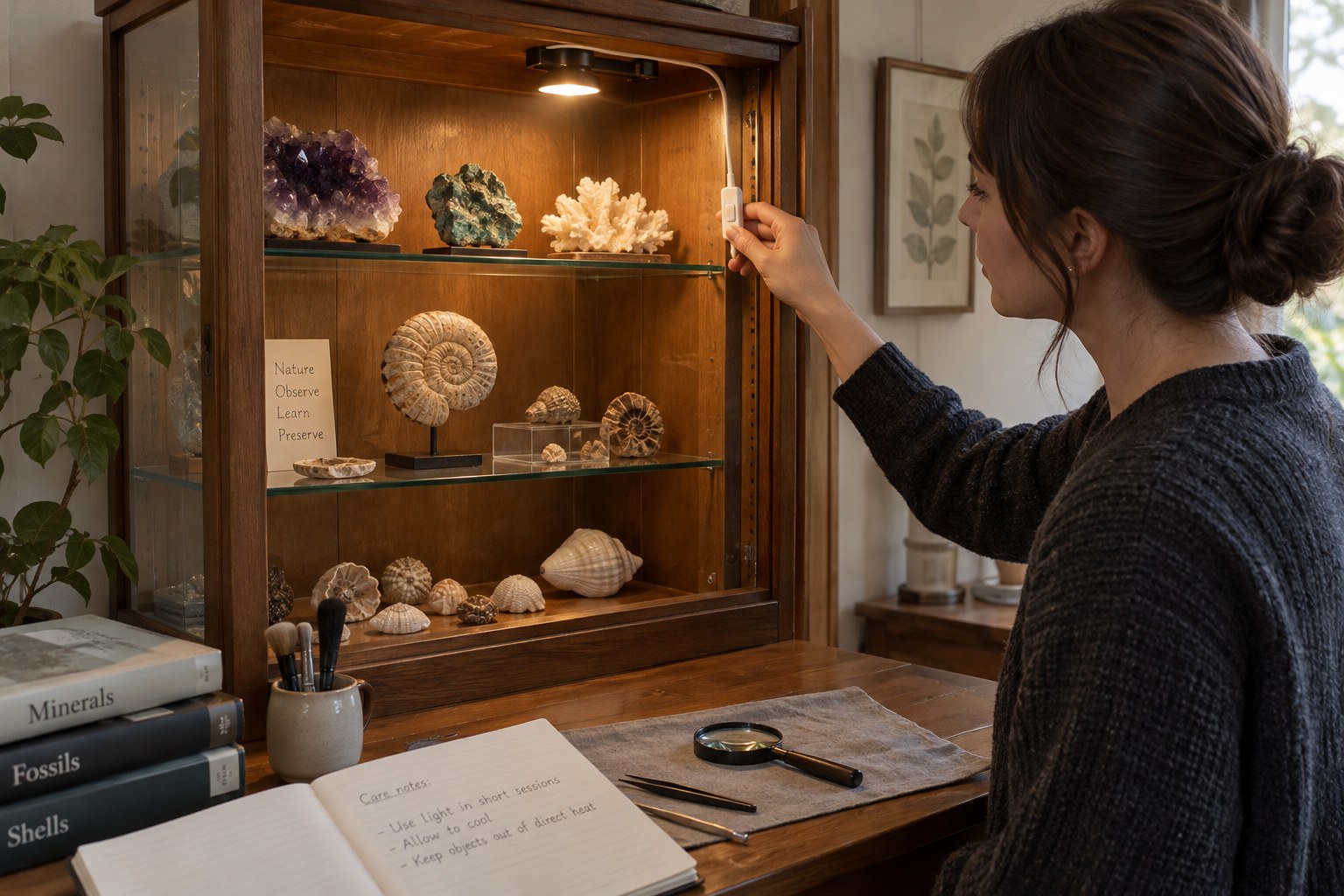
A collection does not need to be illuminated when nobody is looking at it. Plan the viewing schedule as carefully as the position of the lamps.
Read the guide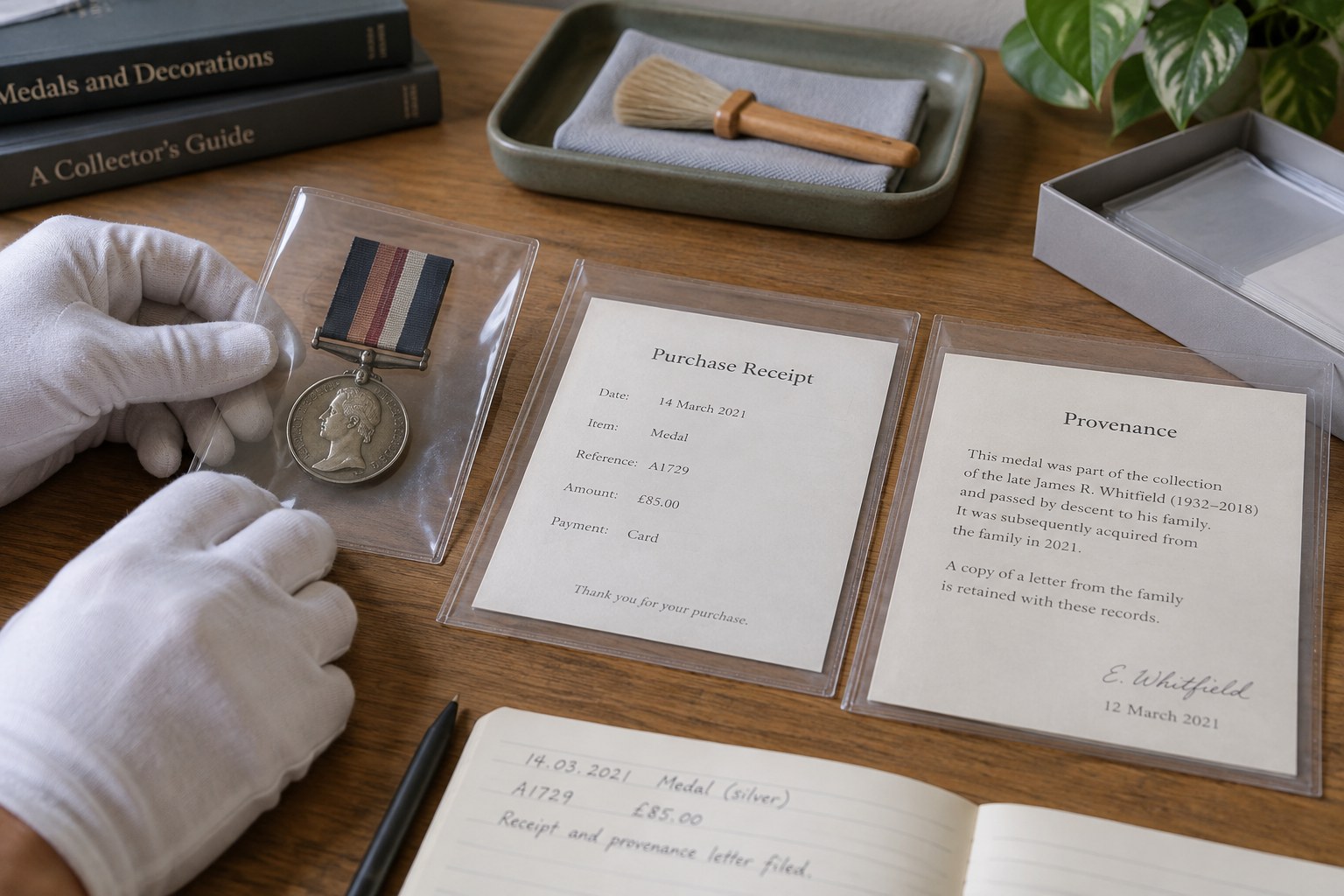
A purchase record explains a transaction; provenance describes an object’s documented history. Keep both, while distinguishing evidence from statements that have not been verified.
Read the guide