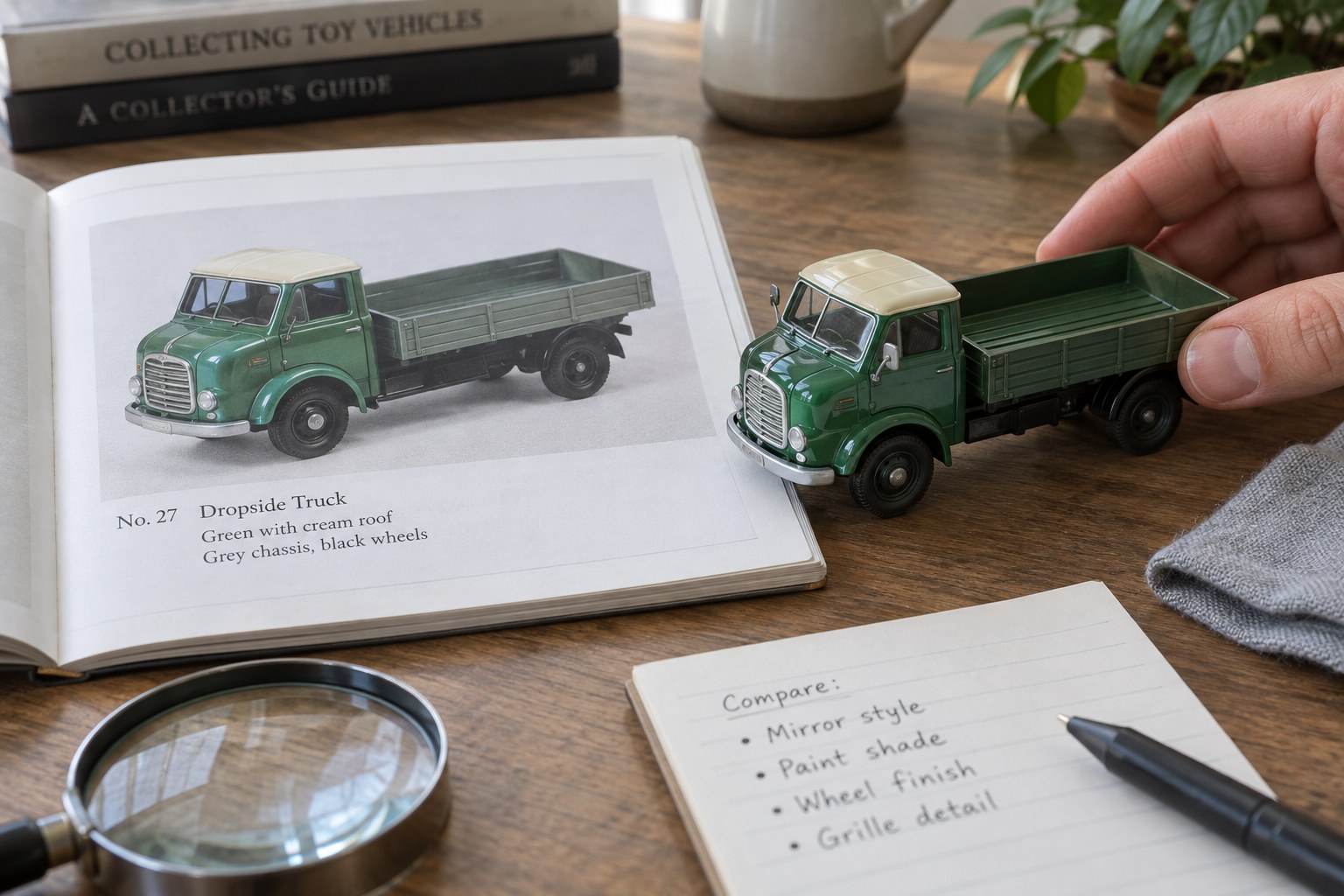
Understanding model scale and actual size
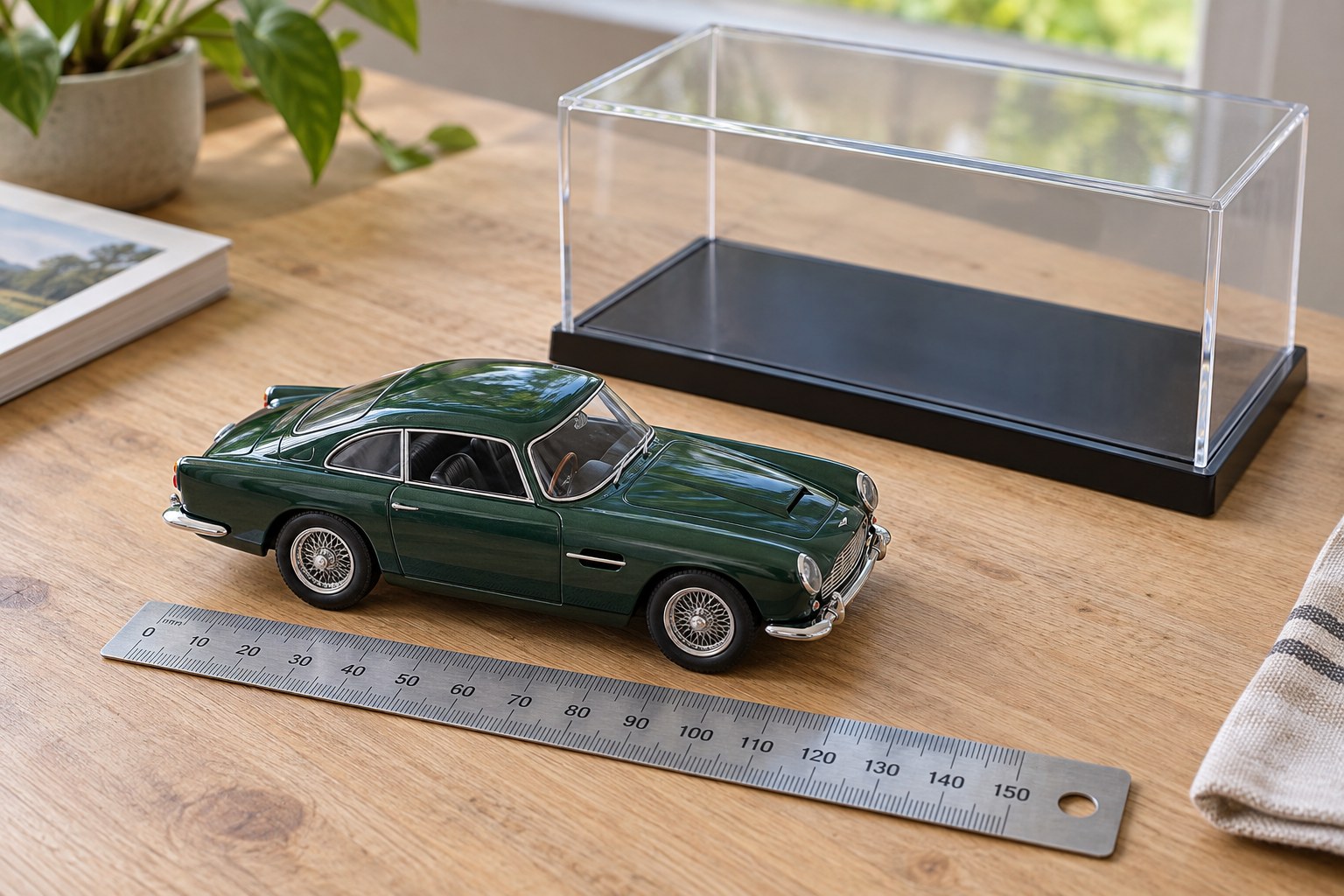
Scale describes a relationship to the full-size subject. It does not tell you the exact shelf space a model needs, and it should not be confused with a model railway's track gauge.
Read the guide24 guides · Page 1 of 2
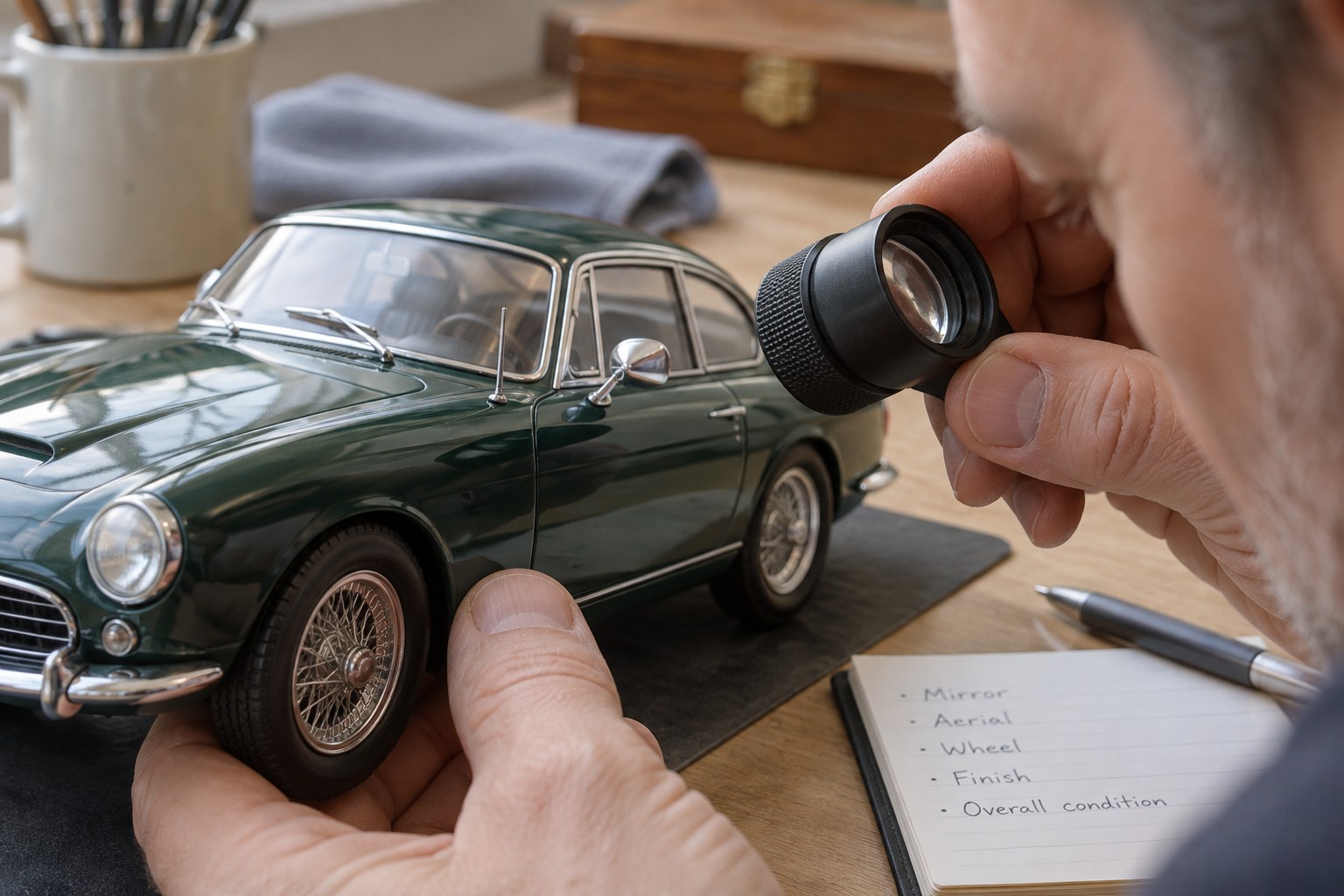
Scale describes a relationship to the full-size subject. It does not tell you the exact shelf space a model needs, and it should not be confused with a model railway's track gauge.
Read the guide
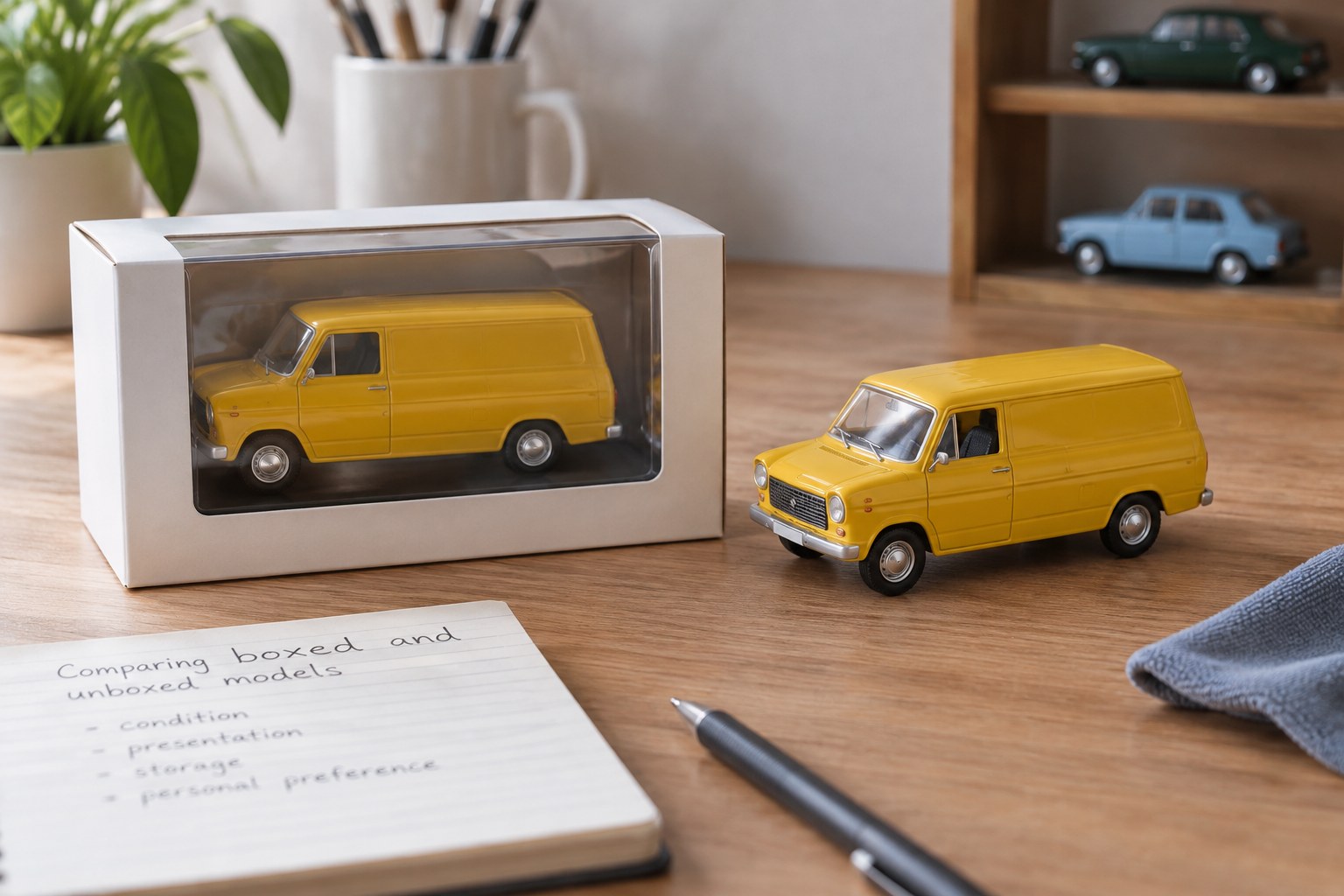
Mirrors, aerials and other small fittings deserve their own inspection. A model can look complete in a front photograph while important details remain hidden.
Read the guide
Original packaging can matter to a collection, but it is a separate object with its own condition and identity. Compare boxed and unboxed models according to what you want to keep and display.
Read the guide
The number printed on a model’s box does not tell you whether it will fit inside a particular display case. Measure the finished object, its base and the space needed to place it safely.
Read the guide
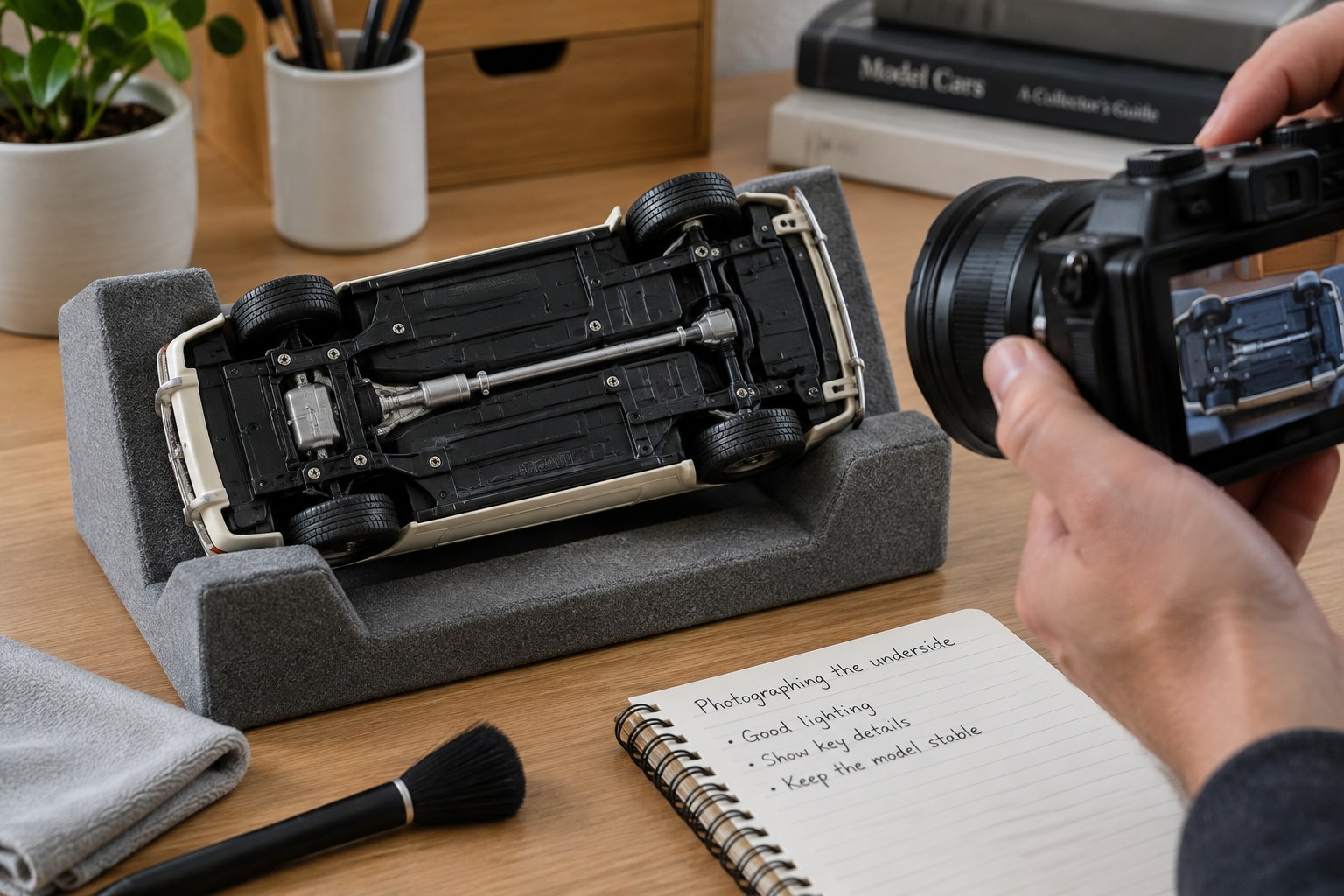
Marks on the underside can help document a model, but turning it over may put mirrors, roofs or other fittings at risk. Plan the view before moving the object.
Read the guide
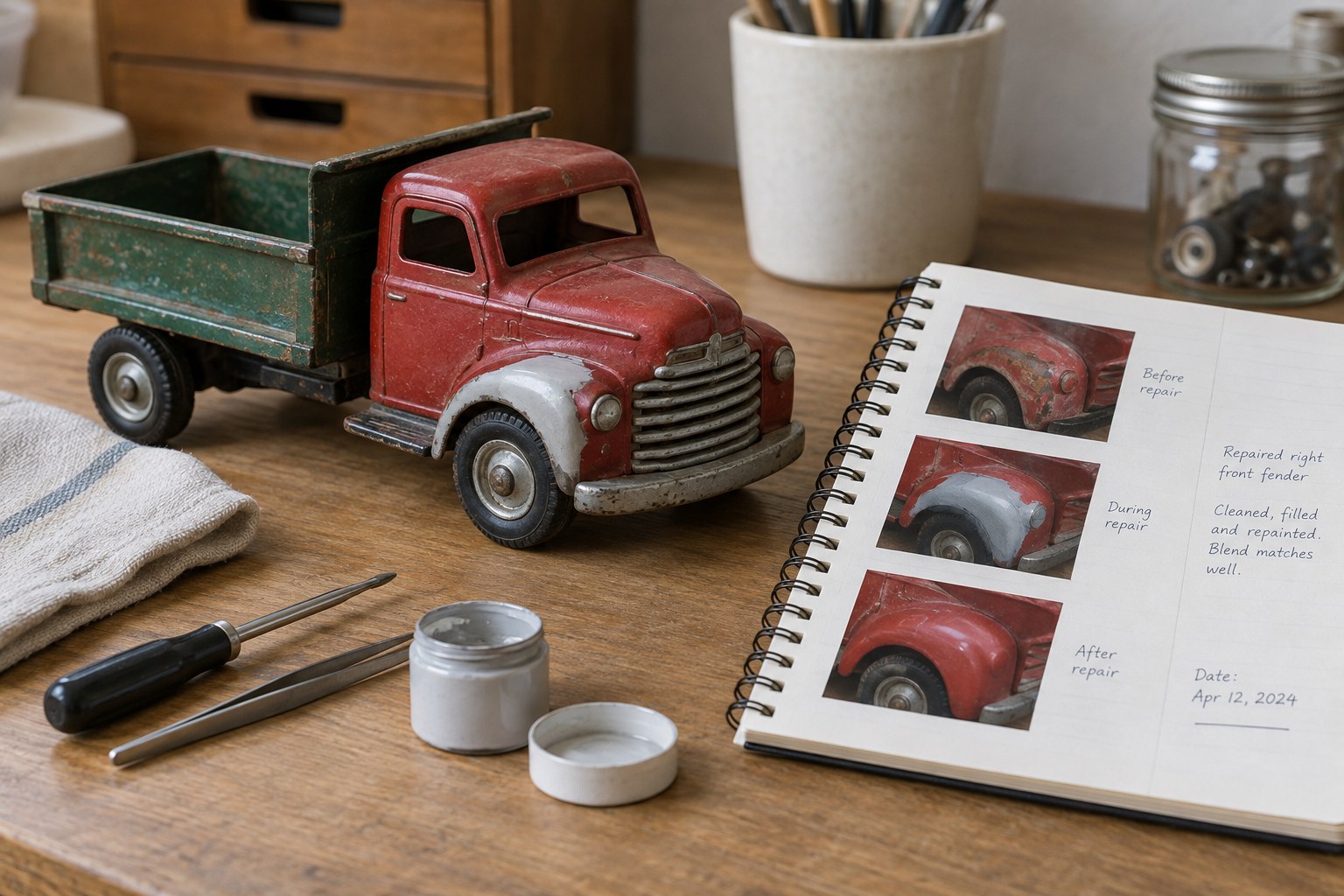
A repair record should let a future reader understand what changed, who did the work and what remains uncertain. It is useful even when the intervention was small or happened before you owned the toy.
Read the guide
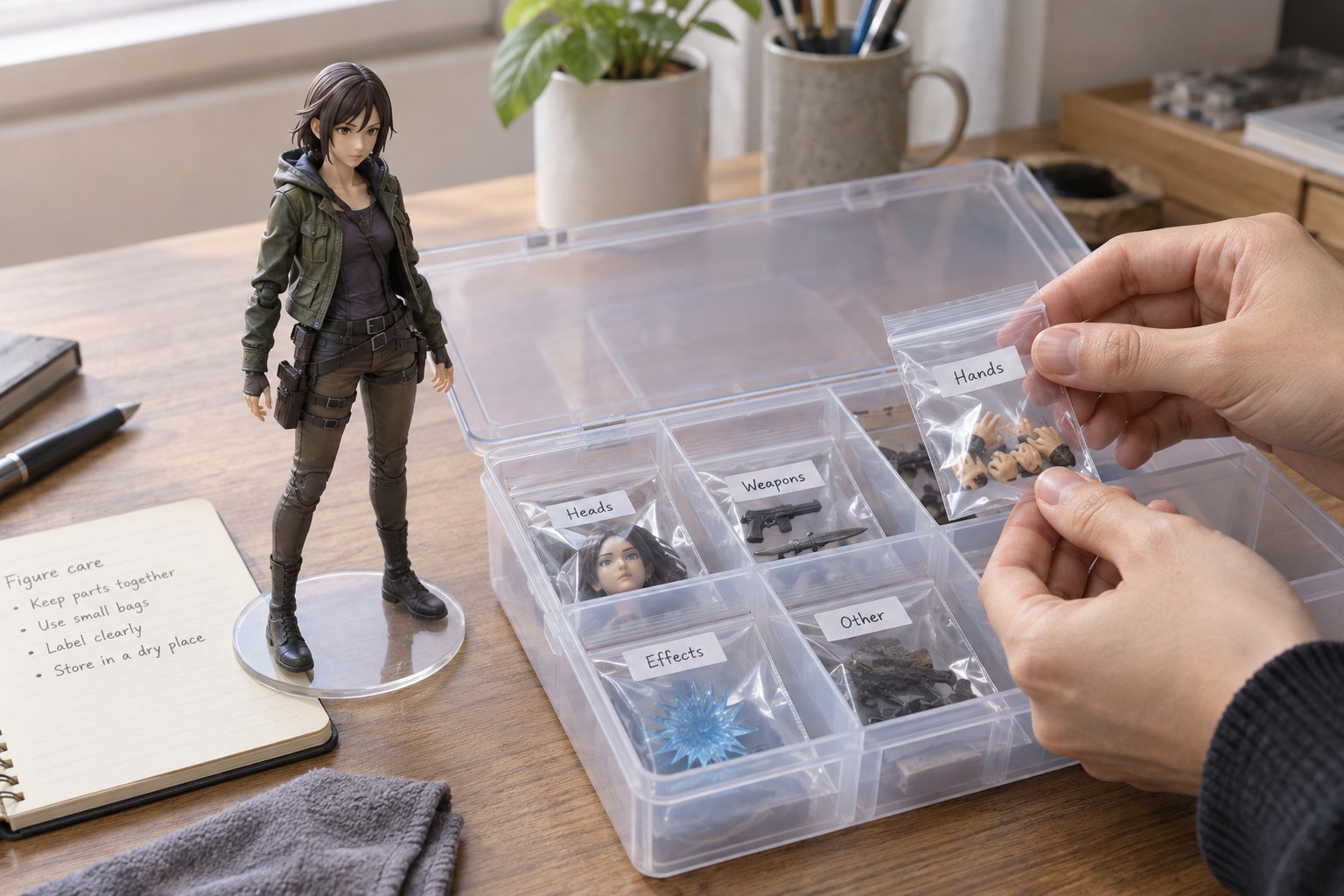
A loose accessory can lose its identity long before it is physically lost. Link small parts to their model at the moment you separate them.
Read the guide
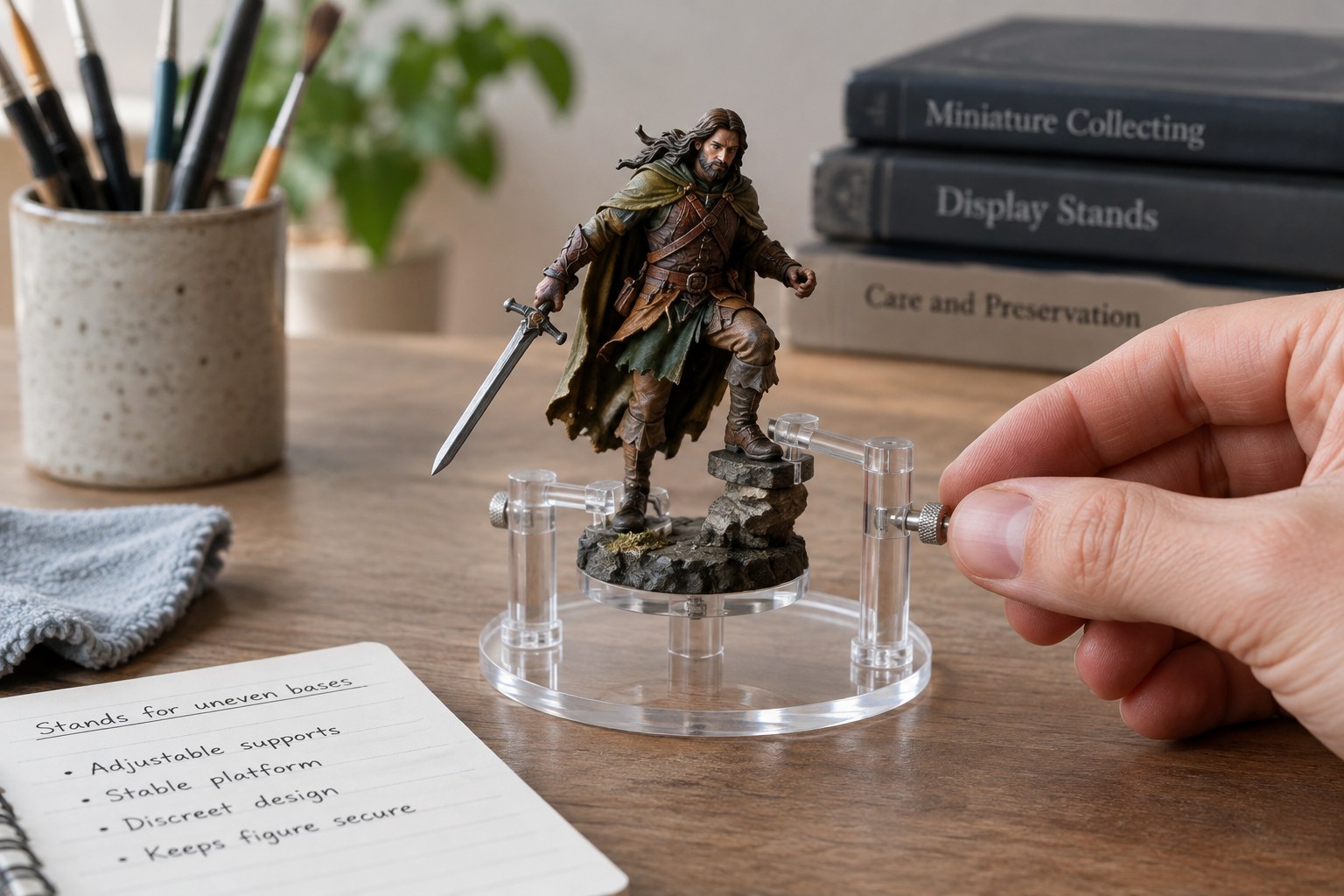
A figure with an uneven base should not rely on a stand that merely looks the right size. Examine its contact points and balance before choosing a display arrangement.
Read the guide
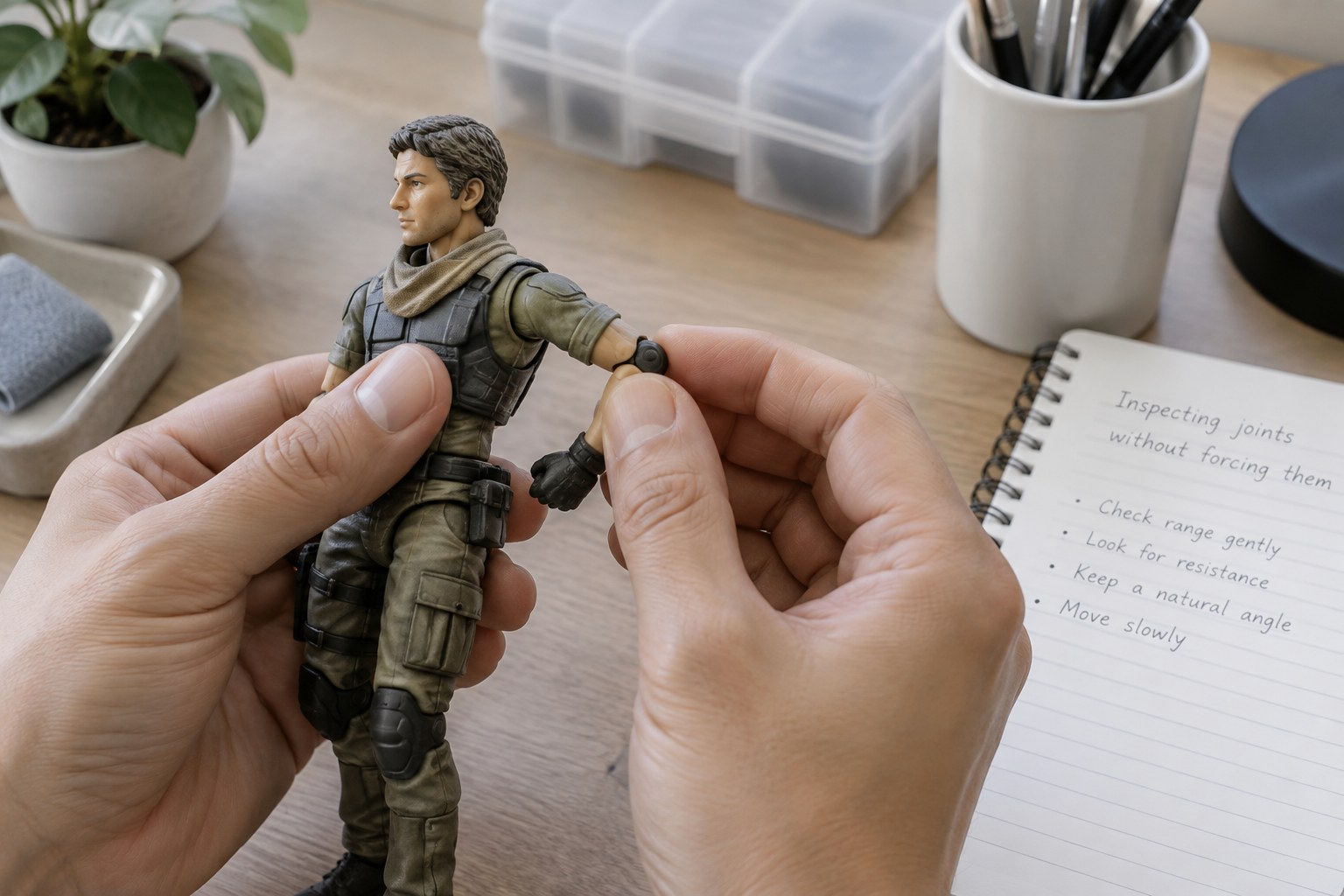
A joint that once moved freely may not be safe to move now. Begin with observation and the model's instructions, and treat resistance as a reason to stop.
Read the guide
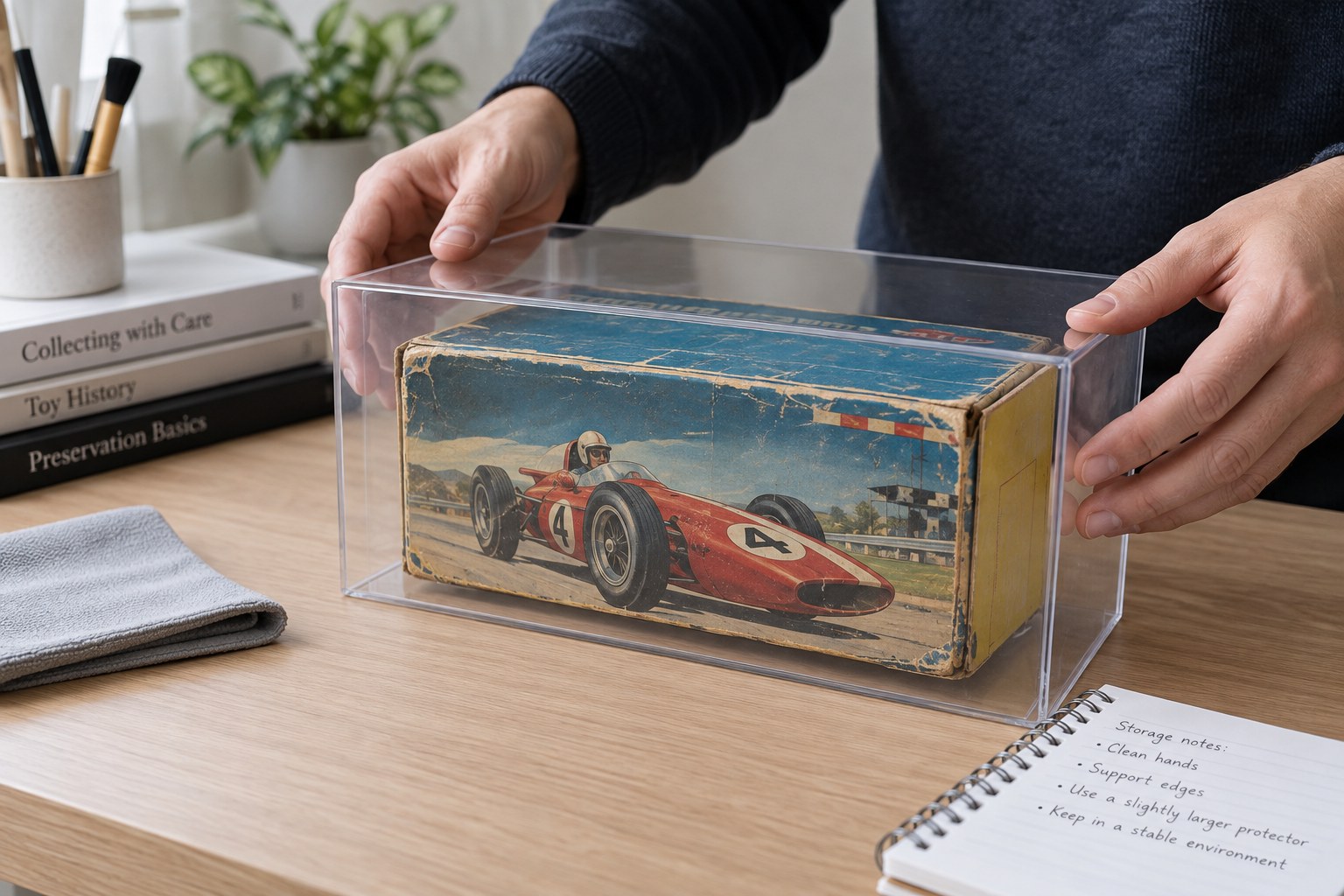
A protective cover should make a toy box easier to handle without disguising its condition. Document the box first, then choose an enclosure that fits without pressure.
Read the guide
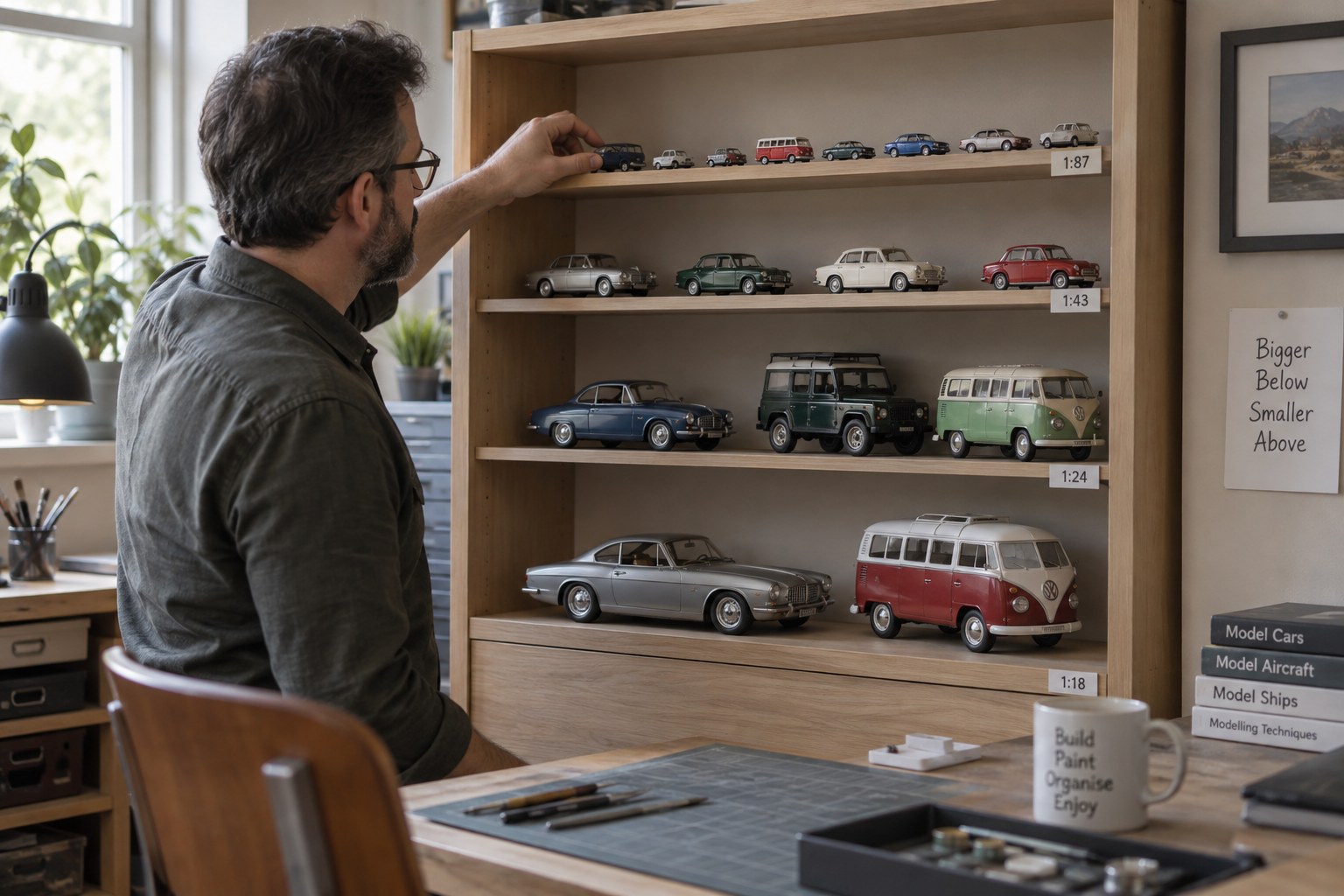
Grouping models by scale can make proportions easier to compare, but shelves also have physical limits. Plan the arrangement using actual footprints, heights and handling space.
Read the guide
A catalogue picture describes a product presentation. Photographs of the offered copy describe the object you may receive. Use the two kinds of image for different questions.
Read the guide