Buying storage supplies in appropriate quantities
Bulk storage supplies are only economical when they fit the objects and will actually be used. Test the specification before filling a cupboard with the wrong size.
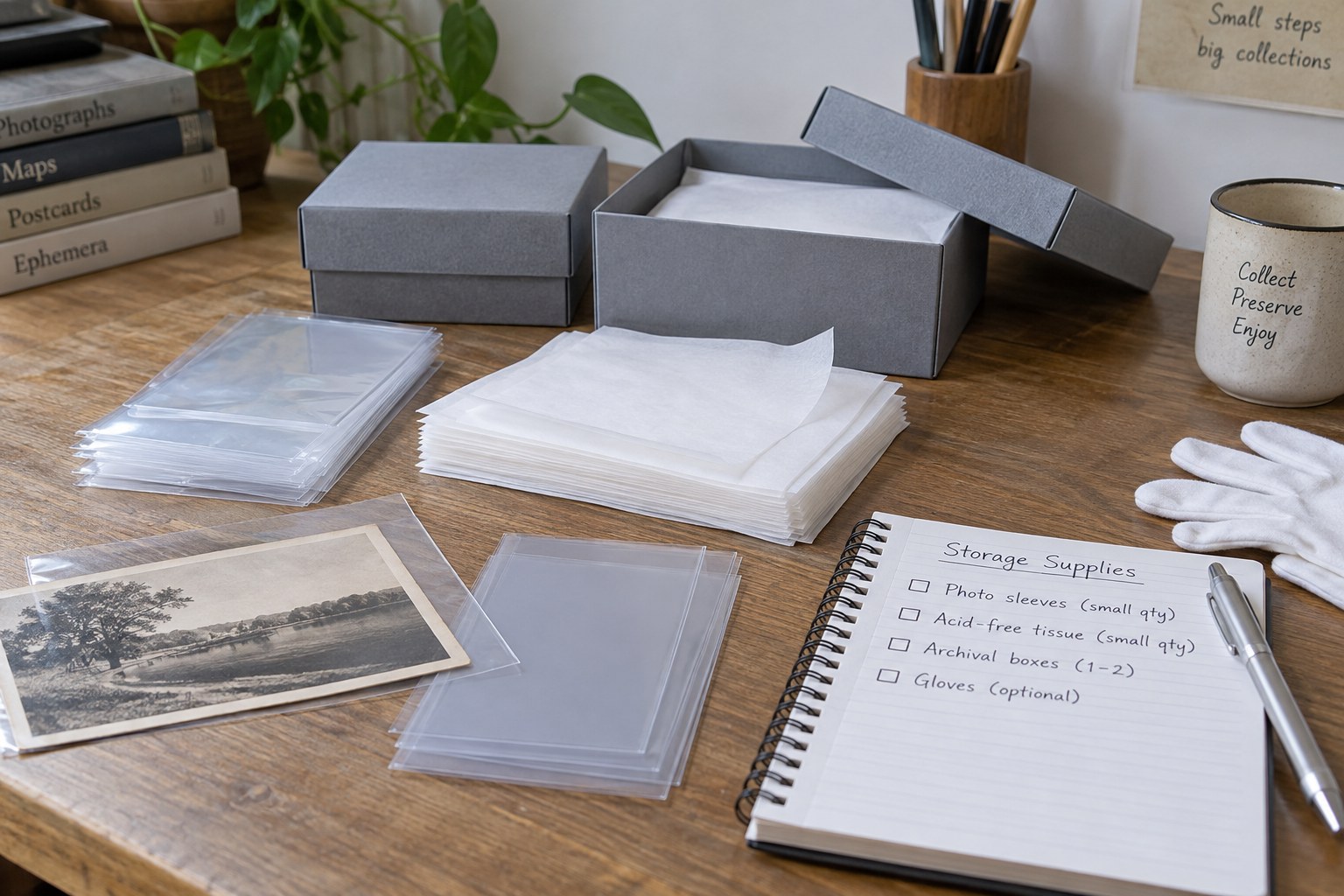
Count protected objects, not just collectibles
Start with a short audit of the collection’s immediate needs. Count the objects that lack suitable enclosures, those whose current enclosures need replacing and those expected to arrive soon. Keep speculative future purchases separate. A collection of one hundred cards does not automatically require one hundred identical rigid holders if their sizes and intended uses differ.
Group requirements by dimensions and material needs. Include the space occupied by an inner sleeve when choosing an outer holder, or by a mounted object when selecting a box. Note unusual sizes separately so they do not distort the order for the main group.
Check what you already own. Unused supplies may be stored in several places or still packed in an old delivery box. Identify them by actual specification rather than appearance. If you no longer know what a material is, do not assume it is suitable for direct contact merely because it came from the collection cupboard.
Make a small trial answer the important questions
Order a sample or a modest quantity when changing product type or supplier. Check fit with representative objects, including the largest and thickest examples in the group. Examine how an item is inserted and removed, not just how it looks once inside. A close fit that catches corners is not a successful test.
Retain the product description and material information. Terms such as archival should be supported by a useful specification rather than treated as a complete explanation. Ask the supplier about the exact material and intended use if the description is vague. A trial can confirm dimensions and handling, but it does not independently establish long-term chemical suitability.
Measure the delivered product where tolerances matter. Pack quantities and outer dimensions may not tell you the usable opening or interior depth. Record what worked so the next order can be checked against the same requirement, even if the product name changes.
Buy for a realistic replenishment cycle
Once the specification is suitable, choose a quantity that covers the current need and a modest, explainable reserve. Compare the total delivered cost, including any extra storage you would need for unused supplies. A lower unit price is not a saving if much of the order is the wrong format or becomes mixed with unidentified materials.
Keep different sizes in labelled original packs or clearly identified containers. Record a reorder reference without relying solely on a shop link that may disappear. When stock runs low, review the collection’s current needs before repeating the previous order automatically. The right quantity follows the collection as it exists, not a target to make the supply shelf look full.


