Checking return terms before paying
Before paying, understand how the seller describes returns, how the platform handles problems and what you would need to do if the item arrived differently from the listing.
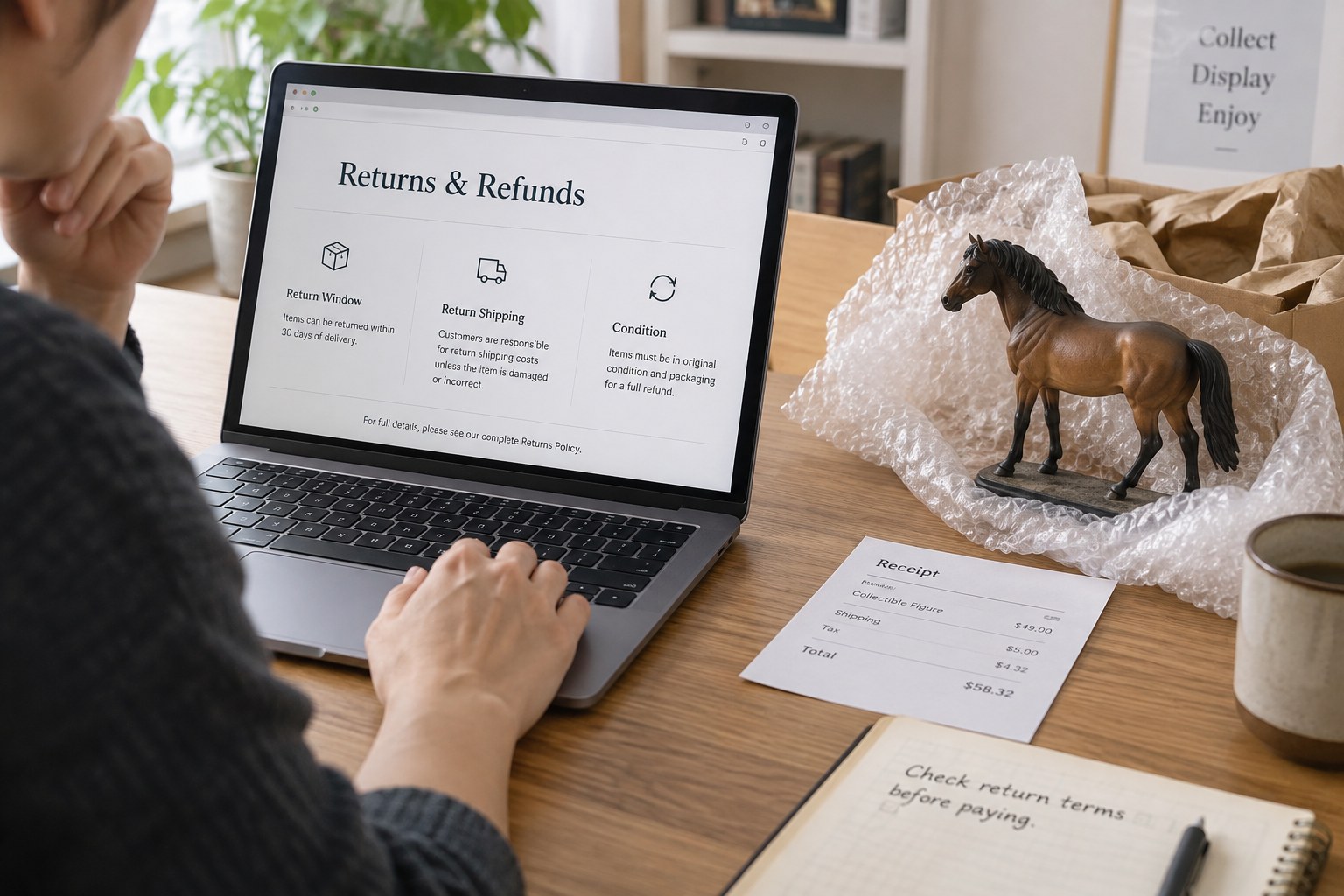
Read the terms attached to this particular purchase
Look at the actual listing and checkout information, not just a banner on the seller’s home page. Note the seller’s identity, the selling platform and the destination country. Terms may vary by item, transaction type and location. Save the relevant pages or confirmation so you have the wording that applied when you bought, rather than a policy that may later change.
Distinguish a change-of-mind return from a problem such as a wrong item, undisclosed damage or a missing component. A seller’s statement about voluntary returns may not describe every platform remedy or applicable right. For example, eBay’s official guidance distinguishes seller return policies from its processes for items that do not match their description. Use the current rules for the site where your transaction actually takes place.
Resolve practical questions while you can still choose
Ask where a return would be sent and how the process is started. Check who arranges the label, who bears the cost in the relevant situation and whether the package needs tracking or a particular service. Do not assume that the original shipping charge, return postage and item price are all treated identically. If the policy is unclear, ask for clarification through the platform’s own messaging system.
For a collection sold as one lot, ask how a missing or damaged component would be handled. Do not assume you can keep selected pieces and return the rest. Likewise, avoid making plans to open sealed packaging, remove a holder or test a mechanism without understanding how that action affects the agreed process. A collectible can change in a way that matters even when its basic function is unchanged.
Record the relevant deadlines from the current terms and note what starts each period. Delivery, a return request and a seller’s response are different events. Rather than relying on a remembered number of days, save the official instructions and put a reminder in your own calendar if you decide to buy.
Keep the evidence connected to the object
Retain the listing images, description, messages and order details. When the parcel arrives, compare the contents with that record and document any concern promptly. Photograph the object, its packaging and the specific discrepancy without altering or attempting to repair it first. Keep communications factual: identify the promised component or described condition and what you observed.
Follow the official transaction process before sending an item back or accepting an informal arrangement. A return address supplied in an unrelated message should be checked against the platform instructions. If the issue concerns legal rights rather than the seller’s stated procedure, consult the relevant consumer authority or a qualified adviser for your jurisdiction. This guide is a preparation checklist, not a statement of the rights that apply to every international purchase.


