Choosing an outer shipping box for collectibles
Choose the outer shipping box after planning the protective arrangement around the collectible. The right size is large enough for support and cushioning, but not a large void filled without a plan.
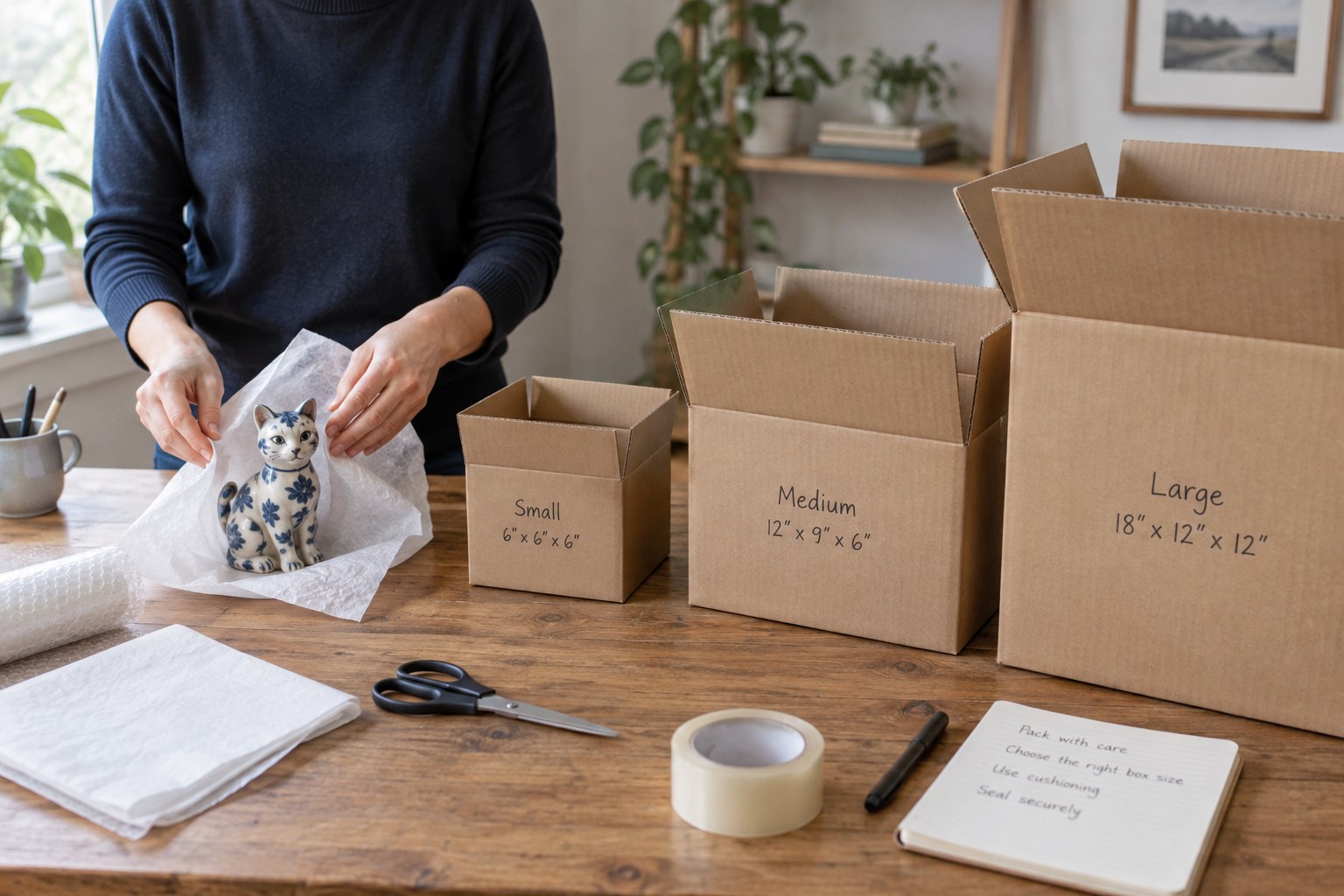
Measure the protected object
Start with the collectible in its intended inner protection, including any base, rigid support or separate accessory enclosure. Measure the full arrangement rather than the bare object. A box that fits a model perfectly may leave no room to protect it, while a box chosen for the model's length alone may be too shallow for its base and padding.
Identify whether the original packaging is itself collectible. If it is, treat it as part of the contents requiring protection. Do not place shipping labels or tape directly onto a box you intend the recipient to preserve. A decorative retail box is not automatically designed to withstand the journey as the outer container.
Check strength and condition
Use a box suitable for the combined weight and the chosen delivery service. Read the carrier's current packaging guidance and any specific requirements for fragile or unusual contents. UPS recommends appropriate cushioning and securing contents within a suitable container; its general guidance does not replace a packing design for every collectible.
Inspect a reused box carefully. Previous crushing, tears, softened areas and damaged seams can make it unsuitable even when the dimensions are convenient. Remove or fully obscure obsolete shipping labels according to the carrier's instructions, and make sure the remaining box can be closed securely. Do not rely on layers of tape to turn a structurally damaged carton into a sound one.
Plan the interior and the opening
The inner arrangement should prevent the supported object from shifting into the walls or into other components. Separate heavy parts from delicate surfaces. Empty space needs an appropriate protective solution, not merely any material that happens to be available. If the object's fragility or value exceeds your packing experience, obtain specialist packing advice.
Check how the recipient will reach the contents. An inner box, labelled accessory packets and a short opening note can make the process clearer. Avoid placing a delicate surface immediately under the taped opening where a blade could reach it. Do not bury small components loose in filler and expect them to be found.
Verify the final parcel before sealing
Set the lid in place without pressure and confirm that no projecting part is carrying the closing force. Check the contents list and keep photographs of the internal arrangement. Measure and weigh the finished parcel for the service you intend to use rather than estimating from the empty box.
Use the carrier's specified closing method and clear address labelling. A fragile label may communicate a request but does not substitute for appropriate packaging. Keep the packing record with the transaction and ask the recipient to retain the materials until the contents have been checked. If the protective arrangement cannot fit without pressure, choose a different box or delivery method instead of forcing the last flap closed.


