Closing a sale while preserving the object record
When an object leaves a collection, its record still explains old photographs, purchase documents and relationships with other pieces. Close the transaction without deleting that history.
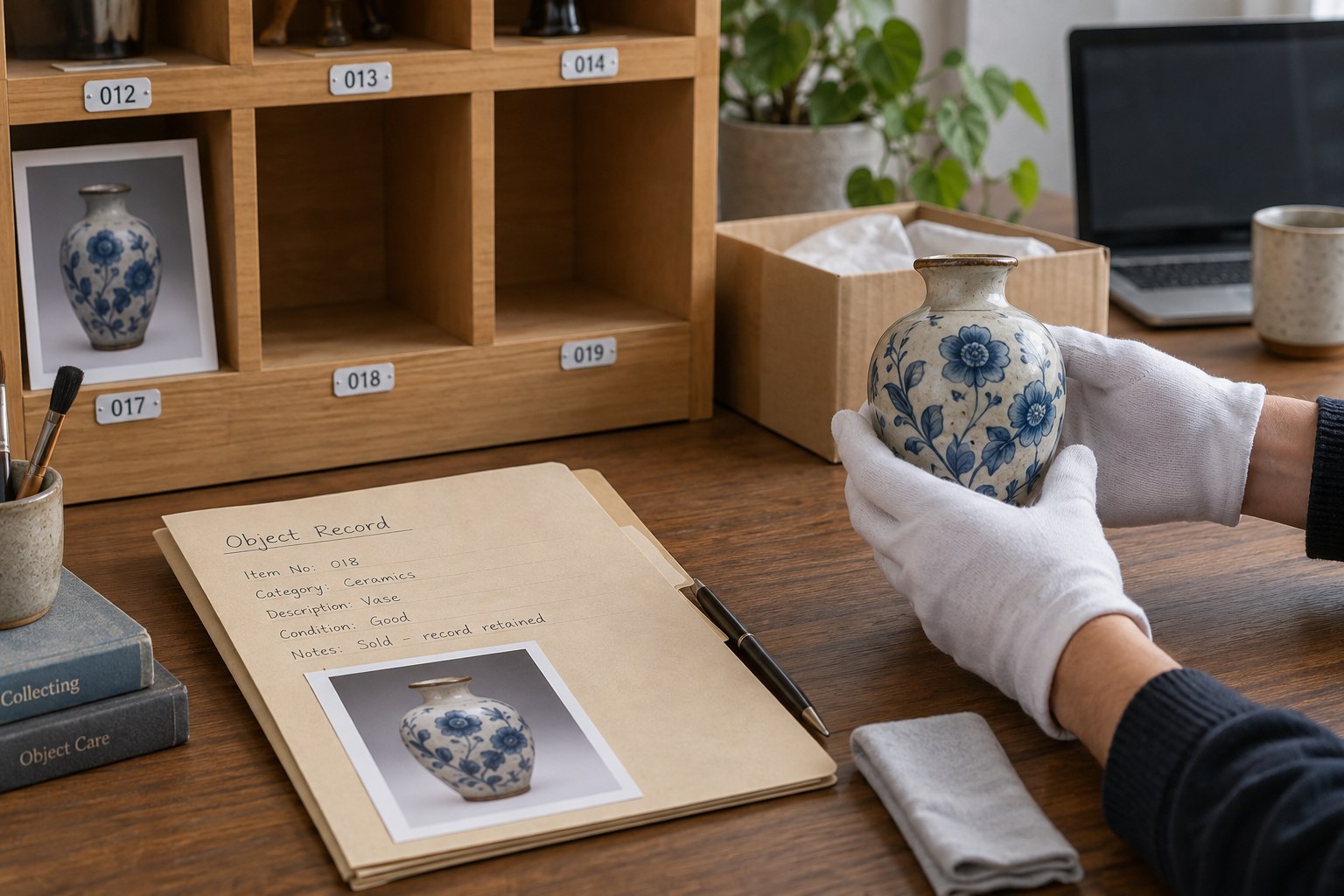
Record the exact object that changed hands
Mark the object’s existing identifier as transferred rather than assigning its number to something new. Add the transfer date and a brief description of the transaction. If you sold a group, list the component identifiers and preserve the contents list accepted by the buyer. The record should show whether original packaging, certificates or accessories left with the main object.
Keep the final listing description and photographs separate from earlier drafts. A working description may have changed after a missing part was found or a buyer asked a question. Save the version that reflects the actual agreement, together with relevant messages and dispatch information.
Separate collection history from private transaction data
The object’s descriptive record can remain useful without exposing a buyer’s address or payment details to everyone who sees the inventory. Store private transaction documents separately with appropriate access. In a shared collection spreadsheet, a transaction reference may be sufficient to connect the records without copying personal information into every row.
Before passing provenance documents to the buyer, check whether they include information unrelated to the object or people who are not involved in the sale. Do not silently alter an original document and present it as unchanged. Discuss an appropriate copy or redaction where needed, and make clear what the recipient is receiving.
If the object belonged to a documented group, retain links to the other records. A sold postcard may still explain the order of an album, and a transferred accessory may have appeared in earlier photographs of a model. A short relationship note prevents a future review from treating its absence as an unexplained loss.
Close the working tasks as well as the listing
Update any other active listing so the same object is not offered again. Remove it from your current storage-location list, but keep the former location in the history if that helps interpret old photographs. Mark a reserved or dispatched object distinctly from a completed transfer; these stages should not all look identical in the inventory.
Check that the agreed documents and components were included, record the dispatch reference and keep any later correspondence with the transaction. If the item returns, reopen the existing record and document its condition on return instead of creating a second, unrelated object entry.
Finally, back up the updated inventory and supporting files. The goal is a readable trail: what the object was, what information accompanied it, when it left and whether the transaction later changed. That trail remains useful after the object is no longer on your shelf.


