Deciding between individual sales and lots
Selling separately gives each object its own description and audience. Selling a lot reduces the number of transactions but asks one buyer to accept the whole grouping.
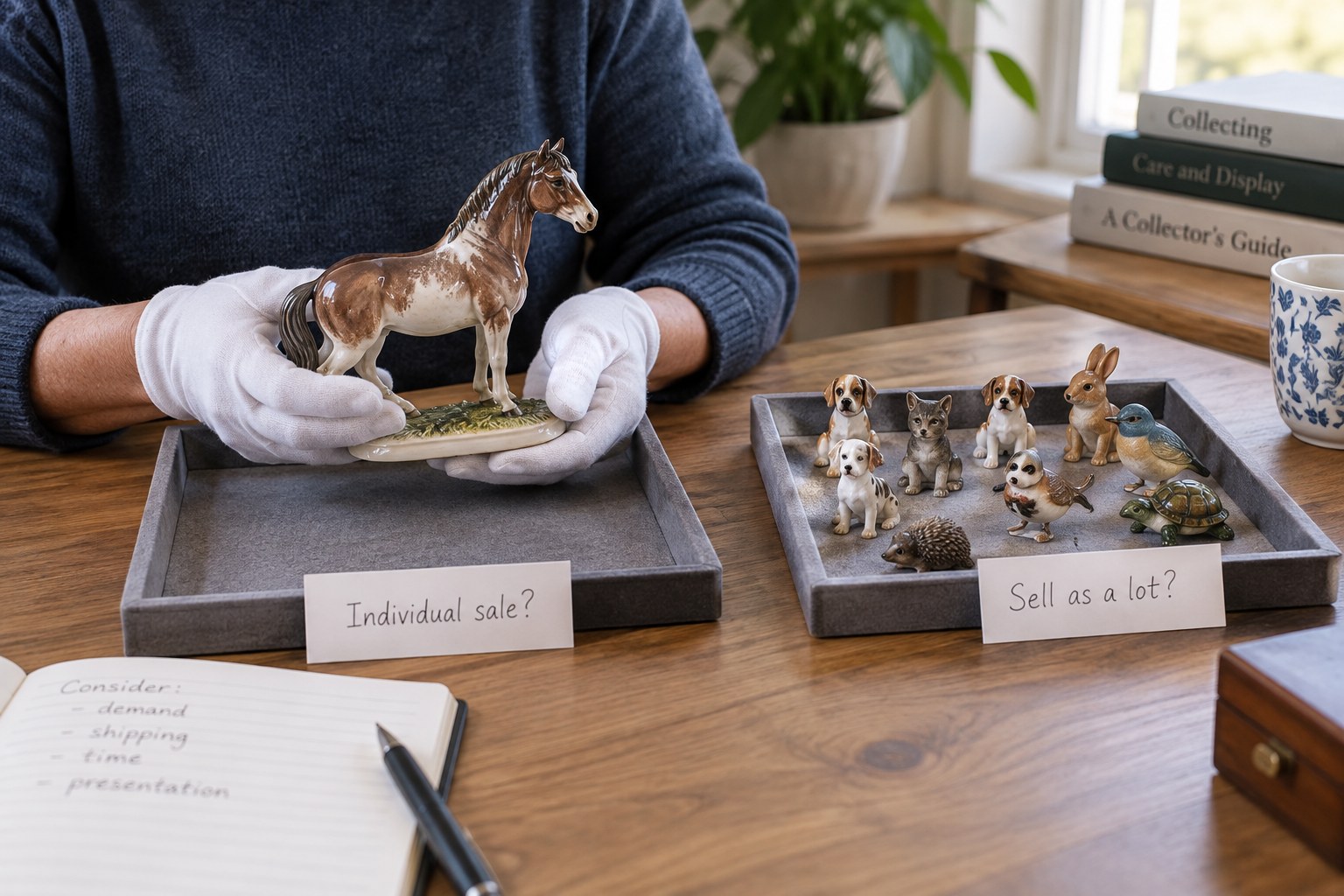
Compare the work, not only the headline prices
Make two rough plans using the same inventory. In the individual plan, count the listings, photographs, messages, packing sessions and parcels. In the lot plan, describe the group and identify the information a buyer would need to assess it. A collection of unrelated objects may be convenient for the seller but difficult for a buyer to evaluate from a few overview photographs.
Use realistic costs for each route. Separate sales may involve repeated delivery charges and packaging purchases, while one large parcel may need stronger materials or specialist handling. Include the time you can actually devote to the process. A theoretically higher total is not useful if you cannot maintain the listings or dispatch the objects as agreed.
Do not assume that a lot price equals the sum of advertised individual prices. Asking prices are not completed transactions, and a mixed lot may contain pieces a buyer does not want. Record the assumptions behind your comparison instead of treating the result as a valuation.
Keep meaningful groups together
Some objects share a documented history: letters from one correspondence, a model with its original accessories, or photographs with identifying notes. Separating them can remove information that is useful to future owners. Before dividing a group, record its relationships and consider whether the combined history is part of what you are offering.
Other groups exist only because they occupied the same drawer. Sorting those objects into coherent subject lots can make the description clearer. For example, separate unrelated postcard locations rather than presenting an unexplained pile. Keep duplicates visible in the count, and describe condition differences rather than applying one favourable label to every item.
A hybrid approach can work when a few objects need detailed individual descriptions and the remaining pieces form understandable groups. Decide the boundaries before advertising so the same item does not accidentally appear in both a single listing and a lot.
Choose a route you can keep consistent
If you accept offers to split a listed lot, revise the listing immediately after agreeing a change. Update the contents list, photographs and price together. Save a copy of the version accepted by each buyer, especially when several conversations are happening at once.
Set a review date for unsold material rather than repeatedly rewriting the plan in response to every message. At that point, compare enquiries, remaining work and storage needs. You can change from individual sales to lots, or the reverse, but keep the inventory’s transaction status current so a reserved object is not offered twice.
The appropriate method depends on the objects and your capacity to describe, store and dispatch them. A smaller number of clearly documented transactions may suit one collection; separate listings may suit another. The decision should follow the actual grouping and workload, not a promise that either method always produces a better price.


