Keeping messages and transaction agreements
A transaction record should explain what was agreed without requiring you to reconstruct a conversation from memory. Keep the final terms connected to the listing and the object.
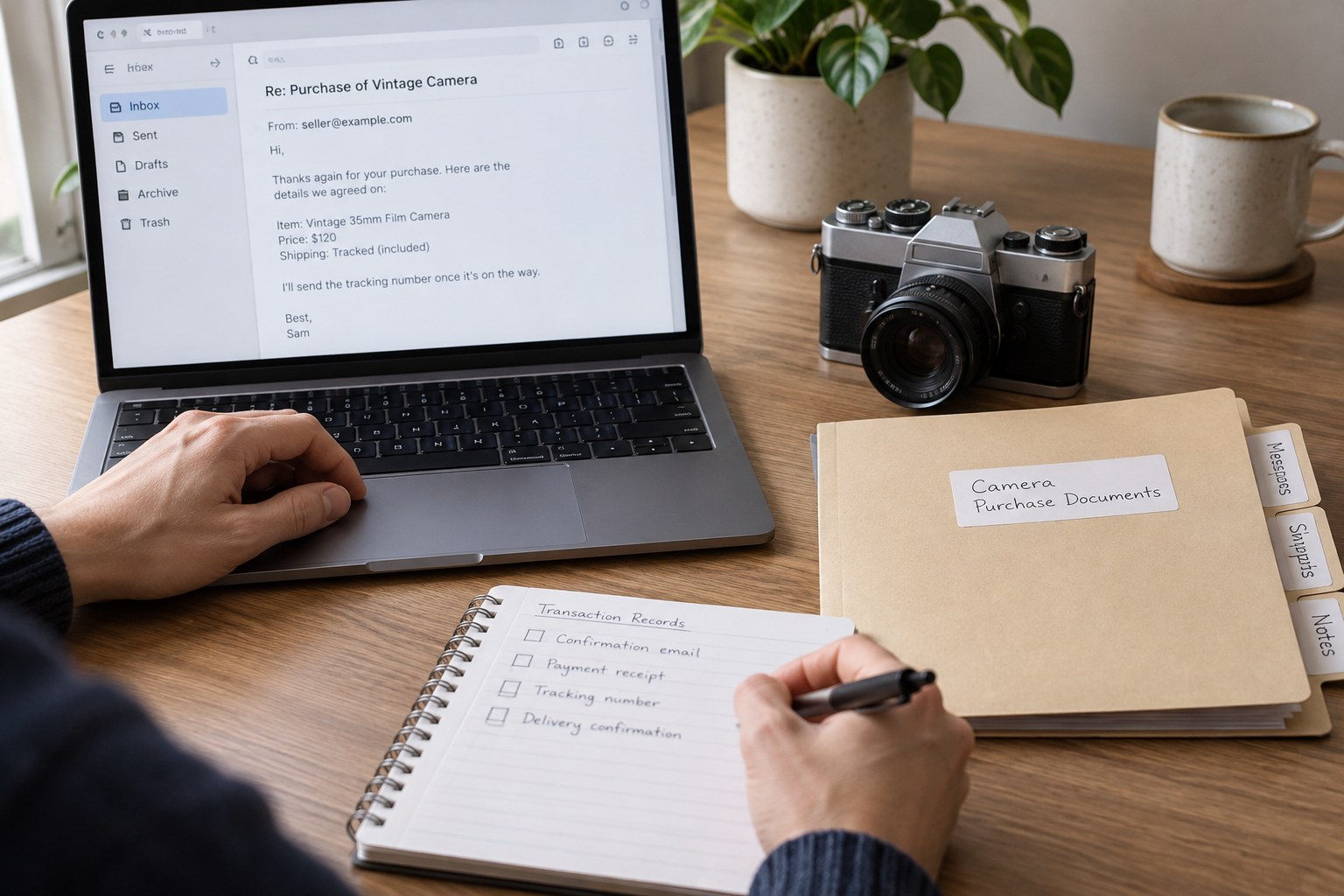
Save the offer as it existed when you agreed
Keep the listing title, description, relevant photographs and item reference. Record the date and the seller's identifier within the platform. A saved link alone may become useless if the page changes or disappears. Use the platform's available saving or download options and retain a readable copy for your private records.
Include condition qualifications and exclusions, not just the attractive headline. If a stand, box or accessory is shown but excluded, preserve that detail. The record should describe the purchase accurately rather than become a promotional summary of the object.
Collect the clarifications in one place
Keep questions and answers together so a short reply retains its context. Yes may refer to a measurement, a missing part or a delivery arrangement; it is not useful without the question. Save the message dates and maintain the original sequence where possible. Do not edit a reply into a stronger statement than the seller made.
If the agreement changes, write a concise confirmation of the final contents, price and delivery arrangement through the transaction channel. Preserve the earlier version as history rather than deleting it. A clear final message helps distinguish a superseded offer from the terms both parties intended to use.
Connect payment, delivery and inventory
Store the order reference, payment acknowledgement and parcel details with the agreement. Link the folder to the object's inventory number. Keep personal and payment information in private storage, with access limited to people who need it. A public collection catalogue generally needs the acquisition date and source description, not another person's address or financial details.
Use consistent filenames or a short index. For example, distinguish listing, questions, final agreement, payment and arrival inspection. The exact naming system matters less than being able to retrieve the relevant record without opening dozens of unrelated files. Keep a backup appropriate to your existing document routine.
Preserve evidence without promising an outcome
If a disagreement arises, refer to the exact term and provide the relevant unaltered message or image. Check the applicable platform or provider process directly rather than assuming that retaining a screenshot guarantees a refund or another remedy. Documentation makes the facts easier to explain; it does not decide the outcome by itself.
When the object leaves your collection, share only the provenance information appropriate to the new owner and redact unrelated personal details from copies. Retain the original transaction record privately according to your needs and applicable obligations. A useful archive balances a clear history with proportionate handling of other people's information.


