Organising a collection received without an inventory
When a collection arrives without a list, the first task is to preserve its existing relationships long enough to understand them. Sorting immediately by size or appearance can erase useful clues.
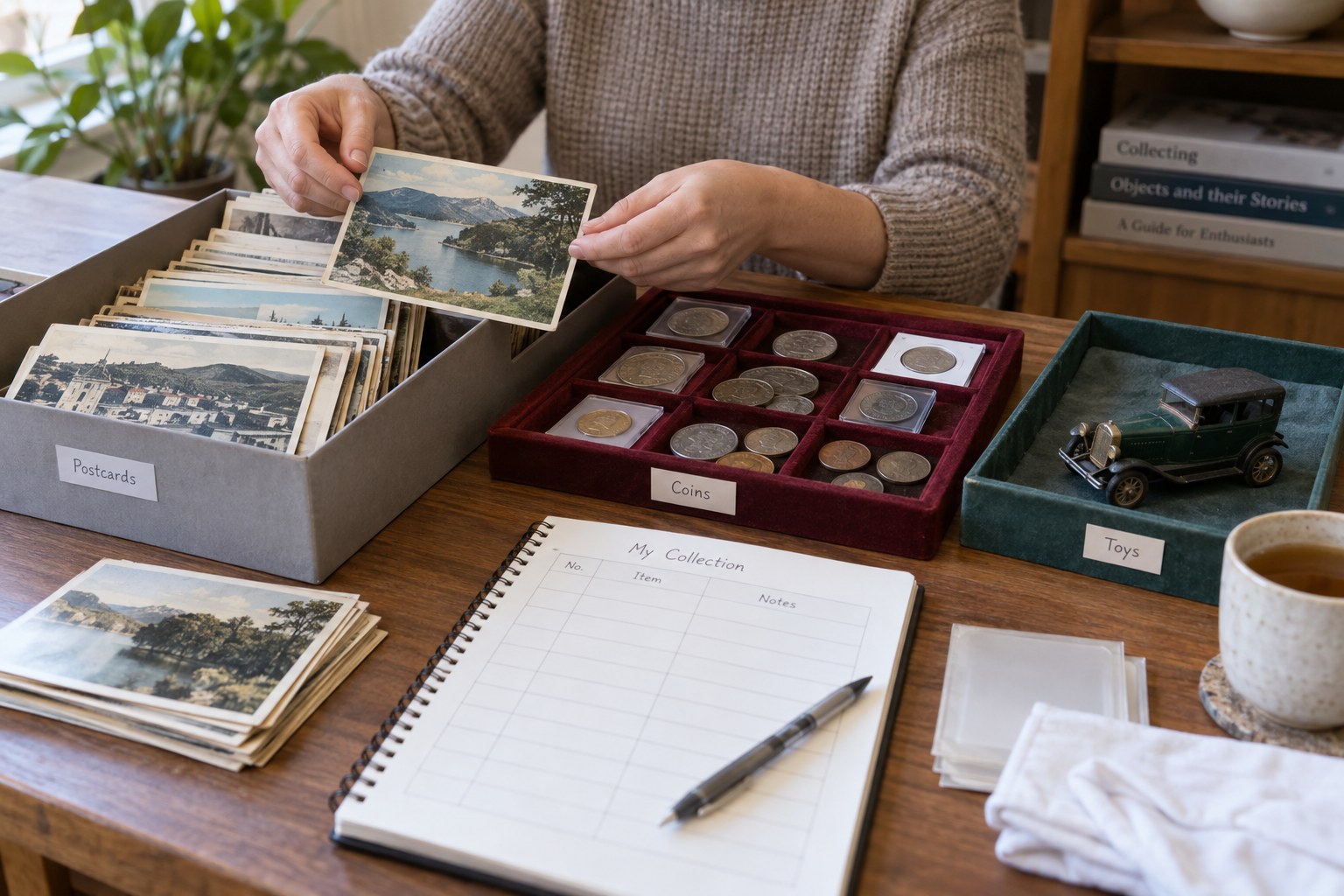
Record the arrangement before changing it
Photograph boxes, drawers, albums and labels as you receive them. Give each container a temporary identifier and record where it came from. An envelope tucked behind an album or a note beneath a model may explain an object that is not obvious on first inspection. Keep those connections visible in photographs and notes before moving anything.
If the collection comes from several locations, preserve that distinction. A group from a desk drawer and a group from a display cabinet may have different purposes or histories. Do not merge them merely because the objects look similar. Temporary container records are enough at this stage; you do not need to identify every object before starting.
Create space for observation, not treatment
Choose a stable work surface and enough room to return objects to their original groups. Keep food, drinks and unnecessary tools away. Work with one container at a time so loose notes and small accessories do not migrate between groups. If something is too heavy, unstable or fragile to handle confidently, leave it supported and seek help.
Do not clean coins, peel old labels, flatten folded paper or test unfamiliar mechanisms as part of the intake process. Those actions may alter condition or remove information. Record visible concerns instead. If you find suspected active deterioration, pests or a substance you cannot identify, keep it separate from the rest of your storage and seek appropriate specialist advice before further handling.
Build a first-pass list with honest limits
For each temporary group, record a plain description, approximate or checked quantity, location and a few photographs. Use broad names when identification is uncertain: metal medal with portrait is more useful than an unsupported attribution to a particular event. Add visible text exactly as you can read it, marking uncertain characters rather than silently completing them.
Distinguish what you observed from information someone supplied. A relative’s recollection, a handwritten price and a printed certificate should each have an attributed source. None should automatically become the object’s confirmed identity or present value. Keep original documents with their related group, using suitable separate protection where needed.
For a mixed box, note the categories without immediately assigning individual values. The purpose is to establish what exists and how it is connected. A neat price column filled with guesses can distract from missing descriptions, uncounted objects and undocumented accessories.
Decide which groups need closer attention
After the overview, identify the groups that require individual records. These may include objects with associated documents, pieces likely to be moved separately or material that needs specialist identification. Keep the temporary container identifier as a relationship field when assigning permanent object numbers, so earlier photographs still make sense.
Ask a relevant specialist about material outside your knowledge rather than sending the same vague question to unrelated sellers. Supply an overview, dimensions and specific detail images. Explain that you are establishing an inventory and identify the questions you need answered. An enquiry about conservation, an identification request and a request for a sale estimate are different tasks.
Delay irreversible decisions until the outline is clear
Before selling, gifting or discarding anything, confirm who can make that decision and whether other people have an interest in the collection. Keep personal correspondence and ownership documents out of public listings. If the collection forms part of an estate or shared property, obtain appropriate advice for those circumstances rather than treating physical possession as the whole answer.
Once authority and scope are clear, plan the next stage by group: retain, research, obtain storage, seek an assessment or discuss transfer. Record the reasons and keep a copy of the original intake photographs. You do not need a perfect catalogue to make progress, but preserving the original arrangement gives later research a foundation that cannot easily be recreated after everything has been mixed together.


