Preparing an inventory for an auction house
An auction enquiry is easier to assess when photographs, descriptions and documents refer to the same clearly numbered objects.
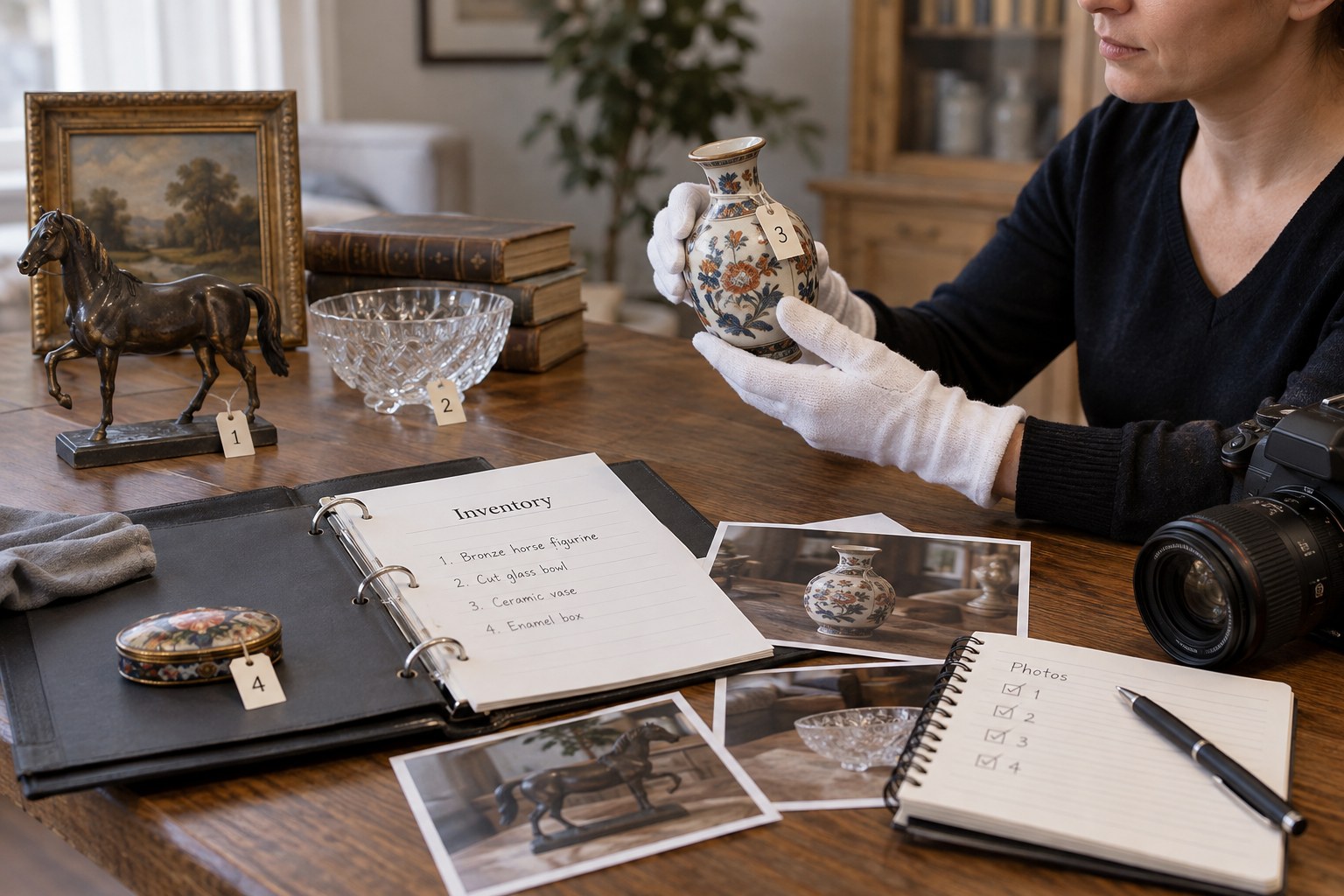
Send a manageable overview first
Start with the auction house’s current submission instructions. Sotheby’s, for example, asks prospective sellers for images and supporting information about an item. That does not mean every house accepts the same categories, file formats or collection size. Identify the relevant department and check how it prefers to receive an initial enquiry before sending a large attachment archive.
Write a short overview explaining the nature of the collection, approximate number of objects and where it is located. Distinguish an approximate count from a checked inventory. If you are acting for someone else, explain your role and establish that you have authority to discuss the objects. Do not imply ownership simply because you are organising the photographs.
Make each row correspond to a recognisable object
Use a unique reference number, a plain description and dimensions with units. Include visible maker’s marks, dates or inscriptions as observations, and label uncertain attributions as uncertain. If an object has several components, list them together but identify the parts separately so a photograph of the box is not mistaken for a photograph of the whole contents.
Attach a small, clearly named image set to each record: an overall view, reverse or underside where relevant, identifying marks and important condition details. Avoid heavily edited pictures or collages that make small details unreadable. Keep full-resolution originals available if requested, rather than assuming a compressed email image will answer every question.
Use the same reference numbers in filenames, the spreadsheet and your message. A record called model car 7 and a photograph called IMG_4421 are easy to separate accidentally. A reference such as LOT-007 in both places lets the recipient ask a specific follow-up question.
Document provenance without filling gaps with a story
Summarise how the object came to you and identify supporting documents. A dated receipt, an old inventory and a family recollection are different types of evidence; name the source of each statement. Do not convert a remembered story into a confirmed chain of ownership. If the date or seller is unknown, record that limit.
Provide a description of condition based on what you can see. Mention repairs, missing pieces and alterations that you know about, including information supplied by a previous owner. Do not clean or dismantle an object to make the submission look more attractive. If further examination is needed, let the specialist explain what photographs or access would help.
Track the enquiry separately from a sale agreement
Save the submitted version and the date it was sent. Record any reference number provided by the house, then add later questions and answers without overwriting the original information. If you contact more than one house, keep those conversations separate so advice from one is not attributed to another.
An initial response or estimate is not the same as an agreed net payment. Before consigning anything, review the actual written terms, charges, transport arrangements and proposed handling of unsold material with the house. Ask for clarification where needed. The inventory supports that discussion; it does not replace the agreement or establish that an item has been accepted for auction.


