Preparing several items for one shipment
Combining purchases can reduce the number of parcels, but objects of different weights and shapes should not become loose neighbours inside one box.
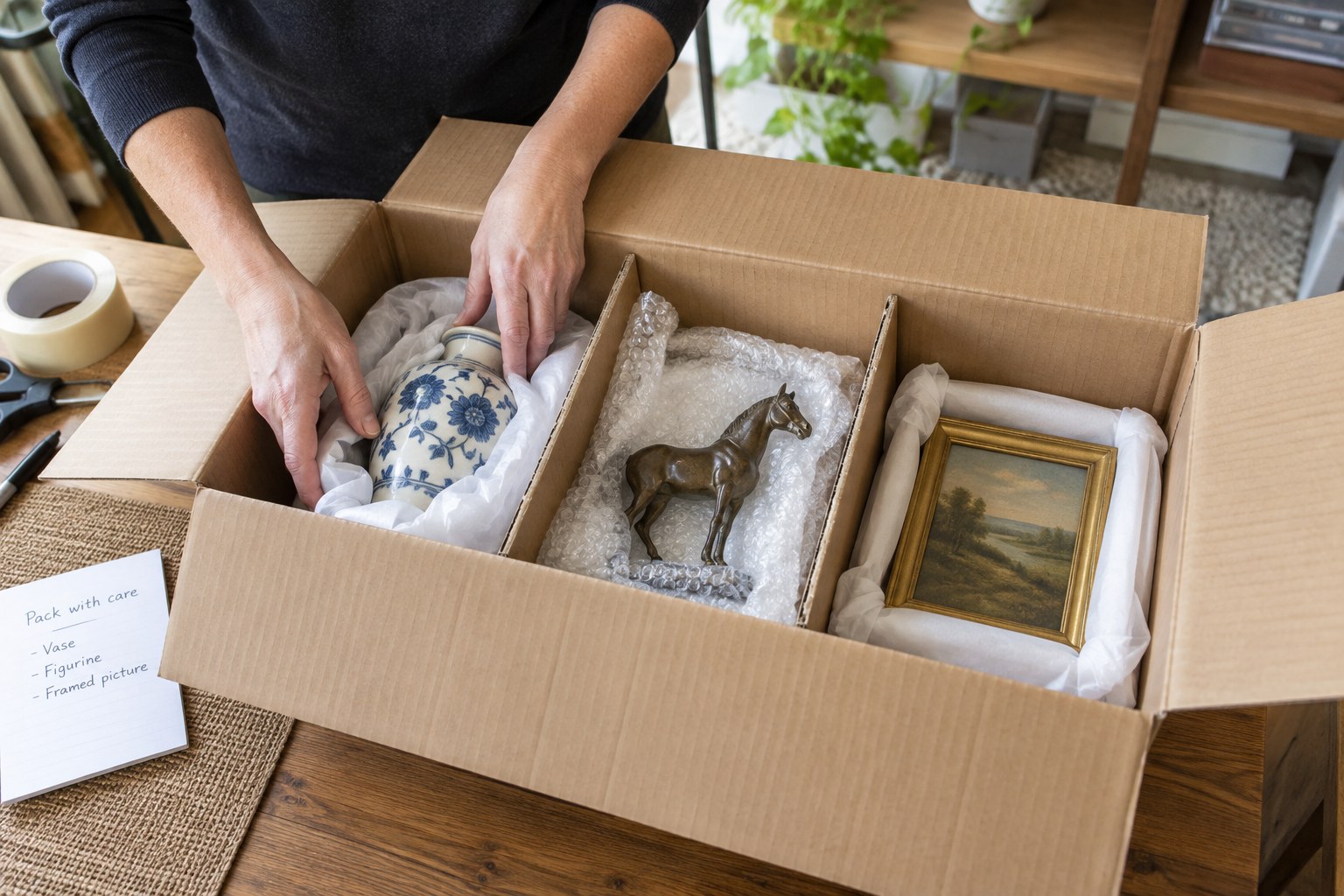
Make an item-by-item packing map
List every object and component before arranging the shipment. Use the same identifiers as the sale record, with a separate entry for detached accessories or documents. Photograph the group so you have a reference for what was intended to travel together. An accurate list is particularly useful when several similar cards, coins or miniature parts are involved.
Decide which objects need their own inner containers. A heavy metal model and a small paper collection should not rely on one shared layer of loose filling to keep them apart. Consider what could happen if the parcel were turned on its side: an arrangement that looks separated when upright may allow a dense object to load a fragile neighbour.
Try the empty containers inside the proposed outer box before packing the collectibles. Leave the space required for cushioning and separation. If the combination is awkward, two appropriate parcels may be preferable to one oversized or poorly balanced package. Compare actual packing requirements as well as the shipping quote.
Keep identity visible through the layers
Label each inner package with a neutral item identifier, not a claim about its value. Do not attach labels directly to collectible surfaces or original boxes. A separate packing list can explain that package A contains a model, package B its detached accessories and package C the accompanying paperwork.
Place documents in their own suitable protection so they do not become folded around a hard object. Keep original certificates connected to the correct piece in the list. If a document includes personal information unrelated to the sale, review what needs to be shared before making copies or including the original.
For many nearly identical small objects, count them into identified groups and check each group against the list. Do not rely on a photograph of a pile to establish an exact quantity. Record which inner package contains each group, making it easier for the recipient to report a discrepancy without opening everything again.
Review the complete parcel as a new object
Once the individual packages are arranged, assess total weight, balance and outer-box strength again. Appropriate protection around each item does not automatically make the combined parcel suitable. Read the selected carrier’s current instructions for the whole shipment, including any restrictions that apply to the particular contents.
Take a final photograph showing the inner package arrangement and packing list before closing. Keep a copy of the list outside the parcel with the transaction record. The receiver can then check the identifiers and quantities during unpacking instead of trying to reconstruct the intended grouping from discarded wrapping.
Explain any unusual opening sequence in the dispatch message. For example, tell the recipient that an accessory envelope sits below an inner tray, so it is not thrown away with the packing. The goal is not merely to get several objects into a box; it is to let each one arrive, be identified and be removed without damaging another.


