Preventing movement inside a parcel
Stopping a collectible from moving is not the same as squeezing it tightly. The packing needs to support the object without transferring pressure to its vulnerable parts.
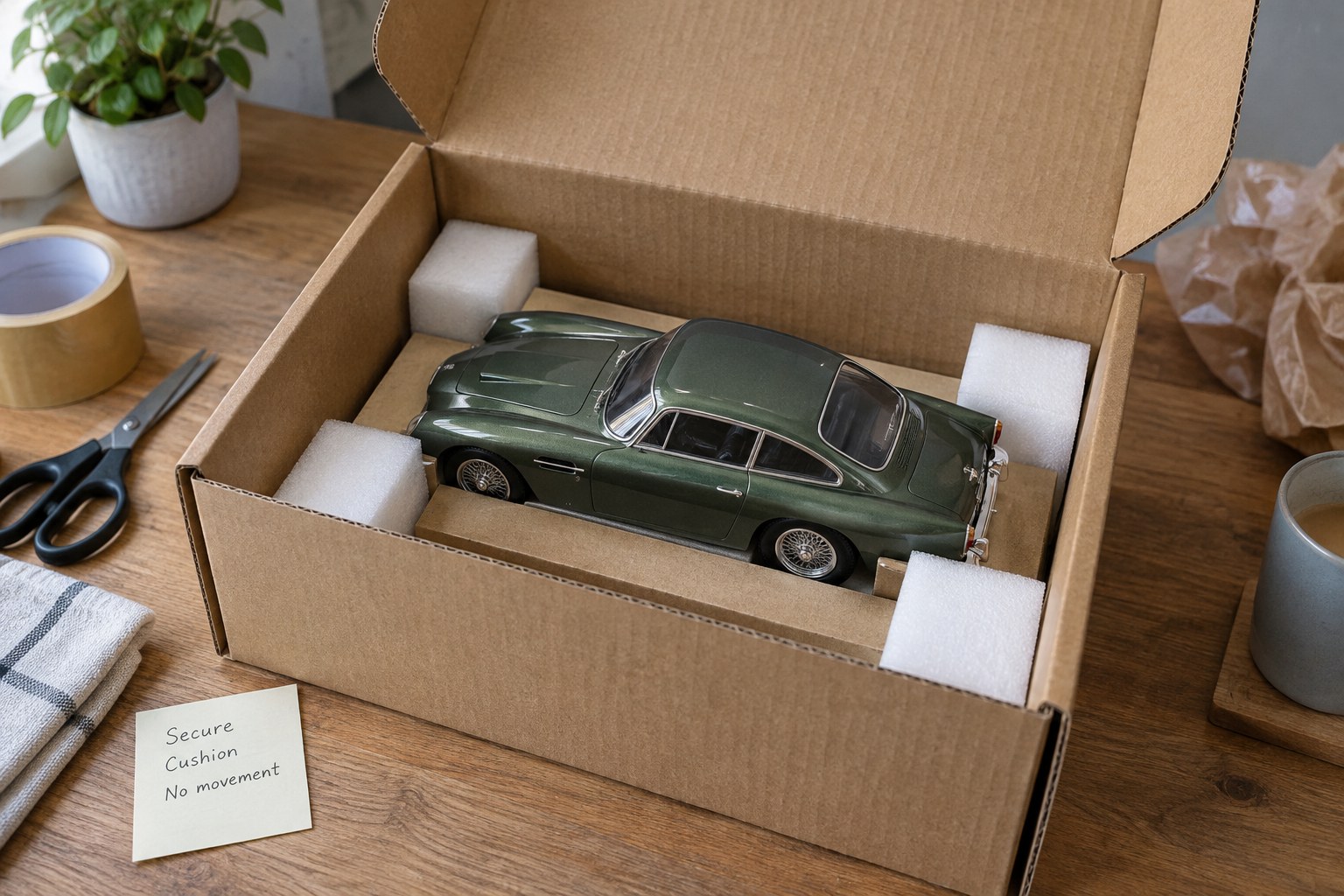
Look for two different kinds of movement
First consider movement of the object inside its immediate holder. A coin can slide inside an oversized capsule, a model can lift away from an unsecured base, and a card can migrate towards an open sleeve. Then consider movement of that holder inside the shipping box. Filling the outer box does not solve an object rattling inside its own enclosure.
Examine the object’s shape and existing supports before adding packing. Identify the parts that can safely bear support and the parts that must remain clear: mirrors, antennas, paper edges, hinges or decorative projections. If the existing presentation packaging was designed only for display, do not assume it is a complete shipping system.
Build the arrangement from the object outwards
Use a suitable immediate enclosure, then provide separation and cushioning around it. FedEx’s breakables guidance recommends individual protection and a box-in-box approach for fragile articles. Consult the instructions of the carrier and service you will actually use; they may specify cushioning, outer-box construction and acceptance limits that affect the whole arrangement.
Packing materials intended to absorb shocks are not automatically suitable for direct contact with a collectible’s finish. Keep the surface-contact layer appropriate to the object, and place general cushioning outside that layer. Do not put adhesive tape directly on the collectible, its original packaging or an enclosure that the recipient will have to cut close to a delicate edge.
A projecting component may need a clearance space rather than a tighter wrap. Filling every visible gap can create pressure exactly where it should be avoided. If you cannot identify a support arrangement that keeps force away from a fragile part, ask an experienced packer or relevant specialist before sending the object.
Check stability without performing a destructive test
Before sealing, inspect the arrangement from above and each accessible side. Look for empty channels where an enclosure could slide, unsupported corners and loose small parts. Gently change the box’s angle while supporting it close to the table; stop if something shifts or sounds loose. Do not shake a valuable object to prove that the packing works, and do not drop-test a parcel containing the collectible.
A trial using a non-collectible dummy of similar size and weight can reveal an obviously weak arrangement, but it cannot certify that a fragile original will survive transport. Think of the trial as a way to reject a poor design, not as proof of carrier compliance or insurance coverage.
Check the lid before applying tape. It should close as intended without being forced against the contents. Overfilling can distort the box and transfer pressure through the packing, while underfilling may leave the internal enclosure free to move. Change the arrangement rather than using the tape to pull an unsuitable box into shape.
Make unpacking part of the plan
The recipient should be able to discover where the object is without driving a blade towards it. Put an opening note or diagram above the protective layers if the arrangement is complicated. Mark separate small components on the packing list, and explain which supports are packaging rather than part of the collectible.
Take photographs at useful stages, including the protected object, the inner arrangement and the closed outer box. Keep these with the transaction record. They document what you prepared, but they do not guarantee how a carrier will decide a damage claim. Confirm any packing or declared-value requirements before buying the shipping label, while there is still time to change the method.


