Recording uncertainties before seeking a second opinion
A useful second opinion starts with a clear question. Separate the features you can observe from the conclusions you are considering before asking someone else to identify or assess an object.
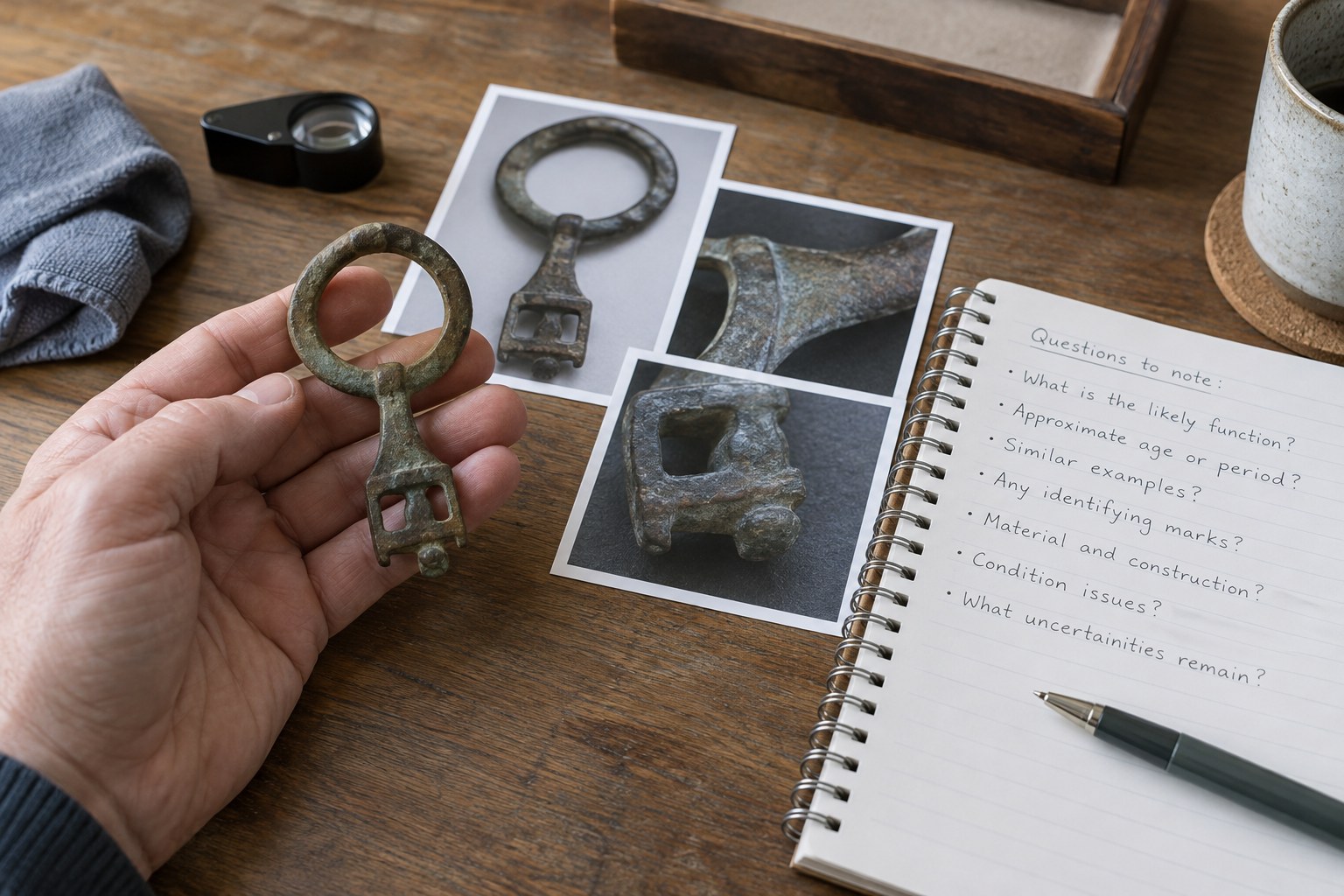
Describe the uncertainty in one sentence
Instead of asking whether an object is good, state what you need to establish. You might be unsure about a maker’s mark, whether an accessory belongs to the same release, or whether a visible line is a fold or a tear. Each question requires different evidence. A single broad request can produce a confident answer to a question you did not intend to ask.
Record why the uncertainty matters to your decision. If you are choosing a storage box, dimensions may be enough. If you are considering an expensive purchase based on a claimed attribution, a few online photographs may be inadequate. The question should determine the kind of help you seek, not merely the person who replies first.
Create a small evidence packet
Include an overall photograph and the relevant detail views, keeping the object’s identifier consistent across them. Add dimensions with units and describe how they were measured. If a mark is difficult to read, supply a clear image and your tentative transcription separately. Do not present your reading as though it were already confirmed.
Add the source of earlier claims: the listing, a label, a previous owner’s message or a reference you consulted. Preserve the original wording where needed, but share only the material you have permission to share and avoid unrelated personal information. Explain whether the respondent will see the object itself or only photographs.
Leave room for more than one explanation
List plausible alternatives without turning them into accusations. A replacement component, a later edition and a mistaken listing description are different possibilities. Ask what observation would distinguish them. This invites a useful explanation rather than a simple vote for one conclusion.
Avoid changing the object to make the question easier to answer. Cleaning, opening a sealed holder, removing a label or forcing a mechanism can destroy information or change condition. If a specialist needs additional access, ask what can be done safely and who should do it.
Record the answer with its limits
Keep the response, date, respondent’s stated basis and any qualifications. An informal comment from photographs is not the same as an examination report. If the answer is uncertain, preserve that uncertainty in your inventory instead of retaining only the most reassuring sentence.
When opinions differ, compare the evidence and scope rather than counting how many people support each view. One person may have examined a mark that another never saw. Ask for clarification of the difference, and consider whether an in-person specialist assessment is needed before acting.
If the available evidence still does not resolve the issue, you can postpone the purchase, describe the object more cautiously or keep it outside the collection’s confirmed categories. A second opinion is useful when it improves the decision, including a decision to wait; it does not have to produce a definitive label.


