Working out total cost before buying
The price beside a collectible is only one part of the purchase. Build a total from confirmed charges and clearly marked estimates before deciding whether the object fits your budget.
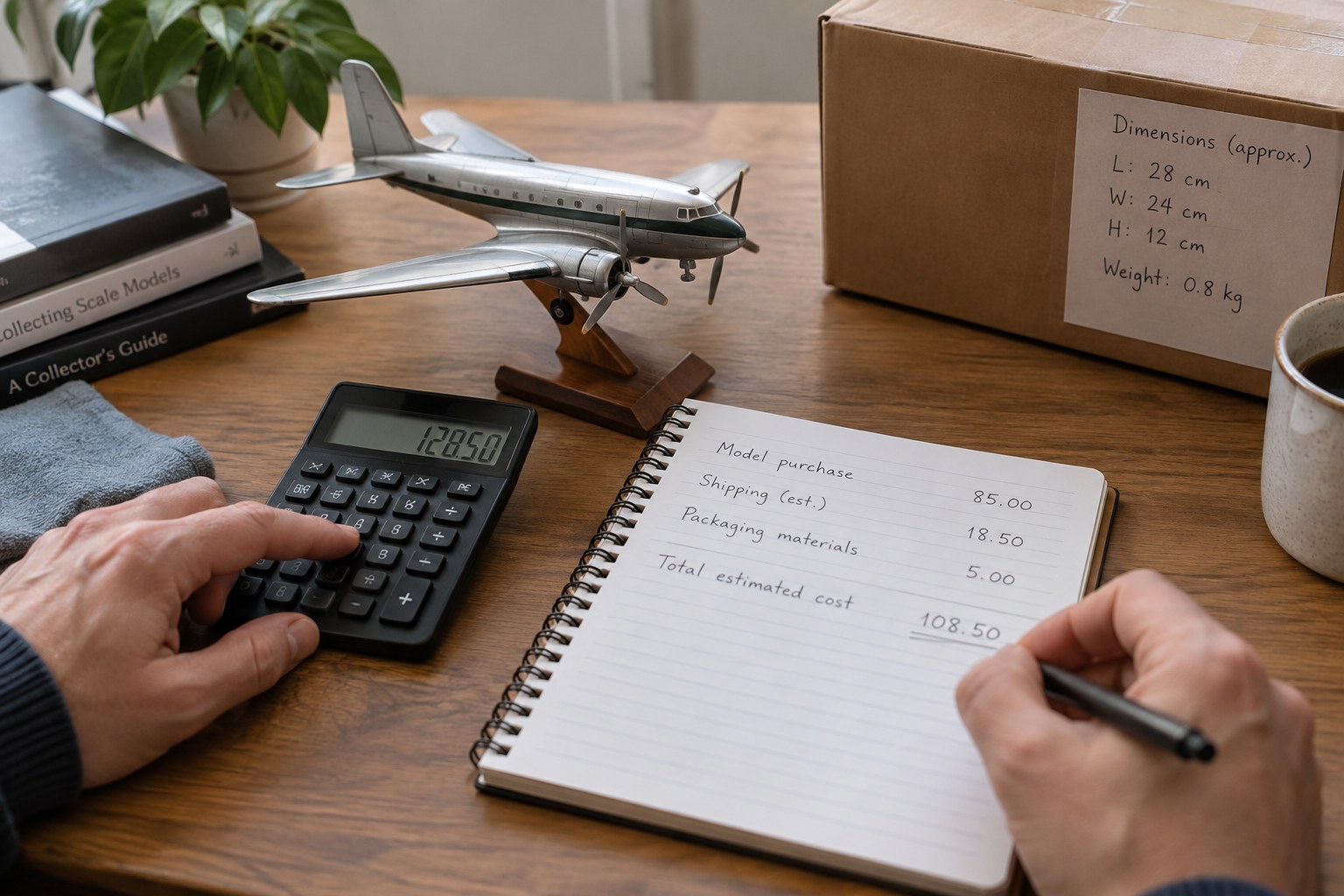
List the charges you can confirm
Record the item price, currency and quantity, then add the seller's quoted delivery cost for your actual destination. Check whether the quote applies to the particular object or to a generic parcel. Large packaging, combined orders and special handling can change the amount. Keep the quote with its date rather than relying on an earlier purchase from the same seller.
Read the transaction's displayed charges and terms. If a platform or auction includes a buyer charge, record how it is calculated and whether the displayed total already includes it. Do not add it twice. For cross-border purchases, consult the relevant official customs information or checkout calculation for your circumstances; do not assume one country's charges apply everywhere.
Separate required preparation from optional extras
Consider whether the object needs a suitable enclosure, a display support or a separate storage box as soon as it arrives. These are practical costs if you currently have nowhere appropriate to put it. A decorative upgrade or an additional accessory you merely want belongs in a different column so it does not blur the essential budget.
Do not assign a confident repair cost to an unexamined defect. If the purchase only makes sense after a repair, obtain a competent assessment or treat the cost as unresolved. The same applies to replacement parts whose availability has not been confirmed. A cheap incomplete object can be a poor fit when your plan depends on an imaginary inexpensive fix.
Work with known totals and uncertainty
For a simple hypothetical purchase, an item at 40 units of currency, confirmed delivery of 8 and a required enclosure costing 6 creates a known subtotal of 54. Any unresolved charge should remain separate. This makes it clear why the visible item price is not the amount you need to allocate, without pretending to know every possible expense.
If payment involves currency conversion, check the provider's actual rate and charges at the time of purchase. Keep the original currency in your notes. An approximate conversion used while browsing may differ from the amount eventually charged, so leave room in the budget rather than treating the search-engine conversion as a payment quote.
Set a decision limit before committing
Choose the maximum total you are comfortable spending on this particular addition. Compare the confirmed subtotal and unresolved costs with that limit. If a missing figure could change the decision, ask for it before agreeing. Do not justify an over-budget purchase by assigning unsupported future resale value to duplicates or spare parts.
After payment, record the actual total and compare it with your estimate. The difference can improve future planning, but it does not mean you need to buy more to spread the cost. A complete cost record helps you understand what the collection requires without turning collecting into a promise of financial return.


