Choosing dividers without squeezing objects
Dividers should make groups easier to retrieve without transferring pressure to the objects. Choose their fit around the filled enclosures and the way the container is used.
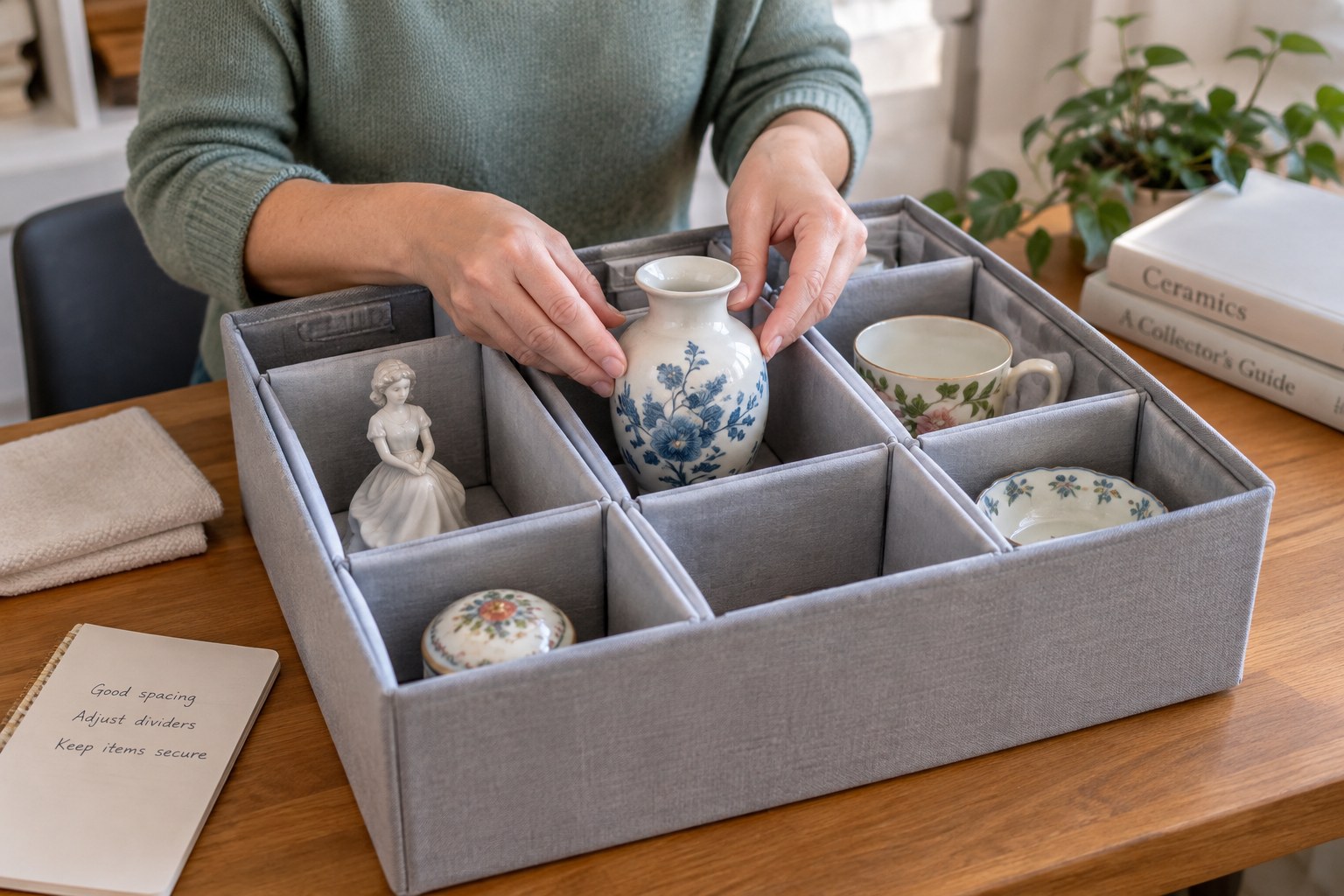
Identify what the divider must do
A divider may label a sequence, prevent a group from leaning or keep different formats apart. Those are different jobs. A thin index card can label a section without providing structural support. Decide which function you need before choosing thickness or material. Do not expect a decorative tab to stabilise a heavy group of objects.
Measure the container’s usable interior and the filled enclosures. Include lids, seams and any rail or lip that reduces space. A divider that fits an empty box may become difficult to insert after folders are added. Use a harmless substitute to test dimensions before introducing the collection.
Leave room for access
Arrange groups so one enclosure can be removed without dragging its neighbours or compressing an edge. Avoid inserting a divider by forcing it into the last remaining gap. If the contents only fit when squeezed, use another container or reduce the load. A tidy vertical row is not worth repeated pressure on fragile paper or projecting parts.
Check whether tabs catch the lid and whether the divider moves when the box is carried. Labels should remain visible from the normal access position. For objects needing individual supports, choose a system designed for their form instead of treating a generic divider as a cradle. Ask an appropriate supplier or conservator when the material or support requirements are uncertain.
Keep grouping flexible and documented
Use stable location codes for the box and clear names for its sections. Update the index when a divider moves or a group expands. Leave deliberate capacity for additions only where the remaining objects are still properly supported. Empty space should not allow the collection to slide freely during ordinary handling.
After a trial period, retrieve examples from the first, middle and last sections. Look for bent labels, caught corners or a divider pressing into the contents. Correct the arrangement before expanding the same system elsewhere. The divider’s success is measured by controlled access and clear organisation, not by how closely the box appears packed in a photograph.
Write section labels before placing the dividers beside the collection. If the order may change, use a replaceable label on the housing rather than a permanent heading that embeds an uncertain identification. Keep the former section name in the index when it helps explain earlier photographs.


