Creating a personal loan record
A personal loan record connects an object with the person holding it, the agreed purpose and its expected return. It should be understandable after the conversation has been forgotten.
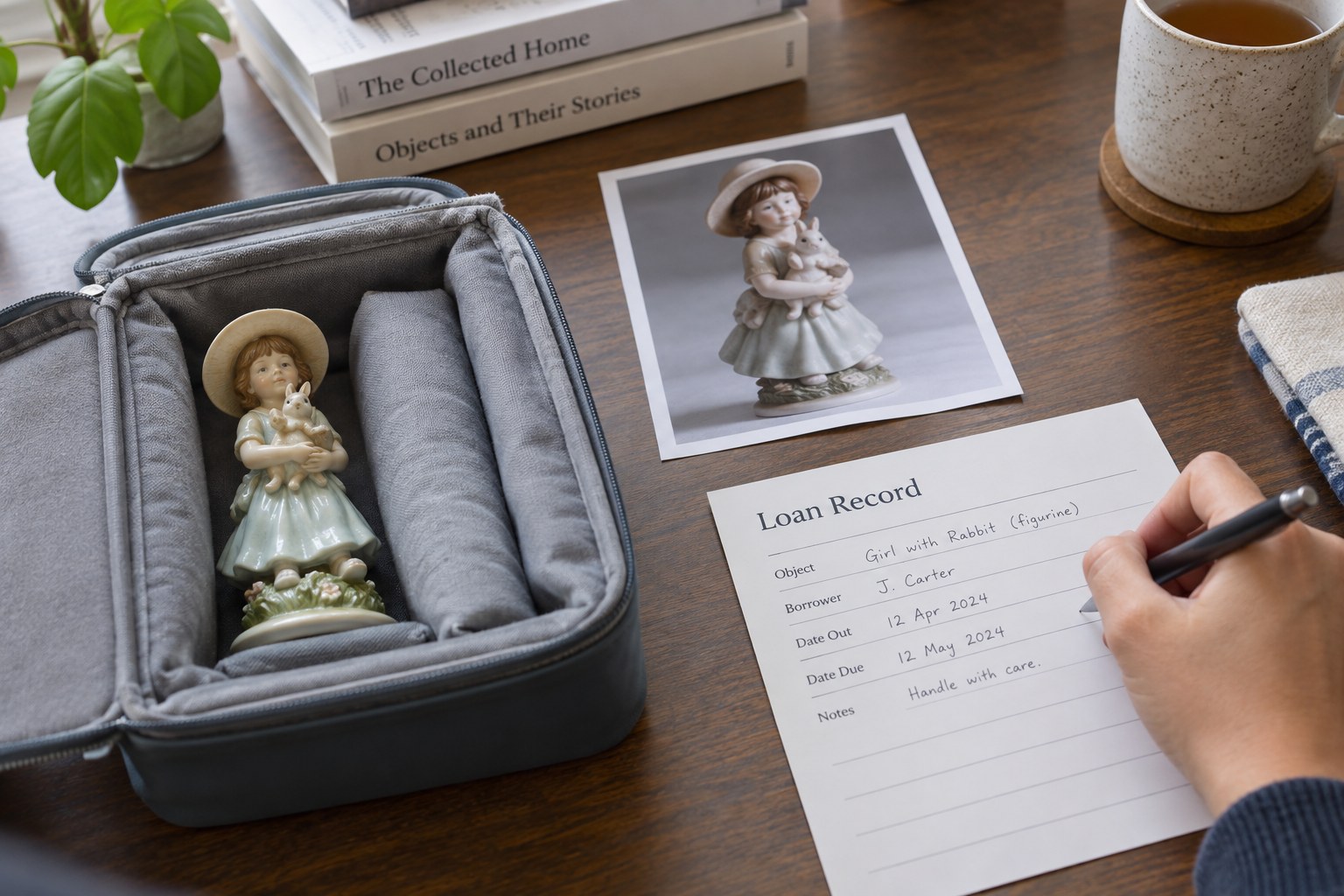
Identify the object and everything travelling with it
Use the collection’s existing identifier, a plain description and current photographs. List accessories, original packaging and documents separately. If a group is being lent, attach a contents list with a checked quantity rather than describing it as a box of collectibles. Both people should be able to recognise what is included without relying on memory.
Record visible condition before the handover, noting the location of marks, loose components or missing parts. Photographs should show the whole object as well as relevant details. Date the record and let both people review it. The purpose is to establish a shared starting point, not to produce an unqualified claim that the object is perfect.
Write down the practical arrangement
State who is lending and receiving the object, how they can contact each other, the purpose of the loan and the expected return date. Explain where the object will be kept and whether it may be displayed, photographed, transported or passed to another person. If something has not been agreed, leave it as an unresolved question rather than assuming permission.
Discuss the handover and return arrangements, including packing and who will organise transport. If the object requires special support or environmental conditions, provide the relevant information and confirm that the recipient can follow it. A record is not a substitute for suitable storage or handling capacity.
For valuable, fragile or institutionally borrowed material, a simple personal note may be inadequate. Obtain appropriate professional advice about the agreement and any coverage required. Do not assume that a written inventory automatically creates insurance or resolves responsibility for every possible event.
Keep the record active until return
Mark the object as on loan in the inventory so it is not mistaken for a missing item or included in a sale. Store private contact details separately from a publicly shared catalogue. Keep a copy of the agreed record with both parties and document any extension or change in destination.
When the object returns, compare it with the initial list and photographs before closing the loan. Record the return date and any observation that needs discussion. Check accessories and documents as well as the main object. Update the storage location and retain the closed loan record with the collection history, rather than deleting it because the object is back on the shelf.


