Inspecting small parts on a model car
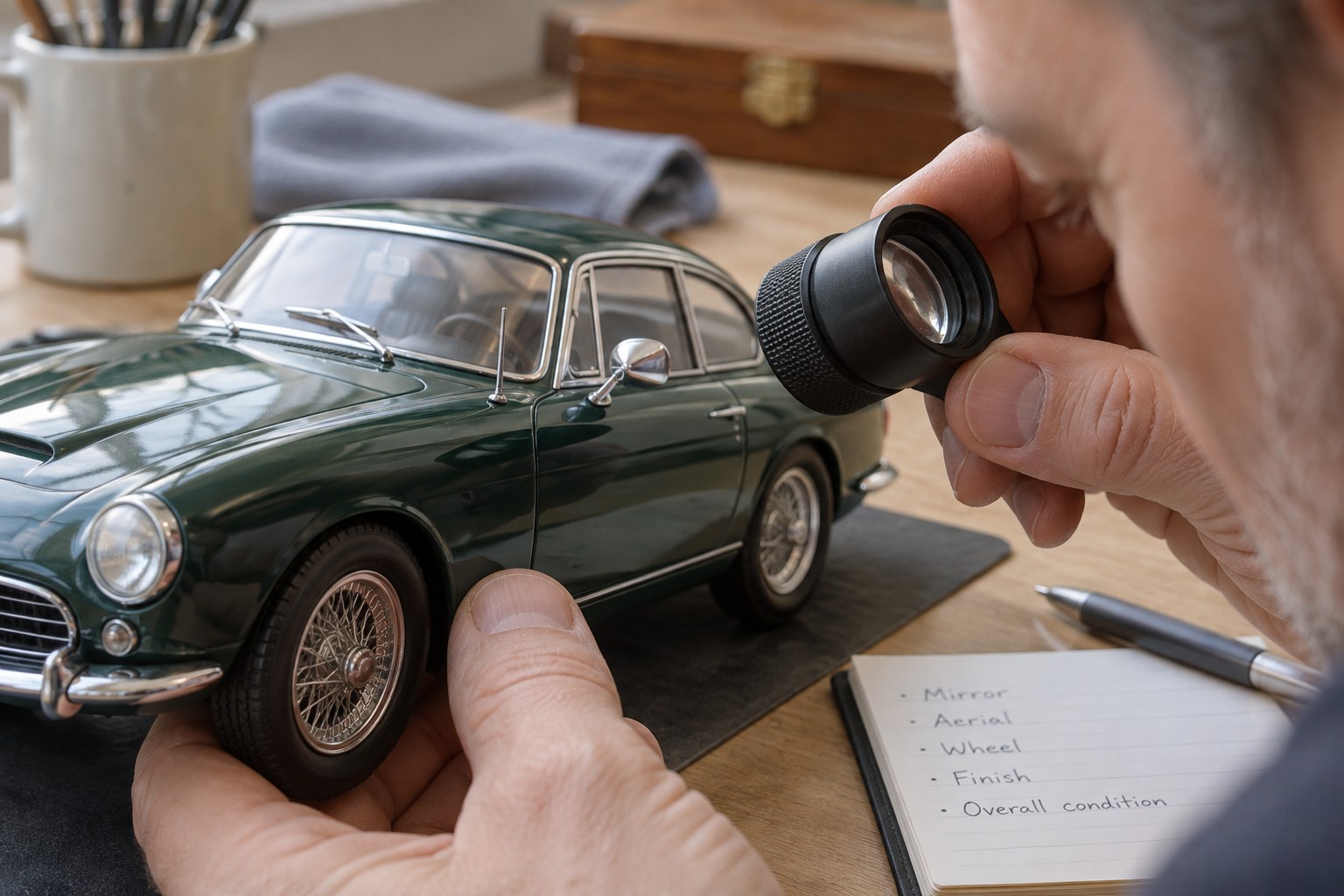
Mirrors, aerials and other small fittings deserve their own inspection. A model can look complete in a front photograph while important details remain hidden.
Prepare an expected-parts list
Find a reference for the exact model and version, preferably the maker's documentation or catalogue. Note the small fittings shown, but remember that publicity images may depict a different release or a pre-production example. Use the reference to frame questions, not to declare a fault before confirming what the offered version should include.
Divide the inspection by area: front, rear, left side, right side, roof and underside where it can be viewed safely. List mirrors, lights, aerials, bumpers and any detachable accessories relevant to that model. A structured list helps you notice an absent part without relying on a general impression of completeness.
Request views that answer the questions
Ask for photographs of the actual copy from both sides and above. A low front angle may conceal a missing mirror behind the body, while a bright reflection can hide the edge of a clear lamp. Specify the area you need to see and request one focused detail rather than asking vaguely for more pictures.
Look for asymmetry, visible gaps, different colours or glue-like residue, but describe them as observations. They may raise questions about replacement or repair without establishing the answer. Ask whether any parts have been reattached, replaced or supplied loose. A seller who does not know the history should be allowed to say so; unknown history is not the same as confirmed original condition.
Inspect without testing to failure
When handling the model yourself, support the body or its intended base and keep fingers away from projecting fittings. Do not tug a mirror or flex an aerial to find out whether it is secure. If a part looks loose, document its position and stop moving the model unnecessarily. Functional doors or bonnets should only be operated according to the model's instructions and apparent condition.
Record loose accessories separately with their storage location. If a part is missing, decide whether you can accept the model as it stands before imagining an easy replacement. A similar-looking spare may differ in attachment or finish, and replacement availability should be verified rather than assumed. Keep photographs with the inventory so future changes can be compared with the condition in which you acquired it.