Keeping purchase and provenance records
A purchase record explains a transaction; provenance describes an object’s documented history. Keep both, while distinguishing evidence from statements that have not been verified.
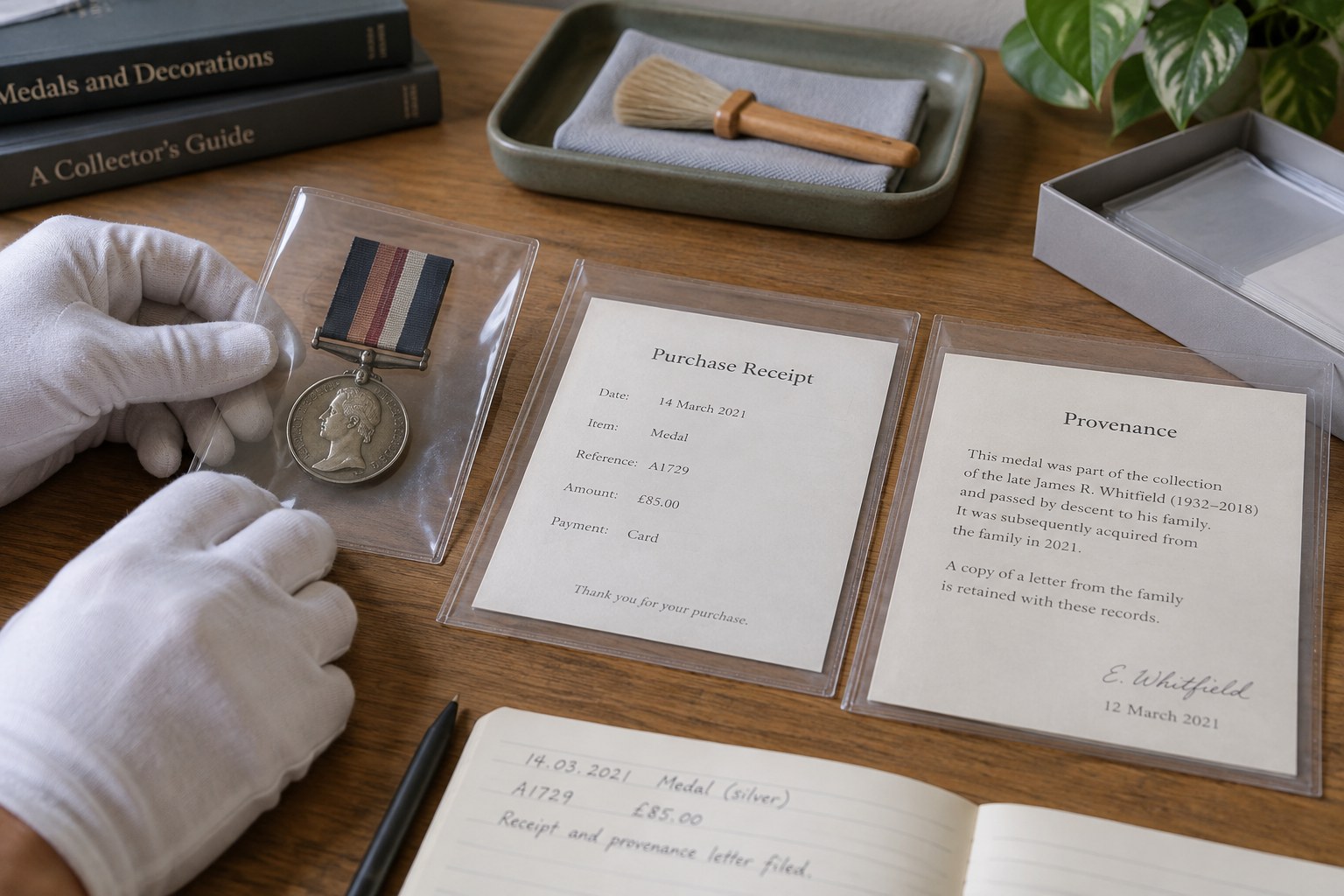
Capture the transaction as it happened
Save the actual listing, receipt and relevant correspondence when you acquire an object. Record the date, seller reference, amount and currency separately from the item description. Keep delivery and other charges distinct if you want to understand the total acquisition cost. Do not overwrite that historical cost with a later estimate or asking price.
Give the object a stable inventory ID and use it to connect files. If one receipt covers several items, retain the full receipt and identify which lines or group relate to each record. Avoid splitting a document in a way that loses its date or issuer. A reference copy can be cropped for convenience while the complete original file remains available.
Attribute earlier history
A seller may describe a former owner, place of discovery or earlier collection. Record that statement with its source and date. Distinguish a supported document from an oral account or listing claim. The phrase seller stated preserves useful information without turning it into an independently established fact.
When earlier labels or envelopes accompany the object, photograph them and retain their relationship. Copy wording before interpreting abbreviations. An old price, name or number may have several meanings. Do not assume a collector’s name on an envelope proves that the object belonged to that person without additional evidence.
Keep uncertainty and corrections
Create a research note for gaps in the chain of ownership or disagreements between records. Missing history does not need to be filled with a plausible story. If a later document resolves part of the history, add it with the date of discovery and explain what changed. Preserve earlier descriptions where they explain previous listings or labels.
Provenance documentation does not automatically authenticate an object. A genuine receipt can describe an incorrectly attributed item, and an attractive certificate may have limited scope. Record what each document establishes and what it does not. This keeps the archive useful for a specialist rather than presenting a conclusion assembled from unrelated assurances.
Prepare separate sharing copies
Your private records may contain personal addresses, payment references and storage details. Create a redacted copy when sharing only part of the history, and retain the original securely. Check the exported file to ensure excluded information is actually removed, not merely hidden by a display setting. Tell the recipient when a document is an excerpt or redacted copy.
When the object leaves the collection, list which original documents accompany it and keep copies of the outgoing set. Update its status rather than deleting its history. That record can explain an old photograph, resolve a later question and prevent paperwork from being mistakenly attached to another similar object.


