Making readable box labels
A box label should help you retrieve the right container without opening several others. Design it for the shelf where it will be read, not just for a neat photograph.
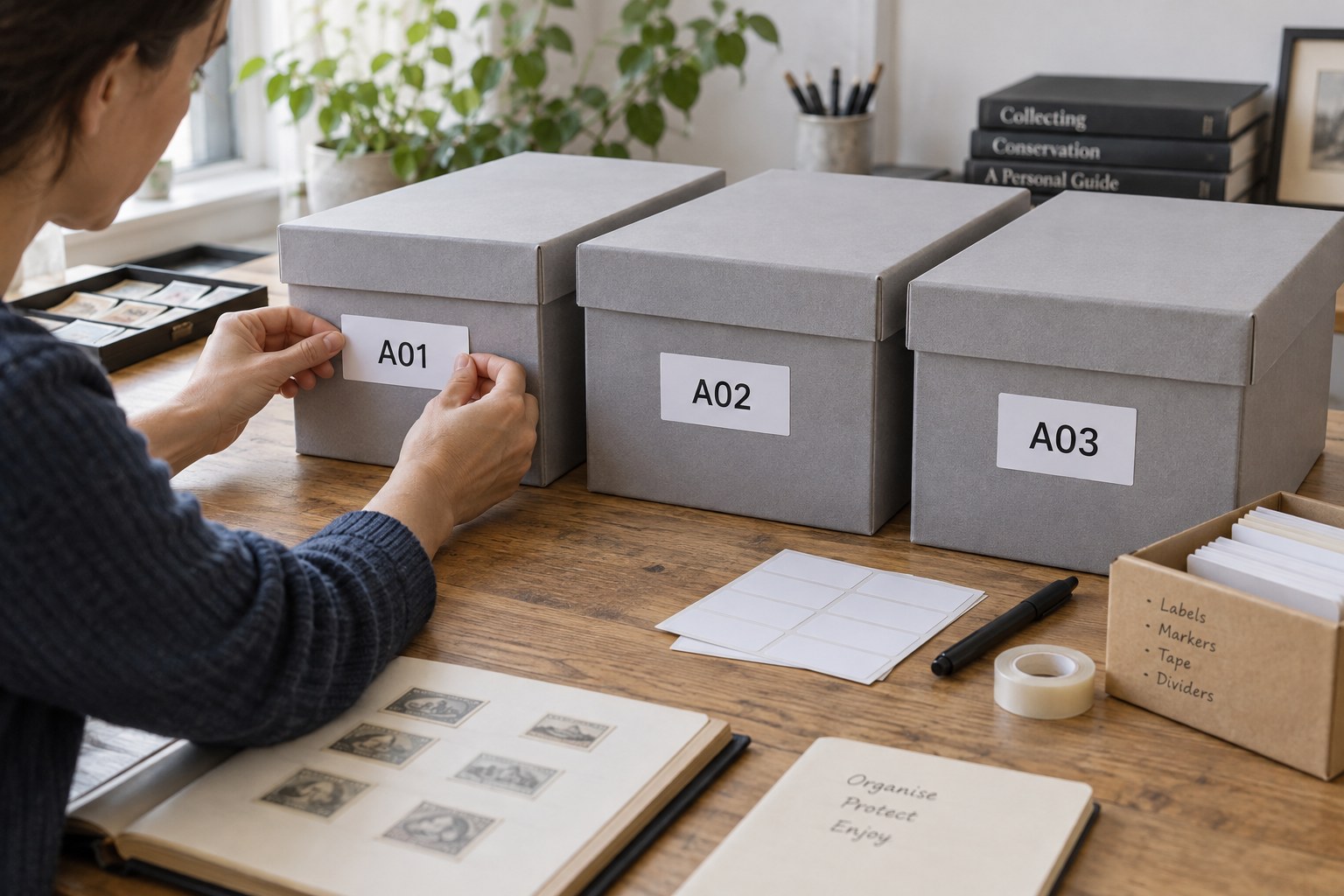
Put the stable identifier first
Give the container a short code and make that the largest element on the label. The code should link to the inventory, where the detailed contents can change without requiring a long new label. Add a brief subject description if it helps distinguish similar containers, but do not try to print every object’s full record on the outside.
Choose characters that remain distinct at the distance you will read them. A handwritten zero can resemble a letter O; a narrow typeface may make I and 1 difficult to distinguish. Test a sample on the actual shelf, under the lighting normally used there. If you have to lift the box to read it, improve the size, contrast or position.
Use the same naming convention in the inventory. A label reading Paper 3 and a location field reading Documents cabinet lower right may both be understandable today, but the relationship becomes fragile after a move. Let the box code identify the container and use a separate field for its current shelf location.
Make retrieval and updates straightforward
Place the label on the face visible when the container is stored. If boxes may be stacked or rotated, consider a second label on another face, keeping both identical. Do not cover a manufacturer’s load or material information that you may need later. Attach the label to the container, not to a collectible or an original presentation box without first considering whether that would alter it.
Leave room for a concise handling note where genuinely needed, such as an orientation instruction. Avoid filling the outside with warnings that do not apply to the contents. Too many competing messages can make the useful identifier harder to find.
When contents move, update the inventory at the same time. A container may retain its stable code while its subject description changes. Remove or clearly replace obsolete labels rather than leaving several contradictory versions on different sides. Photograph the revised shelf arrangement if that helps other people find the correct box.
Keep one spare label or a saved label file for each format you use. If a label becomes damaged, you can reproduce it consistently instead of inventing a new code. The label is an access point to the collection’s records; its success is measured by whether someone can find and return the right container without guessing.


