Organising a collection shared by several people
A shared collection needs shared conventions, but not everyone needs permission to change every field. Agree how objects and records will be handled before the first disagreement appears.
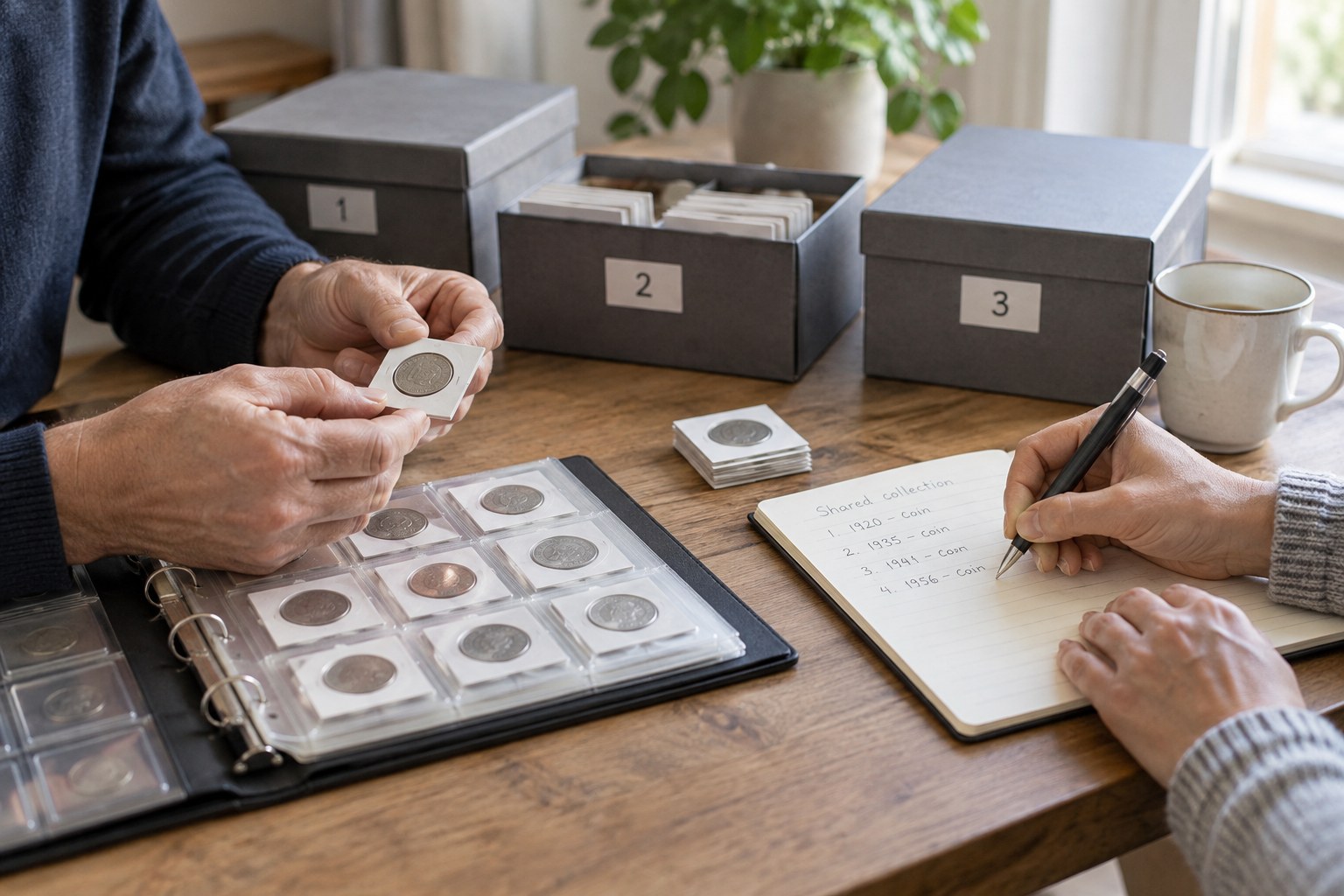
Clarify which objects are actually shared
Distinguish jointly held objects from individual possessions stored in the same place. Record the relevant ownership or custody information in an appropriately private field. A shared shelf does not by itself establish shared ownership. If the arrangement is uncertain, resolve that question before making plans to lend or sell the object.
Choose a common identifier system and keep a list of numbers already allocated. Let one person allocate new numbers or use a controlled intake process that prevents duplicate codes. The descriptive record can include contributions from several people without allowing two different objects to acquire the same identity.
Agree a small set of writing conventions
Decide how to record dates, measurements, currency and uncertain identifications. Use the same location vocabulary so drawer two does not mean different places to different contributors. A short example record is often easier to follow than a long set of abstract instructions.
Separate direct observations from supplied information. If one person identifies a mark and another disagrees, retain both readings with their sources until the issue is resolved. Do not overwrite a qualified note with a confident assertion merely to make the spreadsheet look consistent. Consistency in format should not erase uncertainty in the evidence.
Assign practical roles where useful: intake photographs, storage locations, purchase documents or backup checks. These roles need not confer authority over ownership decisions. Make clear which changes someone can make routinely and which require discussion with the others.
Prevent simultaneous edits from losing information
Choose a working method that everyone can use reliably. If the software supports shared editing and version history, understand how those features work. If it does not, agree who holds the current working copy and how proposed changes will be submitted. Multiple files named latest on different devices are a warning that the arrangement is unclear.
Date significant updates and retain a recoverable earlier version. Before a large reorganisation, save a separate copy and explain the intended change. Test that photographs and document links still work for the other contributors rather than only on the computer where they were created.
Make departures and handovers explicit
Record who can approve loans, sales or gifts and how agreement is documented. Mark reserved or lent objects promptly so another person does not move or offer them. Keep private addresses and payment details out of a broadly shared descriptive catalogue unless access is genuinely needed.
Plan for a contributor leaving the project or becoming unavailable. Keep an explanation of the folder structure, numbering and backup location with the collection records. A shared collection remains manageable when its organisation does not depend on one person remembering where everything is or which file contains the current information.


