Planning an annual storage review
An annual review is a chance to compare the collection with its own records. Keep it focused enough to finish, while giving unusual changes their own follow-up.
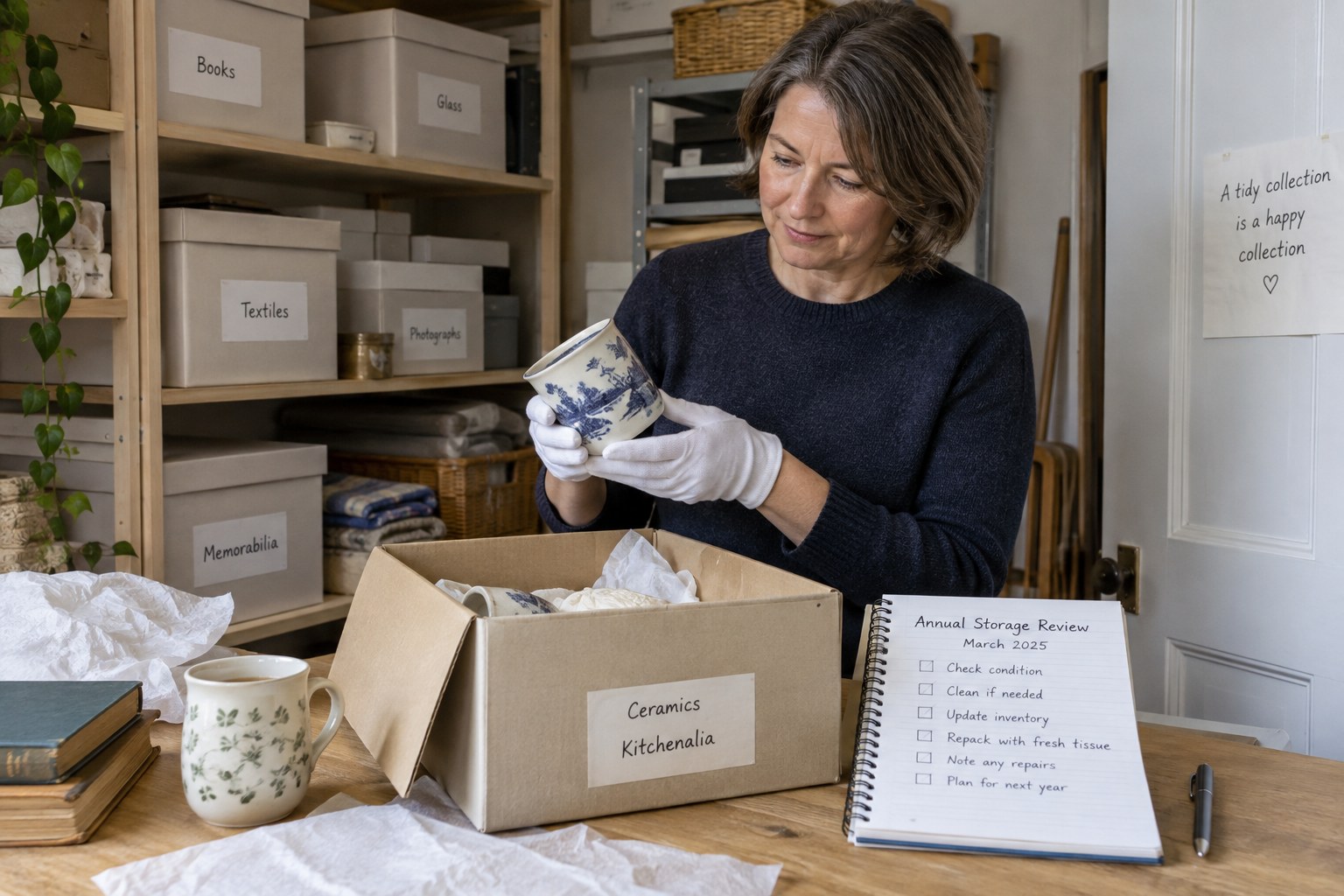
Choose the scope before opening boxes
Use the inventory to list storage groups, containers and any previous concerns. Decide whether the session covers every object or a defined sample plus all flagged items. Record that scope honestly. A review of box exteriors is not the same as examining every enclosed collectible, and the report should not imply otherwise.
Prepare the work area, camera and location list before moving anything. Start with one group and return it before opening another if space is limited. Keep a separate action list so a small labelling task does not interrupt the whole review. The aim is to collect reliable observations, not to begin several repairs at once.
Compare condition and access
Look for changes in enclosures, supports and the objects that can be viewed safely. Compare dated photographs where available. Record a newly noticed feature without assuming it appeared during the last year. Note the difference between a confirmed change and something that was simply not documented before.
Check retrieval as well as appearance. Are boxes too heavy, labels obscured or pages crowded after recent additions? Does a case still open without touching neighbouring objects? These routine access problems can be addressed through layout decisions even when no deterioration is visible. Avoid making a storage system harder to use simply to keep an old arrangement unchanged.
Turn observations into assigned actions
Give each action an object or location reference, a reason and a next step. Distinguish replacing a damaged outer label from seeking conservation advice about a changing surface. Do not describe every issue as urgent, but do not bury a significant concern in a general note that says storage checked. Set a date to revisit unresolved questions.
If several people share the collection, name who will obtain advice, update records or order suitable supplies. Keep purchases linked to the actual problem they address. A review should not automatically become a shopping list of generic storage products. Some improvements may involve moving a box, reducing crowding or making a clearer index.
Close the review with a usable record
Update locations, save photographs and back up the revised inventory. Record the date, scope and anything that could not be examined. Keep the action list visible until its items are resolved. At the next review, start with those outcomes and compare whether the changes helped. This makes the annual exercise a continuing record rather than a repeated declaration that everything looked acceptable.


