Preparing a collection for a house move
Moving a collection is a sequence of handovers and location changes. Plan those transitions before packing so each object can be identified without opening every box.
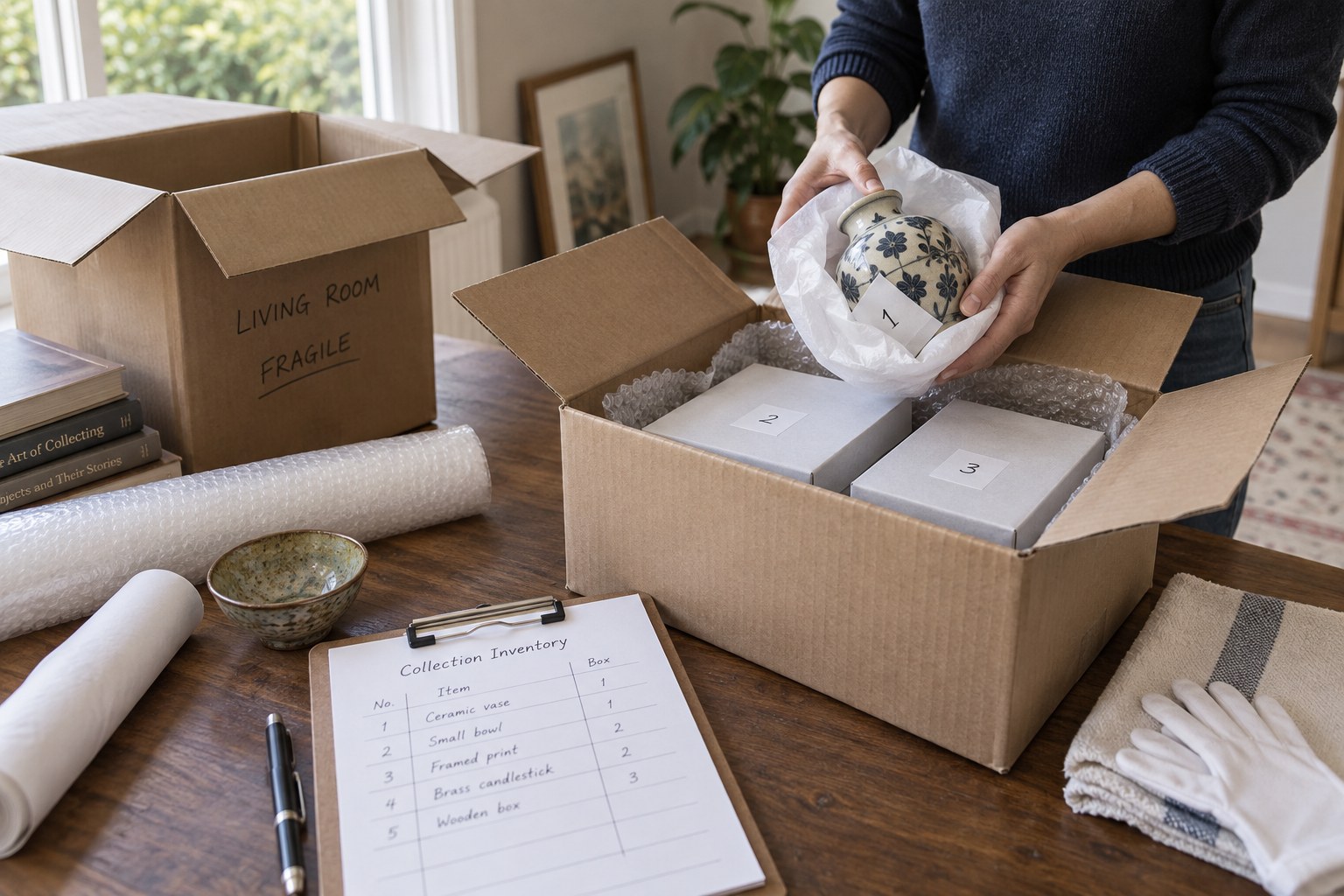
Reduce uncertainty before moving day
Review the inventory and identify objects that need specialist packing or handling. Note fragile projections, loose components, large formats and objects whose condition makes ordinary movement unsuitable. Ask for advice early rather than discovering a problem when transport is waiting. Keep the relevant instructions with the move plan.
Measure the route out of the current room and into the destination, including doors, stairs and the available setting-down spaces. A case that fits its present shelf may not pass easily through a narrow turn. Arrange help for objects that require more than one person and make the responsibilities clear before lifting begins.
Create a packing record
Assign a number to each transport container and list its contents by inventory ID. Record whether the original enclosure travels inside and which documents or accessories accompany the object. Photograph the condition and arrangement before packing. Keep the container list accessible separately from the boxes, with a backup that will not travel only in the same vehicle.
Do not describe contents solely as miscellaneous collection. A useful list identifies the group and any special opening instructions without advertising unnecessary value information on the exterior. Put readable handling and orientation information where the person carrying the box can see it. Check that labels remain attached through the intended route.
Choose packing around the object
Use materials and supports appropriate to the object and the journey, obtaining professional guidance for fragile or unusual pieces. A display case is not automatically a transport case. Loose doors, removable covers and projecting fittings need consideration before the assembly moves. Avoid letting packing material press against a delicate surface or force an object into a new shape.
Keep small components in identified protective arrangements associated with the parent object. Do not detach parts simply because doing so seems to save space; establish whether removal is intended and safe. Retain original packaging when relevant, but assess its current condition rather than assuming an old box still provides adequate support.
Prepare the receiving space
Have a clean, stable area ready at the destination before boxes arrive. Keep the collection separate from renovation dust and the busiest household unpacking activity. Confirm that shelving or cabinets are assembled and suitable before loading them. If permanent storage is not ready, plan an organised temporary location rather than scattering boxes through several rooms.
Agree who checks the arriving containers against the list and records damage or discrepancies. Keep packing materials until contents have been checked and small parts accounted for. Unpack in manageable groups with enough space to support objects safely. A rushed complete unpack is not necessarily better than a controlled staged one.
Close the move in the inventory
Compare objects with their pre-move photographs where a concern appears. Record newly noticed features without immediately assigning a cause. Update each final location and keep the transport-container record as part of the history. Note any object still awaiting inspection or specialist help. The move is complete when the collection can be found and understood in its new arrangement, not merely when the last box enters the building.


