Preparing information for a conservator
A conservator can respond more usefully when the enquiry explains the object, the observed problem and the decision you are trying to make. Prepare information before attempting a treatment.
Describe what you can see now
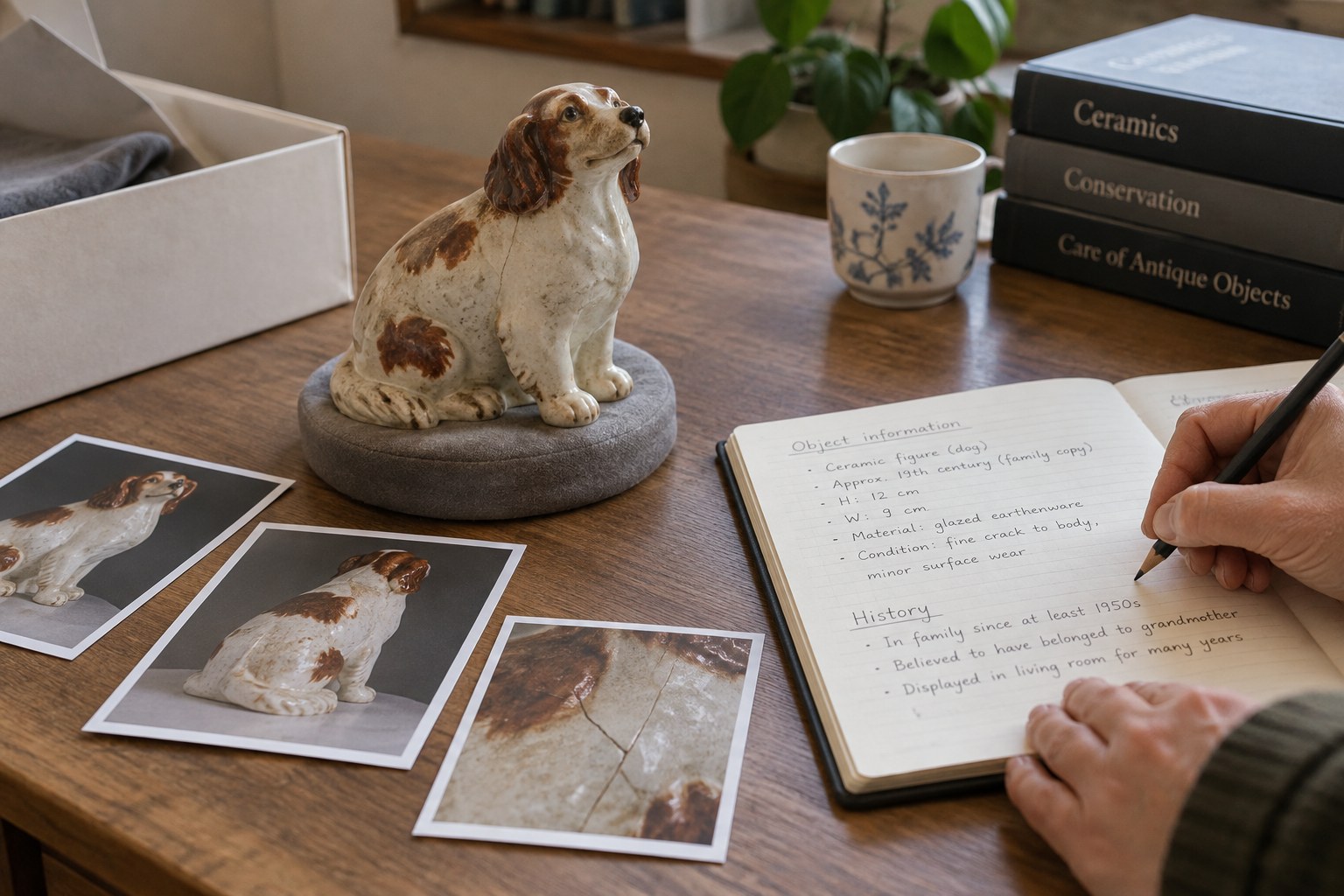
Give the object a reference number and take overall photographs with enough light to show its form. Add detail views of the concern, keeping the camera position understandable. A close-up of a crack is more useful when another photograph shows where it lies on the object. Include dimensions and explain whether any parts are loose or inaccessible.
Use descriptive language rather than diagnosing the cause. Record a powdery deposit, a lifting edge or a change in colour, along with when you first noticed it. If you do not know whether the feature is new, say so. A dated earlier photograph may provide a comparison, but differences in lighting should not automatically be treated as physical change.
Gather the known history
List materials as known or suspected, and identify the source of that information. A maker’s description, a previous owner’s account and your own visual impression carry different levels of certainty. Include any treatment, cleaning or repair history you actually know. The conservator needs this information even if an earlier intervention now seems unwise.
Describe the storage and display conditions in ordinary, concrete terms. Mention the type of enclosure, proximity to a window, recent movement or a water incident if relevant. If you have environmental readings, supply the dates and instrument information. Do not invent a precise temperature or humidity history from a general impression that the room felt dry.
Explain the intended use and constraints
Say whether your aim is safer storage, improved handling, investigation of a change or preparation for a display. These aims can lead to different questions and options. If a deadline matters, state it at the beginning rather than assuming the object can be treated before an event.
Ask what information is needed for an initial assessment and whether an in-person examination is required. Do not send the object without an agreed arrangement. A photographic enquiry may establish next steps, but it is not necessarily enough to determine the full condition, treatment method or cost.
Keep the object and the enquiry stable
Until you have appropriate advice, avoid cleaning, gluing, flattening or dismantling the object to make the problem easier to photograph. Keep loose components identified and supported without forcing them back into place. If you cannot move the object safely, describe that limitation and ask how to proceed.
Save the submitted photographs and description, then add the response and any agreed next steps. Record what remains uncertain. If treatment later occurs, request the documentation offered as part of that work and link it to the object’s record. The enquiry becomes part of its history, helping a future owner distinguish an old observation from a later intervention.


