Separating an object showing deterioration
A changing object needs a clear record and an informed next step. Separating it from a group should not become an improvised treatment or create a new handling problem.
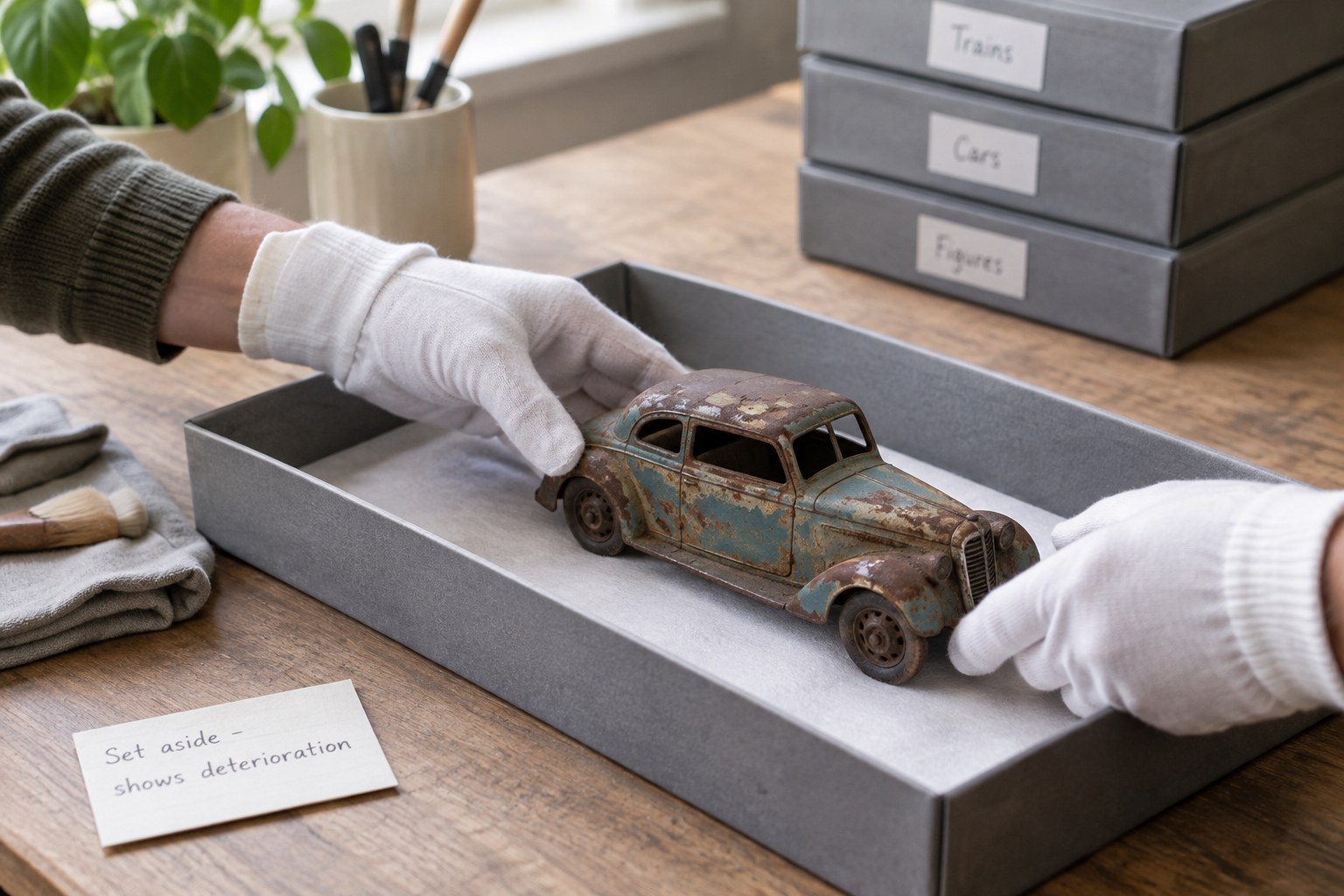
Record the change before acting
Describe what you can see: loose particles, a new stain, distortion, a lifting surface or another visible difference. State when it was first noticed and compare earlier photographs if available. A feature newly noticed by you is not necessarily newly developed. Record the current enclosure and neighbouring materials so the context is not lost.
Avoid touching a surface to test whether it is sticky, powdery or firmly attached. Do not brush away material to improve the photograph. Capture an overall view and a detail without unnecessary movement. If access itself creates a risk, describe the limitation and seek advice from the accessible evidence.
Consider whether movement is safe
An object that is shedding material or has a fragile structure may not be safe to lift in the usual way. Assess the existing support and ask a conservator how to move it when necessary. Do not pick up a larger assembly by the affected component or pull away material that appears stuck to its enclosure.
If temporary separation can be made safely, preserve the object’s support and identification and record the new location immediately. Keep it away from routine handling and from other objects that could be contacted by loose material. Do not seal an uncertain object in an arbitrary container on the assumption that isolation alone solves the problem. The appropriate enclosure depends on the materials and condition.
Seek advice about the object and its surroundings
Provide the conservator with photographs, material information, known storage conditions and treatment history. Explain whether nearby objects show similar changes and whether there was a recent move, leak or enclosure replacement. These observations can guide questions without establishing a diagnosis. Keep any advice about handling or temporary housing with the record.
Do not apply household cleaners, pesticides, adhesives or coatings in response to an unexplained change. If the situation involves suspected hazardous material or widespread contamination, stop routine handling and obtain appropriate professional guidance. The collection task is to preserve information and limit unnecessary disturbance while the problem is assessed.
Track the next observation
Give the concern a dated follow-up entry rather than leaving a loose note that says check later. Record who was contacted, what was recommended and what remains unresolved. Repeat photographs only when they can be made safely and use comparable views. Return the object to the main group only when the reason for separation has been addressed, keeping the full history rather than deleting the warning as if nothing happened.


