Separating incompatible materials in a mixed collection
A mixed collection can share an inventory without sharing every enclosure. Separate storage decisions by material, condition and contact, while preserving the relationships that make the group meaningful.
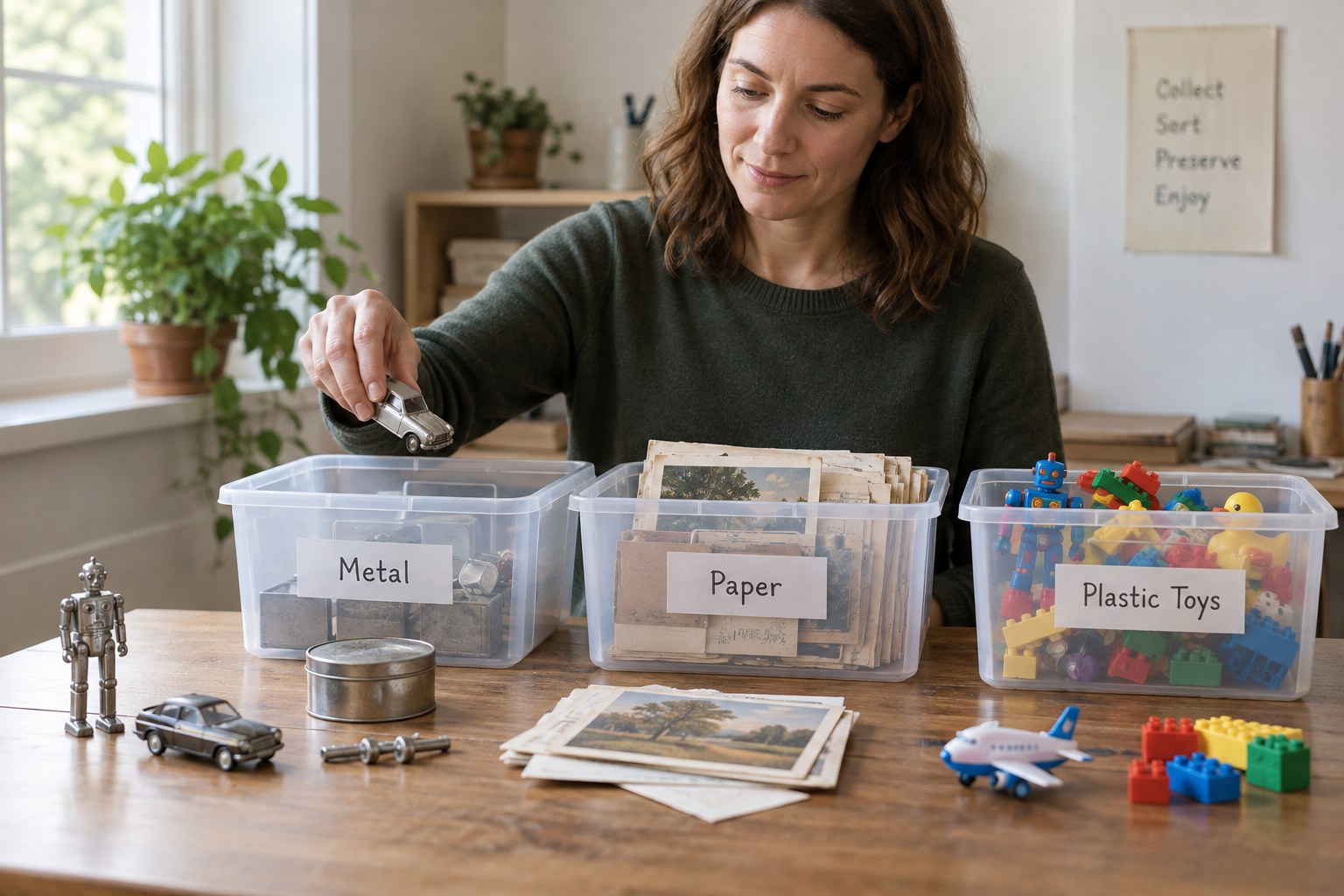
Map what is actually present
List the components of the group: metal objects, paper records, photographs, plastics, textiles and any unknown materials. Include packaging and display supports, not only the collectibles. A model with a paper label and foam insert is already a mixed assembly. Record what touches what before choosing a new container.
Note visible changes such as staining at a contact point, loose material or a distorted enclosure. Do not diagnose the cause from appearance alone. Photograph the arrangement and compare with earlier records if available. A concern about one component is a reason to seek informed advice, not to dismantle the entire object automatically.
Distinguish association from physical contact
A receipt can remain linked to a coin through the inventory without resting against its surface. A certificate can occupy a separate folder while its display case stays with the object. Use component IDs and two-way references so either item leads to the other. Photograph the former arrangement when it helps explain the set.
For components that are attached or integral, do not separate them simply because a general storage rule suggests different materials should be apart. Removing a label, mount or original fitting can change the object. Ask a conservator about the assembly and explain which materials you know and which are uncertain.
Choose enclosures around the specific needs
Describe the materials and contact points to a preservation supplier or conservator. Ask which enclosure materials and supports suit the group, and whether separate locations are appropriate. Avoid assuming that one clear plastic, one foam or one paper labelled archival suits everything. Keep the actual specifications and advice with the records.
Allow enough space so a heavy object cannot press onto adjacent paper and a projecting fitting cannot catch another item. Separate compartments may solve a mechanical problem without resolving a chemical compatibility question; treat those as different issues. A tidy arrangement is not proof that every material is suitable for prolonged contact.
Review the relationships after moving
Update locations as each component is rehoused and check the group index before discarding temporary labels. Retain significant original packaging separately when it no longer serves as the primary enclosure. Take a new arrangement photograph and date it. At the next review, compare both condition and access: a system that protects one material but makes another difficult to retrieve may need a further adjustment.


