What to ask about archival materials
The word archival is a starting point for questions, not a complete specification. Ask what a product is made from and which objects it is intended to house.
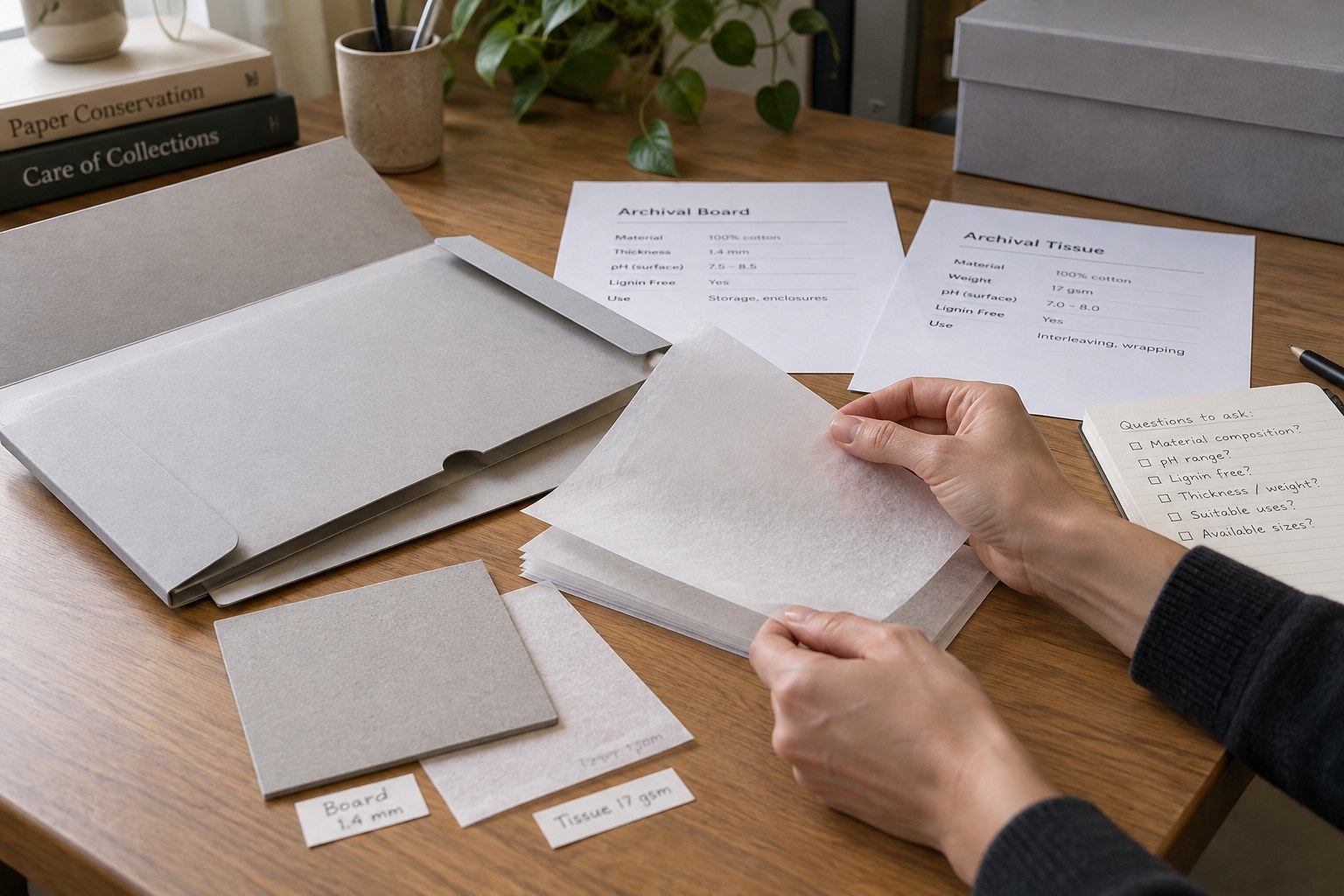
Describe the object to the supplier
Tell the supplier whether the enclosure will hold a photograph, document, coin, model or mixed object. Include unusual features such as a coating, attached label, fragile surface or existing mount. A material appropriate for one format may not be appropriate for another. If the object itself is unidentified, make that uncertainty part of the enquiry rather than choosing a product by appearance.
Explain whether the product will touch the original directly or form an outer layer around an existing enclosure. A box, sleeve and fitted insert have different roles. Ask about every component that may make contact, including lining, adhesive, printed areas and foam. A specification for the outer board does not automatically describe the materials inside.
Request evidence behind the label
The Library of Congress cautions that archival is not a meaningful definition by itself for housing materials. Ask for the material name, relevant specifications and any testing claimed for the particular product. Keep the response and product reference. A general statement about the manufacturer’s range is less useful than information identifying the item you intend to buy.
For photographs, ask whether the enclosure is intended for photographic storage and what evidence supports that claim. The Library of Congress identifies the Photographic Activity Test as part of assessing photo-safe materials. Passing a relevant test is useful information, but it does not settle questions about fit, handling or the particular photograph’s condition. Those still need attention.
Check construction as well as chemistry
Request usable dimensions, seam positions, opening method and support requirements. A suitable material can still be assembled into a pocket that catches corners or a box that compresses the contents. Use a harmless substitute to test access before placing the original inside. Account for existing mounts and any additional support in the measurement.
Ask whether the specification applies to the current product and whether substitutions may occur. Save a copy with the purchase record so future replacements can be compared. If a supplier cannot answer a relevant question, seek another source of information before committing the whole collection to that enclosure.
Make a modest trial
Order a small quantity where possible and inspect it before use. Check dimensions, finish and any discrepancy from the description. Do not regard a home trial as a chemical safety test; it can reveal fit and handling problems, not prove long-term compatibility. Combine the published specification with advice appropriate to your objects and an arrangement you can actually maintain.


