Assessing old adhesive photograph albums
An old adhesive album combines photographs, page material, plastic overlays and a binding. Assess the whole assembly before trying to free a single image.
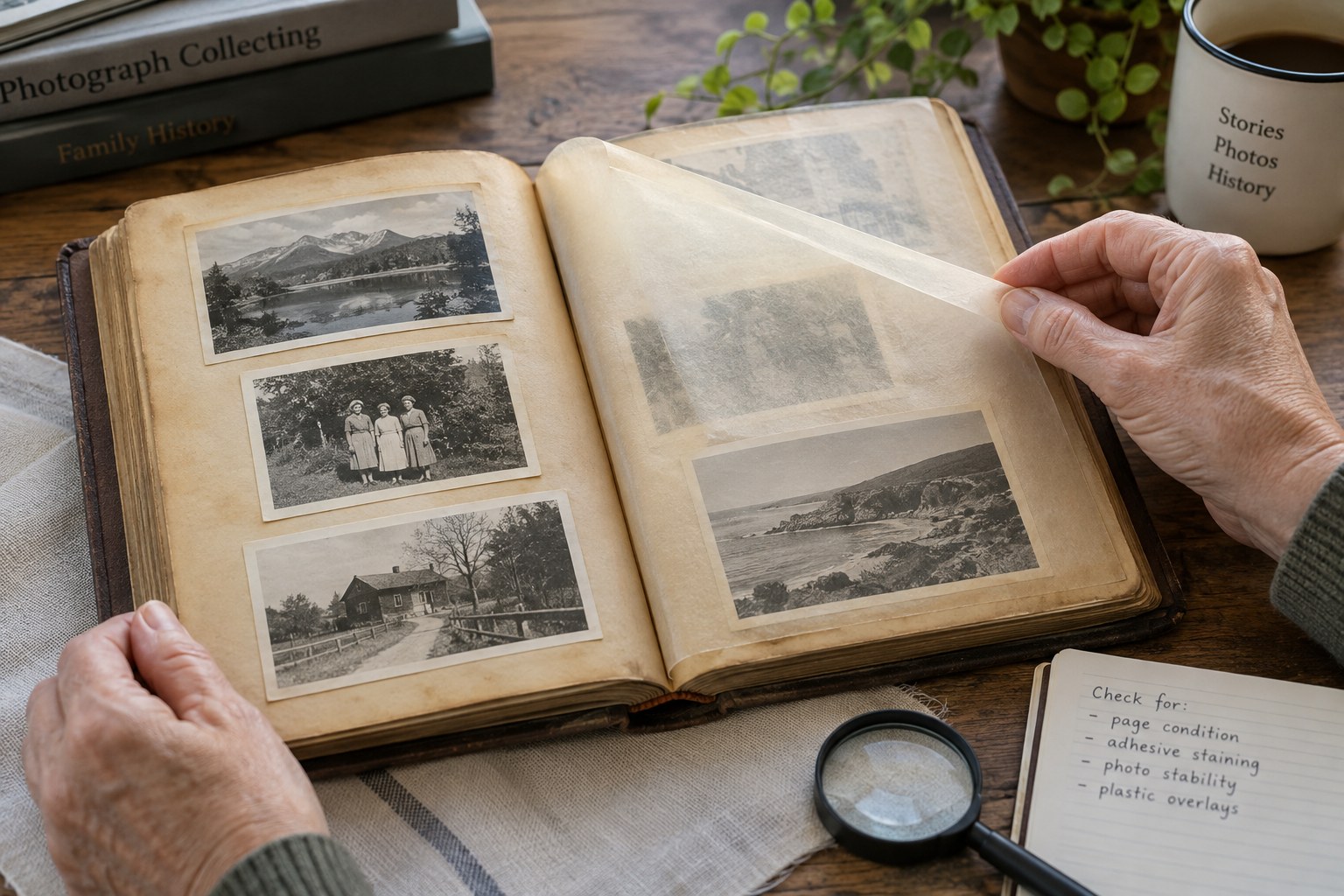
Record how the album works
Photograph the cover, page sequence and any captions before changing anything. Note whether photographs are loose, partly attached or firmly held, without pulling to test the bond. The order may explain family relationships or events even when individual captions are missing. Give the album a record and number its pages so later advice can refer to precise locations.
Look for components that behave differently: a loose print beside a firmly attached one, a brittle overlay or a page that no longer turns freely. Record what is visible and stop where movement creates resistance. The album may need support as an object, not just separate treatment for the photographs inside.
Do not turn assessment into removal
The Library of Congress advises avoiding new albums with sticky self-adhesive pages. That advice does not mean every existing photograph should be peeled out immediately. For an old album, the safe response depends on the materials and condition. A print that seems to lift at one corner may remain strongly attached elsewhere.
Do not use household solvents, heat or a blade to separate photographs as a trial. Do not assume a method that worked on one page will suit the next. Preserve the accessible information through photography and ask a photograph or paper conservator about the album as a whole. Explain whether your priority is access, stabilisation or removing the prints, since those are different objectives.
Prepare a useful enquiry
Send overall images of the album, representative pages and details of the concern. Include dimensions, approximate page count and any known storage or treatment history. Describe whether the overlay is attached, loose or damaged and whether pages can be turned without strain. Avoid diagnosing an adhesive from its colour or smell.
Ask whether an in-person examination is needed and what handling should be avoided meanwhile. A remote view may help define the next step without establishing a treatment plan. Keep the advice and its scope with the album record. If separate housing is later recommended, retain the original page sequence and caption relationships in the inventory.
Improve access without forcing change
Use a digital reference copy for frequent viewing when the visible pages can be photographed safely. Capture the complete page as well as individual images so their arrangement remains understandable. Mark hidden or unreadable areas as limitations. Do not press the album flat to remove glare; change the camera or lighting position where possible.
Return the album to a supported storage position and avoid stacking unrelated heavy objects on it. A suitable box may protect the assembly, but it should fit without compressing the contents. Any new storage should preserve the album’s shape and allow careful retrieval. Record what remains unresolved so a future owner does not mistake a closed box for a completed conservation treatment.


