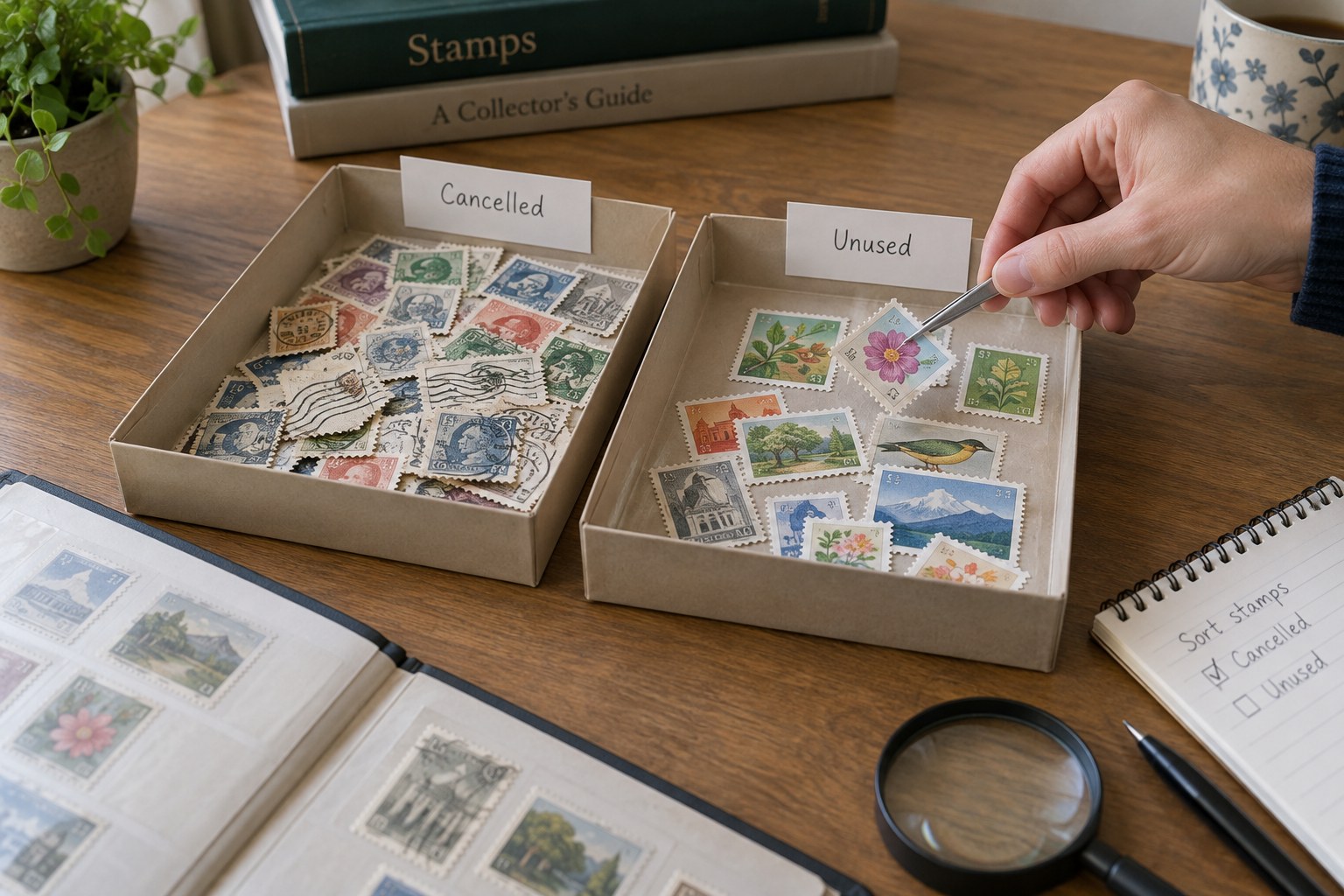
Stamp album or stockbook for a beginner
An album and a stockbook solve different organising problems. Choose around how often you change the arrangement and what you want to see when a page opens.

Decide whether the sequence is settled
A preprinted album offers a defined framework, often with spaces associated with particular issues. It can make a chosen series easy to follow, but it also presents gaps that may not match your interests. Check the actual pages before buying. A beginner collecting birds from many countries may find a rigid country sequence less useful than a flexible arrangement built around designs.
A stockbook typically holds stamps behind strips on its pages, allowing the arrangement to change without creating a new printed layout. That flexibility can suit sorting and developing a collection. It does not remove the need to inspect the construction, materials and available space. Compare the usable strip height with the largest stamps or blocks you expect to store.
Compare access and presentation
Imagine a normal session: take out the book, find one stamp, view it and return it. Ask whether the selected system allows that sequence without frequent removal of neighbouring pieces. If you want to examine backs often, the method of mounting or retention matters. Do not choose an album only from a photograph of its decorated cover.
Look at how pages behave when partially filled and when turned. A format that requires the book to remain upright may not suit your available storage or working surface. Follow the manufacturer’s instructions and test with expendable paper substitutes before introducing the collection. Avoid overfilling strips or pockets to make an entire theme fit one page.
Budget for the complete arrangement
Compare the book, any required mounts or pages, labels and likely expansion. A low initial price may not include the components needed for the intended layout. Ask whether replacement pages are available in the same format and keep the product specification. Do not assume every binder page with similar holes uses compatible dimensions.
For an unsettled collection, begin with a modest amount of capacity. Organise a representative group and note what feels restrictive. You might use a stockbook for sorting and a separate album for a completed project, but that should follow an actual need rather than a requirement to own both immediately.
Preserve information outside the page order
Assign inventory references or group references and retain purchase notes, original labels and identification uncertainties. Moving a stamp from one page to another should not erase where it came from. A simple page map can connect a physical arrangement to photographs and records. The best first system is one whose order you can explain and maintain, including the pieces that do not fit a printed space.