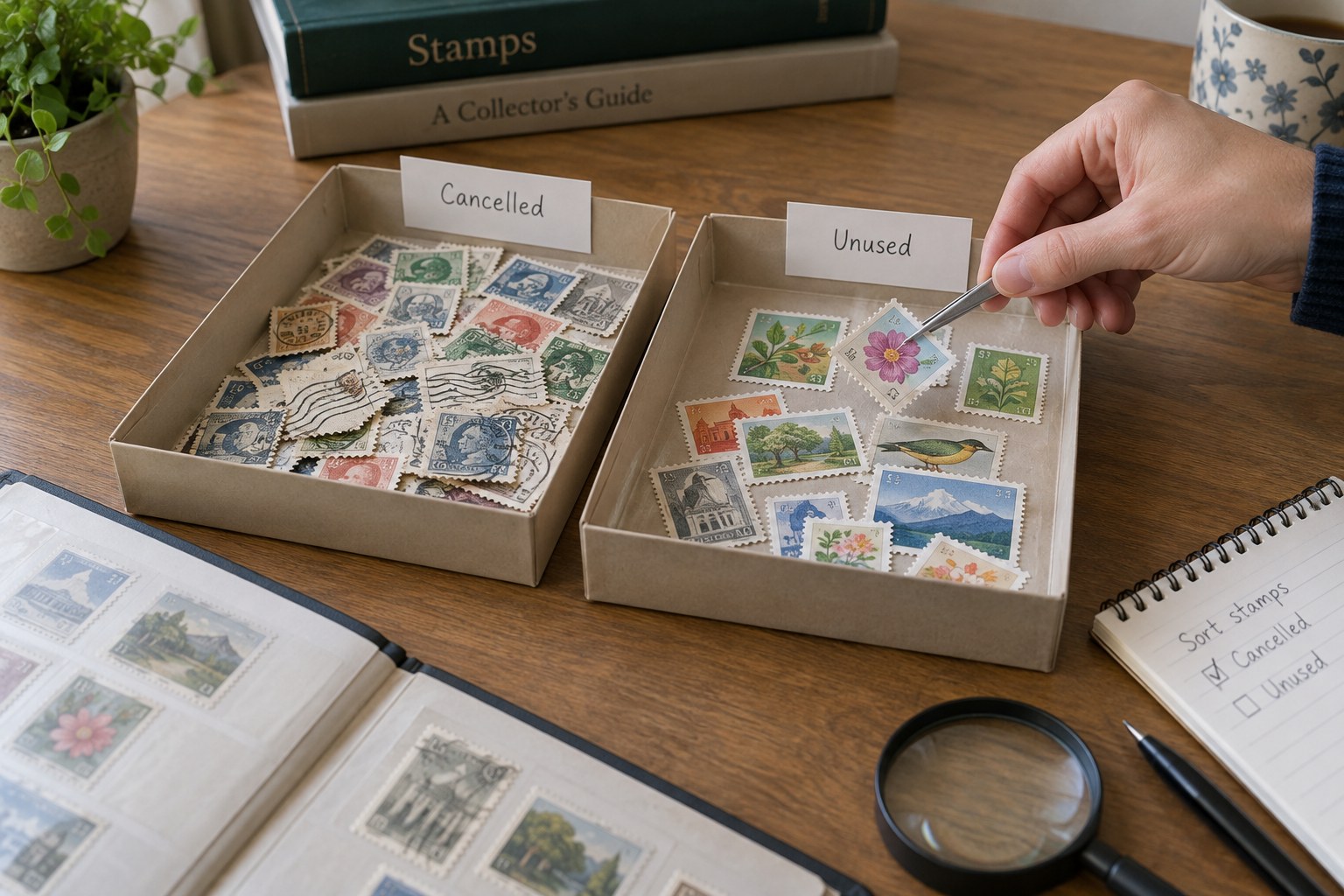
Inspecting stamp perforations without damage
A stamp’s outer edge deserves its own inspection. Record what is present before deciding whether an irregularity comes from separation, damage or the issue’s original format.

View all four sides
Place the stamp on a suitable support with enough contrast to see its outline. Examine the top, bottom and both sides, then look at the corners where two edges meet. A photograph of only the design can conceal a short tooth or a torn corner. Keep a full image that includes a small border around the entire stamp.
Use magnification if it helps you see the outline without bringing the object close to your face. Reposition the light rather than repeatedly lifting the stamp. Describe an irregularity by its location, such as the second visible tooth from the upper left, so another person can find it. Avoid relying on a general phrase like imperfect edges when a specific description is possible.
Separate observation from attribution
Different issues can have different edge formats. Compare with a reference for the exact issue before concluding that a straight edge is a fault or that an unusual spacing indicates a variety. A stamp separated from a larger unit may require context that a single front photograph does not supply. Retain any attached margin or related piece rather than trimming it to create a more regular outline.
If using a perforation gauge, follow the tool’s instructions and bring the supported stamp into visual comparison without pressing its teeth against the gauge. Record the reading and which sides were measured. If the fit is ambiguous, preserve the uncertainty and a clear image. Do not force the outline to match a preferred catalogue entry.
Document damage without correcting it
Do not straighten a bent tooth with a tool, trim a projecting fibre or reshape an uneven edge for a photograph. Those actions change the object you are trying to describe. A fragile or partially detached portion may need support and conservation advice rather than further examination with tongs.
For a sale description, show the affected edge clearly and explain any viewing limitation caused by a mount or enclosure. If you cannot see the reverse edge, say so. Keep the front and back images connected to the same inventory record so later comparisons do not accidentally use a different example. A careful outline record supports identification and condition discussion without promising a formal grade.