Buying a stamp lot with useful photographs
A photograph of a large pile can make a stamp lot look informative while revealing very little. Judge the evidence for the pieces you want, not the apparent volume of paper.
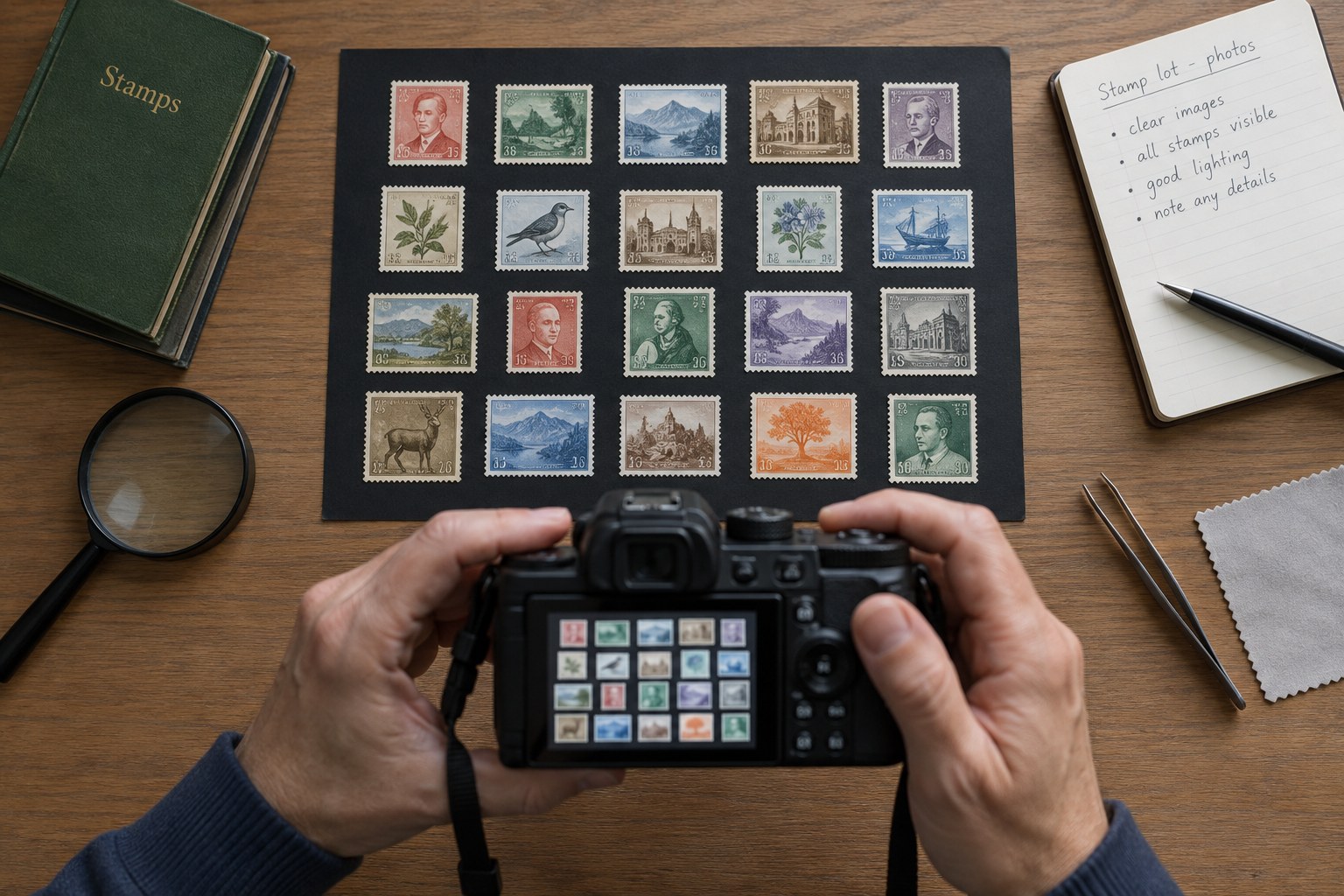
Identify the purchase you are considering
Write down the purpose of the lot before studying its most attractive stamp. You may want material for a topic, a country collection, a sorting exercise or exchanges. Each purpose changes which details matter. A lot that is suitable for leisurely sorting may be unsuitable when you need one precisely identified issue in a particular condition.
Check whether the listing shows the exact stamps offered or representative examples from a larger stock. Ask whether every photographed item is included and whether duplicates are expected. Count information, weight information and a photograph are not interchangeable descriptions. A weight-based lot may include paper or packaging; find out what the seller’s measurement includes.
Request views that answer a question
For loose stamps, spread-out photographs are more useful than a heap with most designs hidden. Ask for clear front views of the part of the lot that motivates your purchase. If reverse condition matters, request appropriate back views rather than assuming an unused-looking front tells the full story. Explain which examples you need to inspect so the request remains manageable.
For album pages, ask for full-page images as well as details. The full view shows what is present, what may be overlapping and how stamps are mounted. A close-up can reveal a specific concern but can also conceal missing spaces or an unrelated surrounding group. Check whether the album, pages or mounts are included in the sale or only used to display the stamps.
A photograph should be large enough to assess the relevant feature without relying on artificial enlargement. If a key date, margin or corner remains unclear, say exactly what you cannot see. A general assurance that the collection is nice does not resolve a specific viewing gap.
Separate visible condition from promises
Make a short list of observable concerns: folded corners, missing portions, heavy markings, attachments or stains visible in the photographs. Describe them without guessing causes. Where a stamp is partly covered, leave its condition unresolved. Do not assign value to an unseen reverse on the assumption that it resembles the better examples in the group.
Treat claims such as unsearched as descriptions supplied by the seller, not evidence of undiscovered rarity. Ask what sorting or identification has actually been done if that matters to your decision. A story about the origin of a collection can be interesting while still leaving the contents uncertain. Keep documented provenance separate from promotional language.
Include the work after arrival
Calculate delivery, appropriate storage and the time needed to record and sort the material. Decide how much duplication you are comfortable retaining. Avoid assuming that unwanted stamps will quickly recover the purchase price through resale. They will require their own identification, photographs and transaction arrangements, and may not match another collector’s needs.
Set a maximum based on the visible material and the uncertainty you are willing to accept. If the purchase depends on a hidden stamp being a desirable variety, obtain the missing evidence or reconsider. A mixed lot can offer a useful learning project without being presented to yourself as a guaranteed bargain.
Preserve the arrival evidence
Save the listing and relevant answers before purchase. On arrival, photograph the group as received and compare it with the agreed description before separating stamps from labels or pages. Report a discrepancy through the agreed sales channel with clear examples. Keeping the original arrangement initially helps distinguish a missing item from one that disappeared into your own sorting piles.


