Cataloguing figures when the maker is uncertain
An unidentified figure can still have a useful catalogue entry. Describe what is present and keep possible attributions separate until evidence supports them.
Create a neutral identity
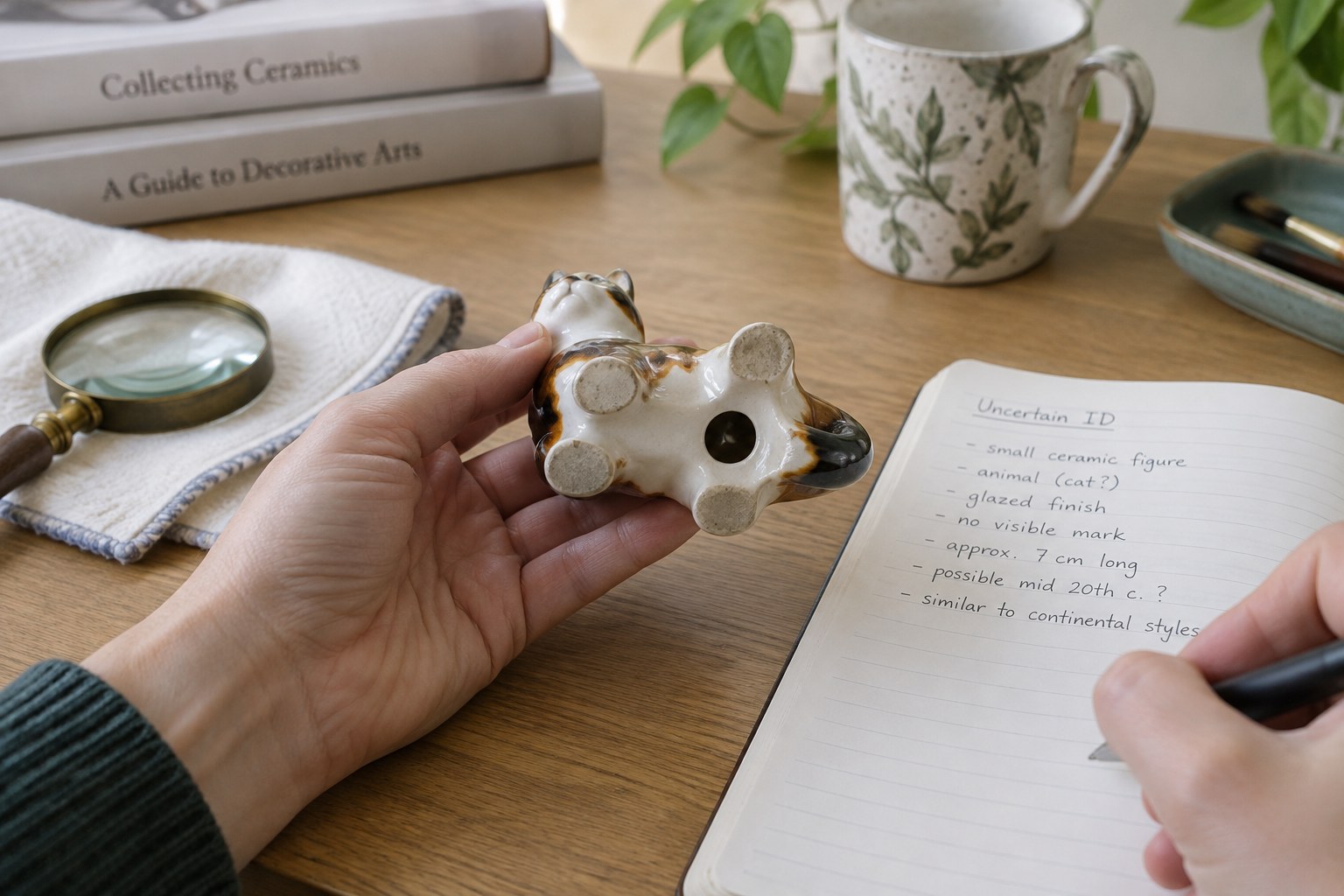
Assign an inventory number that does not depend on a guessed maker. Use a descriptive working title based on visible subject, pose and colour. Record height, width and depth, including the base and projecting parts. Add photographs from several sides and of any accessible markings. These observations remain useful even if the eventual identification changes completely.
Transcribe marks exactly as seen, including symbols and uncertain characters. Record their location rather than merely writing marked underneath. Do not apply cleaning products or scratch a surface to reveal a faint mark. If the area cannot be read safely, note that limit and keep the best available photograph.
Build an evidence file for possible matches
Search using the observed features and compare candidate references with the whole figure, not just its face or pose. A similar design can appear from more than one maker or in several sizes. Look for consistent details in base shape, dimensions, markings and attachments. Prefer manufacturer catalogues, museum records or other identifiable primary documentation when available.
Keep each possible match with its source and the specific similarities and differences. A dealer's title is a lead, not independent confirmation. If several listings repeat the same unexplained attribution, they may all derive from one mistaken description. Do not count repetition as several separate pieces of evidence.
When asking a specialist or collector group, supply clear images and measurements and say what you have already checked. Avoid leading the question with a confident maker name if that is precisely what remains uncertain. Record replies with their dates and reasoning, distinguishing a documented comparison from someone's impression.
Update without losing the earlier record
Use a status such as maker unconfirmed while research continues. A likely attribution can sit in a separate field with the reason for it. If stronger evidence appears, add a dated identification note and preserve the earlier working title as an alias. This prevents old photographs and receipts from becoming disconnected from the new catalogue entry.
For a sale or exchange, carry the uncertainty into the public description. Do not promote a tentative attribution into a certainty simply because it makes the listing easier to find. The figure's visible characteristics and documented history can be described fully without claiming a maker, date or material that has not been established.