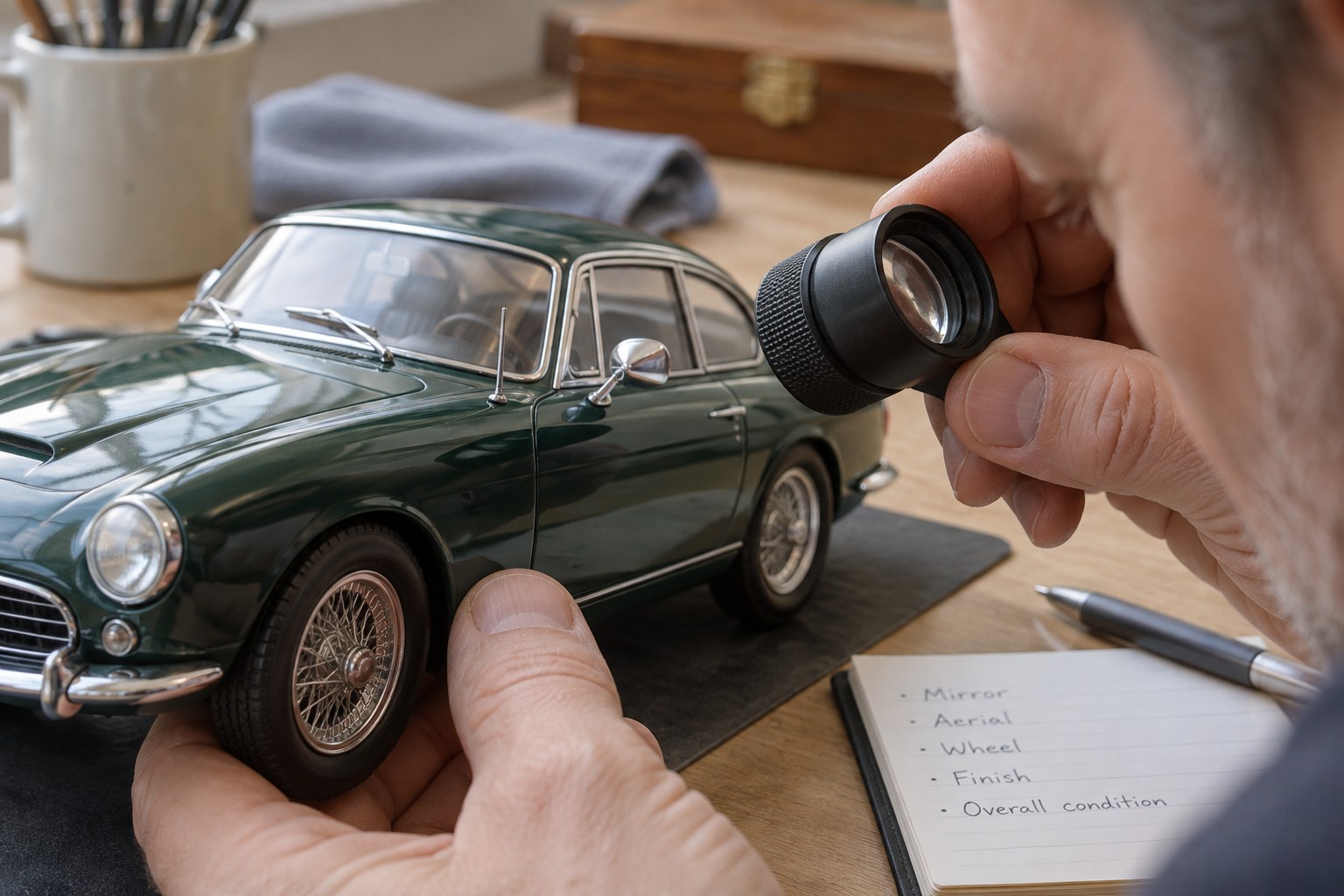
Checking battery compartments in older toys
The battery compartment can reveal missing parts or visible residue that a front photograph misses. Inspection should stop short of powering or cleaning an unfamiliar old toy.
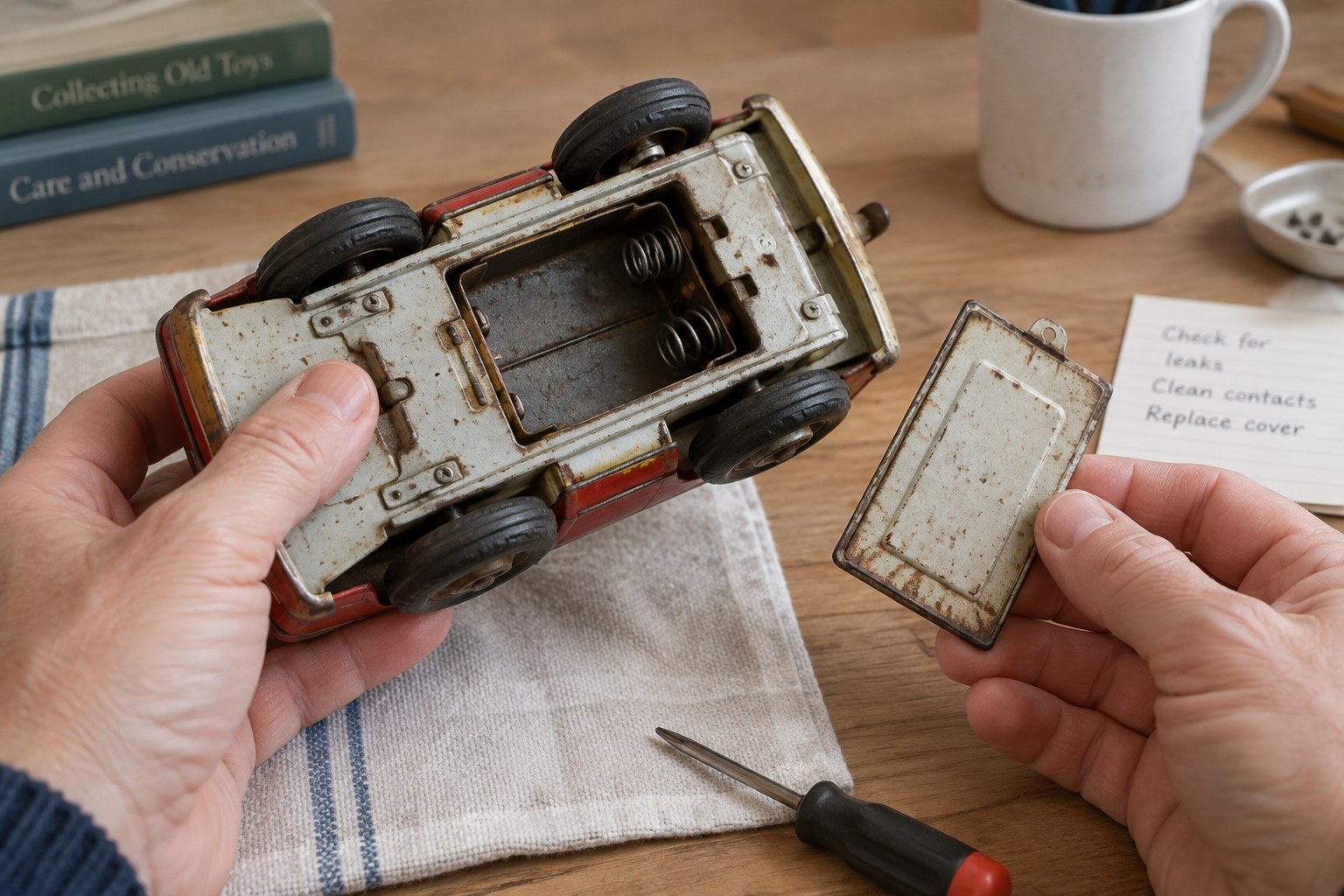
Ask for an accessible view
Request a photograph of the compartment and its cover if they can be opened normally. Ask whether batteries are present and whether the cover, screws or retaining tabs are complete. A cover held in place with tape should be described separately from an intact original closure. Do not ask a seller to force a seized screw or pry a brittle tab for the sake of a photograph.
Record visible staining, deposits, distorted contacts or damaged plastic without diagnosing the exact substance from an image. A clean-looking photograph does not establish electrical safety or prove that the toy has never suffered leakage. If the view is obscured, ask for clarification and retain the uncertainty.
Keep condition inspection separate from operation
Ask what tests, if any, have already been performed, when and with what power source. Do not treat a compartment that appears tidy as permission to install batteries. The correct battery type, polarity and condition of the toy need to be established from reliable documentation and appropriate inspection. For an uncertain vintage electrical item, use a competent repair specialist rather than trial and error.
If you see leakage residue or a damaged battery, avoid touching it and stop handling the compartment. Follow current battery-maker or local disposal guidance for the specific situation, obtaining professional assistance where needed. Do not improvise a cleaning mixture or scrape contacts on a collectible simply because an online photograph looks similar.
Record the buying implications
Separate the toy's appearance from its untested functions in the listing or inventory. A display-only purchase can still be worthwhile, but it should not quietly become described as working. Note missing covers, visible damage and any areas that could not be accessed safely.
Before buying, ask how batteries, if present, will be handled for transport in accordance with the carrier's current requirements. Keep the seller's answers with the purchase record. On arrival, compare the accessible compartment with the photographs before any operation or repair. If the condition differs, document that difference first; modifying the area immediately can make the original problem harder to explain.