Checking display cabinets before filling them
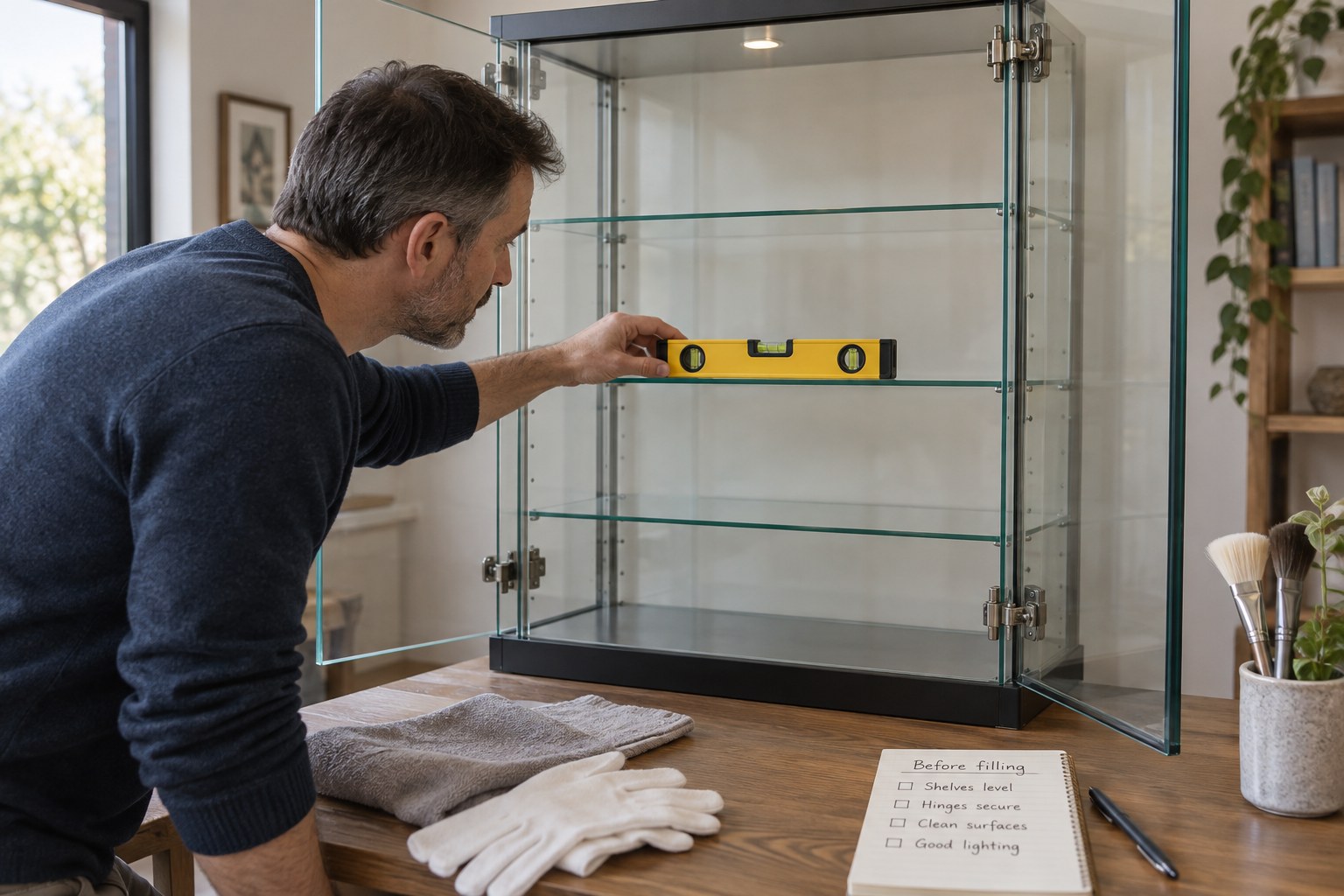
Check an empty cabinet as a piece of furniture and as a working display space. Once it is full, problems with access, shelf support or door clearance are harder to correct.
Read the installation and load information
Identify the cabinet model and obtain its assembly and installation instructions. Check whether wall anchoring is required and use the specified method appropriate to the wall, obtaining competent help where needed. A tall cabinet's appearance does not establish its stability. Complete the furniture installation before introducing collectibles.
Read load limits for individual shelves and the cabinet as a whole. Confirm that shelf supports are correctly seated and that adjustable shelves sit level. Do not infer a safe load from another cabinet that looks similar. If instructions are missing or fittings appear damaged, resolve that before placing heavy bases or models inside.
Inspect doors, shelves and contact surfaces
Open and close each door through its full normal movement. Note whether it sweeps across the display space, shakes the cabinet or leaves a narrow opening. Check handles, hinges and catches for smooth operation. A door that requires a sharp pull can disturb a carefully arranged display even if the shelves themselves are level.
Examine shelf edges and surfaces for chips, sharp areas or residues. Follow the cabinet manufacturer's cleaning instructions while it is empty and allow the space to be ready for use before adding objects. Do not spray cleaners around installed collectibles. If a surface material or coating is uncertain, seek advice about suitable separation rather than assuming direct contact is harmless.
Test access with a layout plan
Measure usable interior dimensions, including reduced space beside hinges and supports. Draw footprints for the models, cases and labels. Leave room for your hands to reach a robust lifting point without touching a neighbouring aerial or wing. A model that fits through the doorway diagonally may still be impractical to retrieve repeatedly.
Use ordinary stand-ins to assess spacing before handling the collection. Check the highest and lowest shelves from your actual working position. You should not need to balance on unsuitable furniture or reach blindly behind fragile objects. If access is poor, change the shelf layout or choose smaller display groups.
Observe the cabinet in the room
Check sunlight at different times and note nearby radiators, doors and busy walkways. If lighting is built in, follow its instructions and observe whether it creates noticeable local heat. Do not assume that a cabinet isolates its contents from the conditions around it.
Create a simple display map and record the first arrangement with photographs. Keep installation information accessible for future moves. Recheck supports and access after rearranging shelves or relocating the cabinet, before returning the objects. A cabinet check is most useful when it happens while there is still nothing fragile inside.