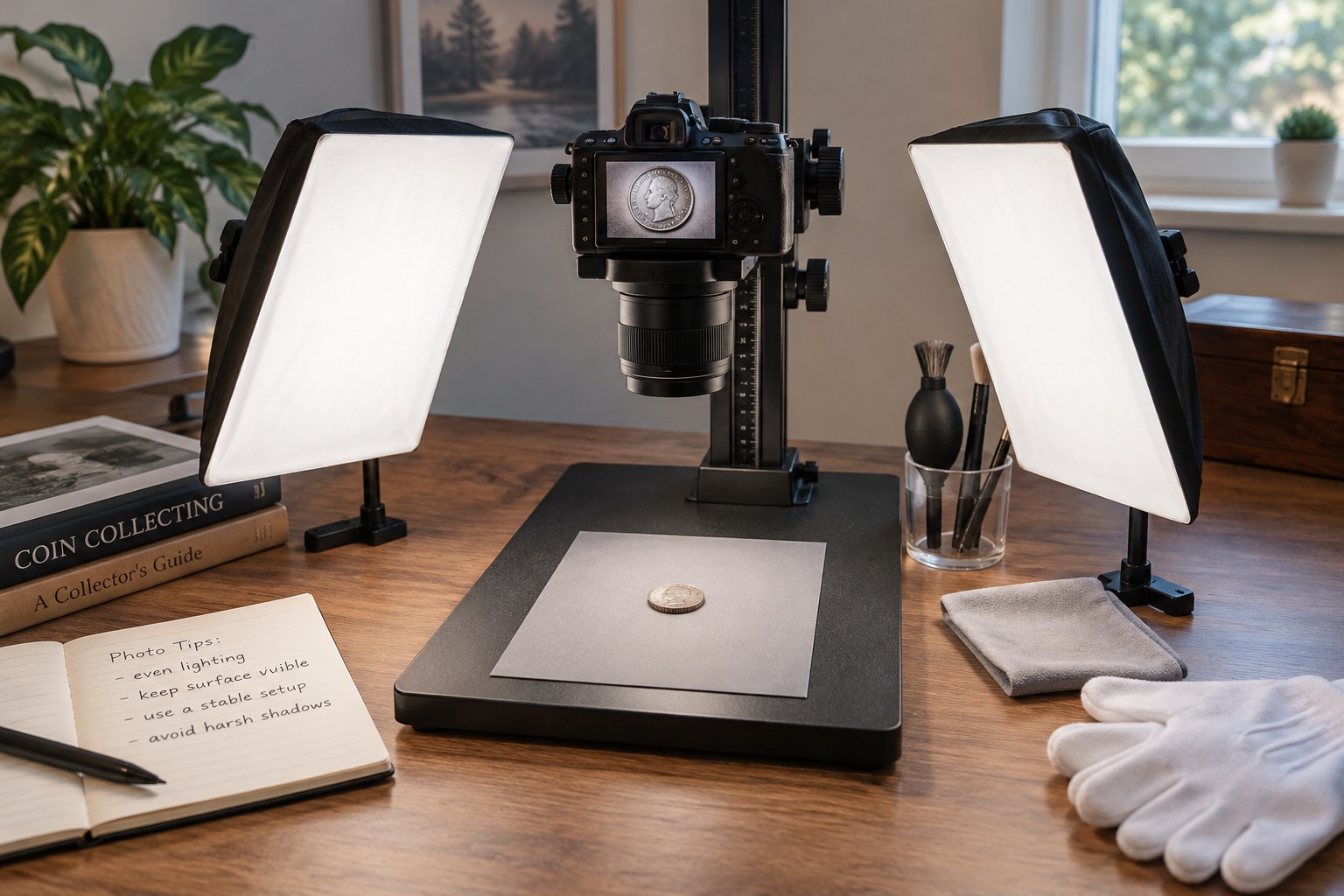
Choosing a loupe for small details
A loupe is useful when it answers a particular viewing question. Higher magnification is not automatically the most comfortable way to examine a coin, stamp or small printed label.
Match the view to the detail
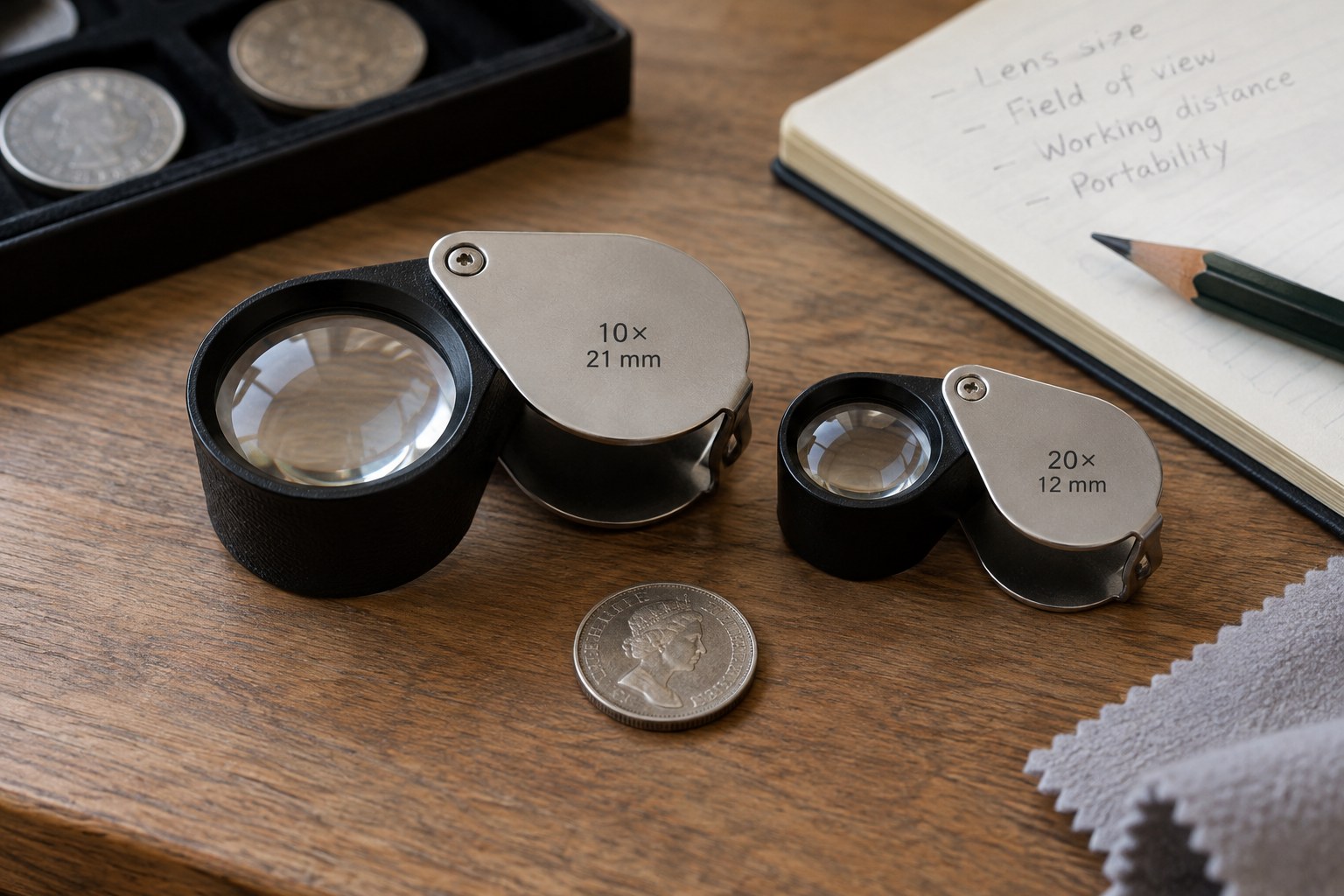
Decide what you need to see: a complete date, a small surface mark, perforation tips or a line of printing. Ask to compare magnifications while viewing a similar disposable sample. A strong lens can show a tiny area clearly while making it harder to understand where that area sits on the object. You may prefer a broader view for routine inspection and a closer view only for a specific question.
Check whether the centre and edges of the image are comfortable to use and whether you can hold the lens at its working distance. Product descriptions should state magnification, but your viewing position and lighting also matter. If you wear glasses, test the arrangement you will actually use. A loupe that works briefly in a shop may be tiring during a longer recording session.
Plan light and support together
Try the lens over a supported object rather than holding both object and lens in the air. Position the light so your hand does not block it. Built-in illumination can be convenient, but inspect how it changes reflections and colour before relying on it for a description. Keep an ordinary-light view available for comparison.
Consider the physical shape. A folding case protects the lens during storage; a stand may free your hands but needs room on the table. Check how close the housing comes to the object at focus. You should not need to rest the loupe against a collectible’s surface. If the required distance is too awkward for safe handling, choose a different viewing arrangement.
Clean the lens according to its manufacturer’s directions and keep that cleaning equipment separate from the collection. A smudge on the lens can resemble a mark on the object. Confirm a suspicious detail by changing the view and checking the lens before recording a condition concern.
Buy for observation, not a verdict
Use a loupe to document what you can see, then compare it with appropriate references. Magnification does not itself establish authenticity, grade or age. A feature that looks unusual may need context from the same issue or production method. Keep a photograph or written location note so a specialist can find the feature you mean.
For a first purchase, prioritise a clear specification, comfortable handling and the ability to return an unsuitable product under the seller’s stated terms. Avoid building a collection of nearly identical lenses before you know why the first one is inadequate. One well-understood viewing tool is easier to use consistently than several tools chosen only by their advertised magnification.