Reading the obverse, reverse and edge
A coin has three surfaces worth recording. Reading them separately prevents a familiar portrait from standing in for a complete identification.

Give each face a separate record
Begin with two photographs labelled side A and side B if you are unsure which is the obverse. Obverse and reverse are the usual names for the two faces, but the presence of a head is not a reliable rule for every issue. Keep the provisional labels until a reference for that particular series resolves them. You can still make a useful description without guessing.
Copy the visible lettering before trying to expand abbreviations. Preserve the order of words, punctuation and unfamiliar characters. Put a question mark beside uncertain readings in your notes, rather than silently replacing them with the inscription you expected. A partly worn date should remain partly unread until a clearer image or examination supports a reading.
Separate inscriptions from your interpretation
Create fields for denomination, date as displayed, issuing authority and design. A date in an unfamiliar calendar needs two entries: the actual inscription and any later conversion, with the reference used. Similarly, a portrait identification belongs in a separate note from the literal text around it. This lets another person check the evidence without first accepting your conclusion.
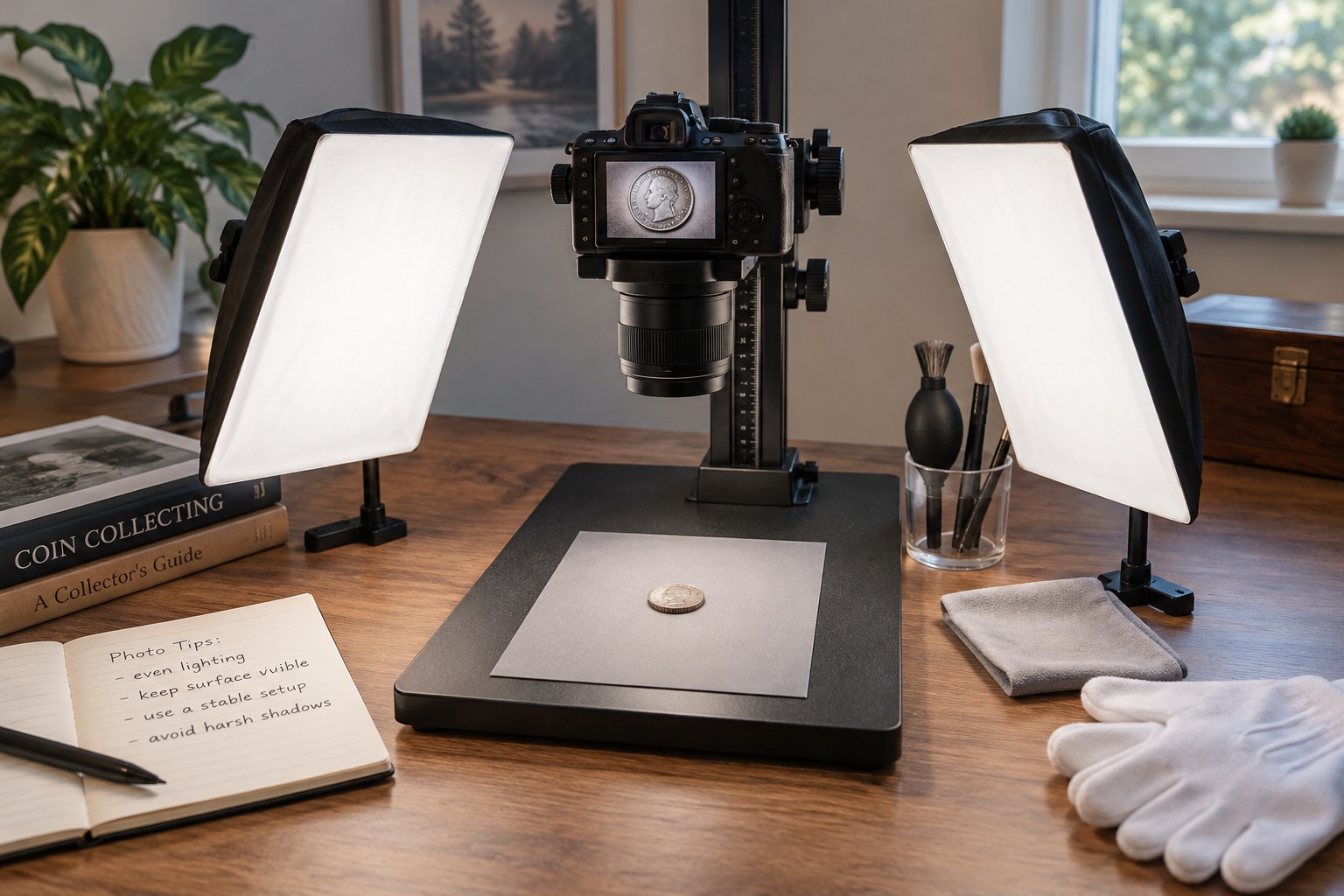
Describe where details appear. A small symbol below a portrait, lettering inside a wreath and a mark near the rim are easier to find when their positions are recorded. A rough annotated copy of the photograph can help; keep an untouched image alongside it. Do not mark the coin or its protective window to point at a feature.
Include the edge without forcing access
The edge may be plain, patterned or lettered. Record only what you can actually see and distinguish the edge from the raised border on each face. Photograph successive portions if the inscription extends around the circumference. A holder that hides the edge is a reason to note a limitation, not necessarily a reason to open it.
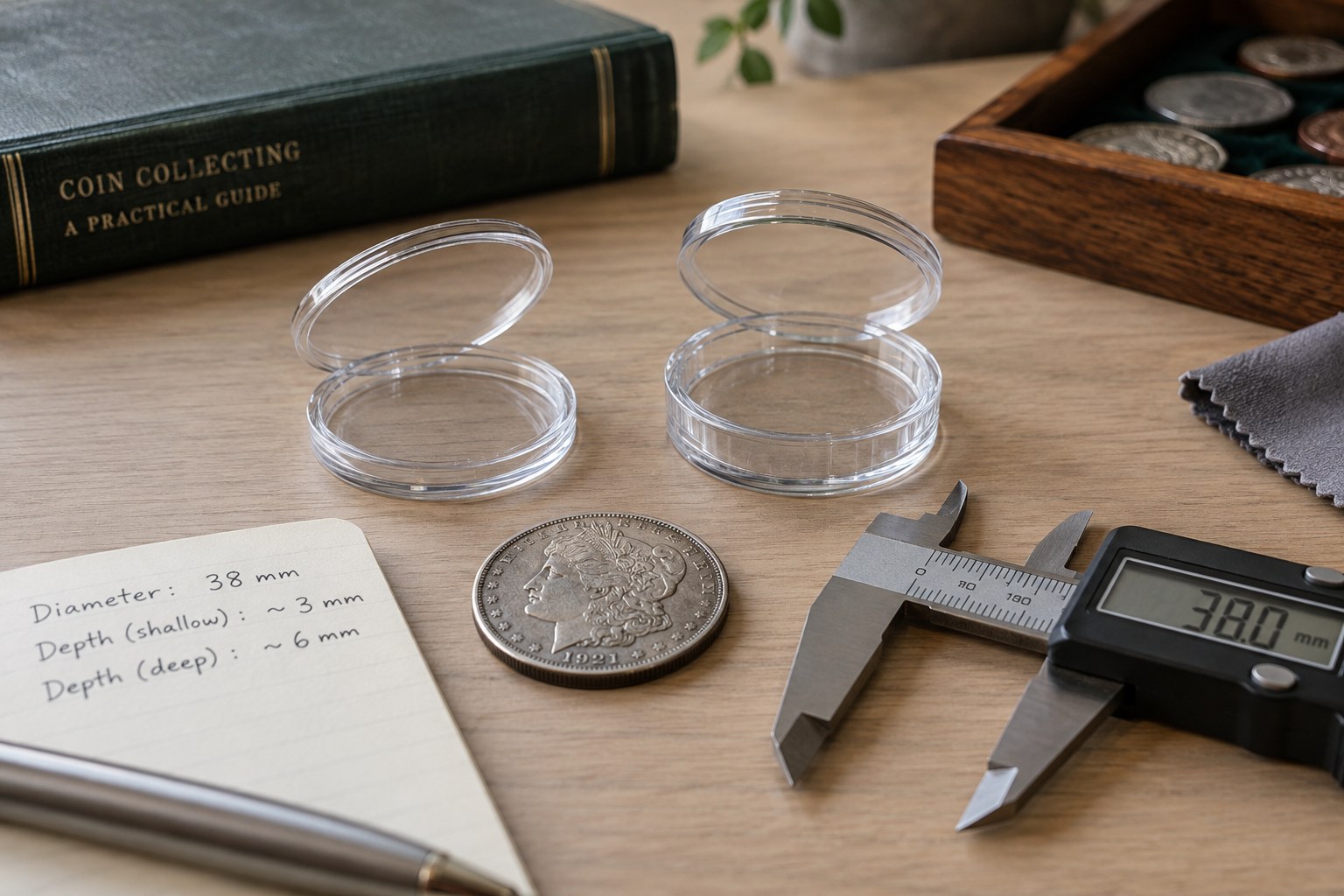
When comparing your record with a catalogue or issuing authority’s description, check all three surfaces and the stated dimensions. A design resemblance alone is not proof of identity or authenticity. If several issues look alike, write down the remaining differences you need to investigate. Your finished entry should make clear which information came from observation and which came from a reference.