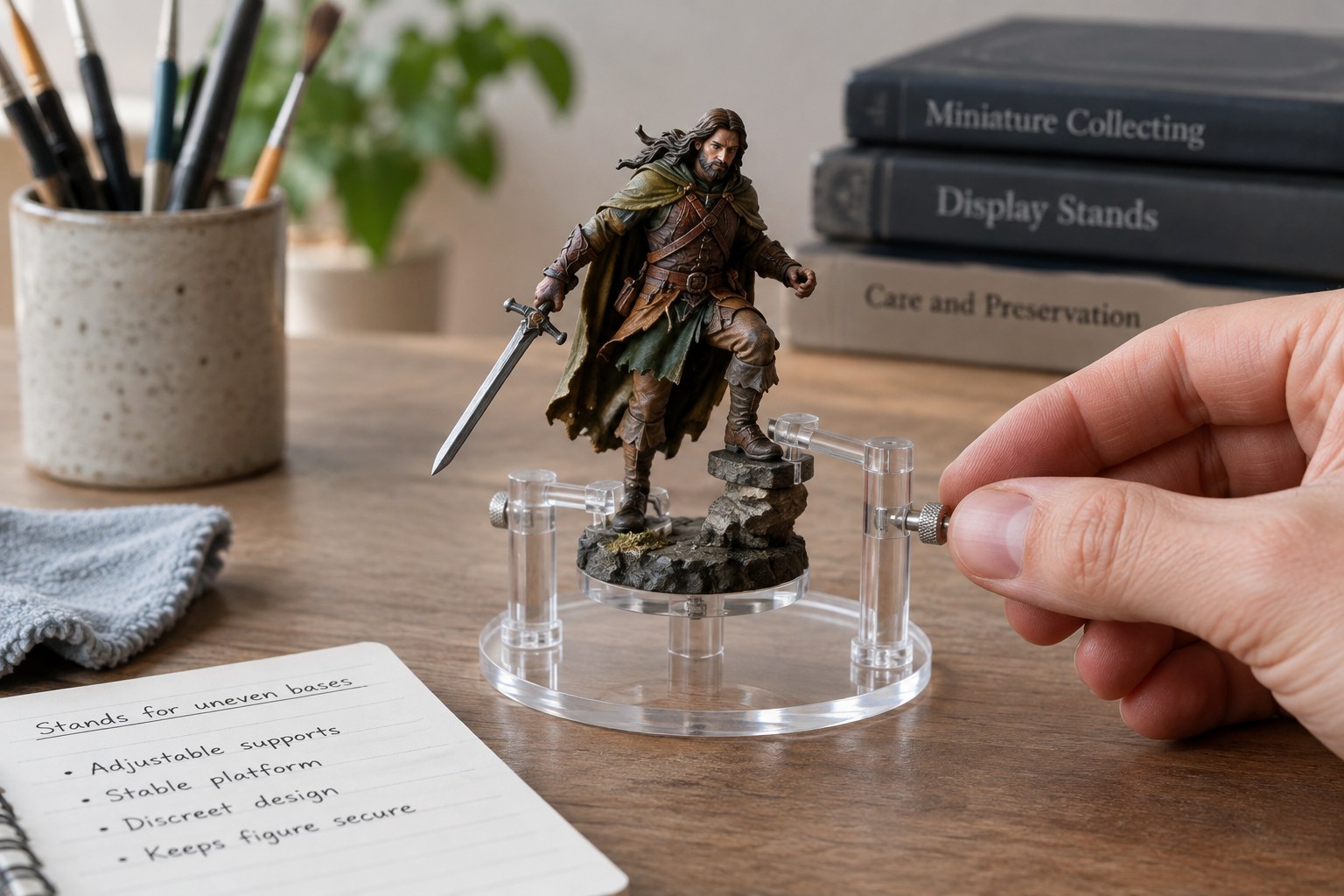
Choosing stands for figures with uneven bases
A figure with an uneven base should not rely on a stand that merely looks the right size. Examine its contact points and balance before choosing a display arrangement.
Identify how the figure is meant to stand
Look for the maker's intended support, including a supplied base, peg or bracket. Check the exact version: a stand for a similar figure may have a different peg diameter or attachment position. Do not force a peg into a foot or enlarge an opening to make an accessory fit. A reversible-looking adjustment can still alter the collectible.
Place the figure on its intended base only when the parts appear sound and the instructions are clear. Observe whether it leans because of its design, an uneven surface or an apparent change in the object. These situations need different responses. If a leg or base seems deformed, adding pressure from a new stand is not a diagnosis or a repair.
Compare support and contact areas
Ask where the proposed stand touches the figure and how it holds the weight. A narrow arm around a painted waist may create a different risk from support beneath a robust base. Check whether contact surfaces are described and whether the stand is intended for the material and size of your figure. Decorative appearance alone cannot answer those questions.
Consider the figure's pose. A raised arm, heavy accessory or extended wing may place much of the mass away from the feet. Measure the complete footprint and the space needed around projecting parts. A wider stand can take more shelf space than the figure itself, and adjacent objects should not be used as accidental supports.
Test the location without risking the figure
Check the empty stand on the actual shelf for rocking and slipping. Inspect the shelf surface and confirm it is level and stable. Keep the display away from doors, passing elbows and places where cleaning requires reaching between fragile figures. A suitable stand cannot compensate for a shelf that is routinely knocked.
When fitting the figure, follow the stand maker's directions and stop if you need to squeeze, bend or force a contact point. Do not improvise with tape, glue or elastic bands to hide an unsuitable fit. For a valuable or fragile figure without a safe support, obtain advice from a conservator or a specialist mount maker.
Make the support part of the record
Photograph the finished arrangement from the front and side, noting which stand belongs to the figure. Include any removal instructions so someone else does not lift it by a projecting accessory. Check the arrangement when changing the display and after moving the furniture.
Keep alternative stands clearly labelled and separate. An unused stand that looks similar may later be mistaken for the original, so record whether it was supplied with the figure or purchased afterward. That distinction preserves both the handling plan and the history of the collection.