Describing spots and colour changes
Colour descriptions should help another person find and compare a feature. They should not turn a photograph into an unsupported diagnosis of the metal’s condition.
Describe position, extent and appearance
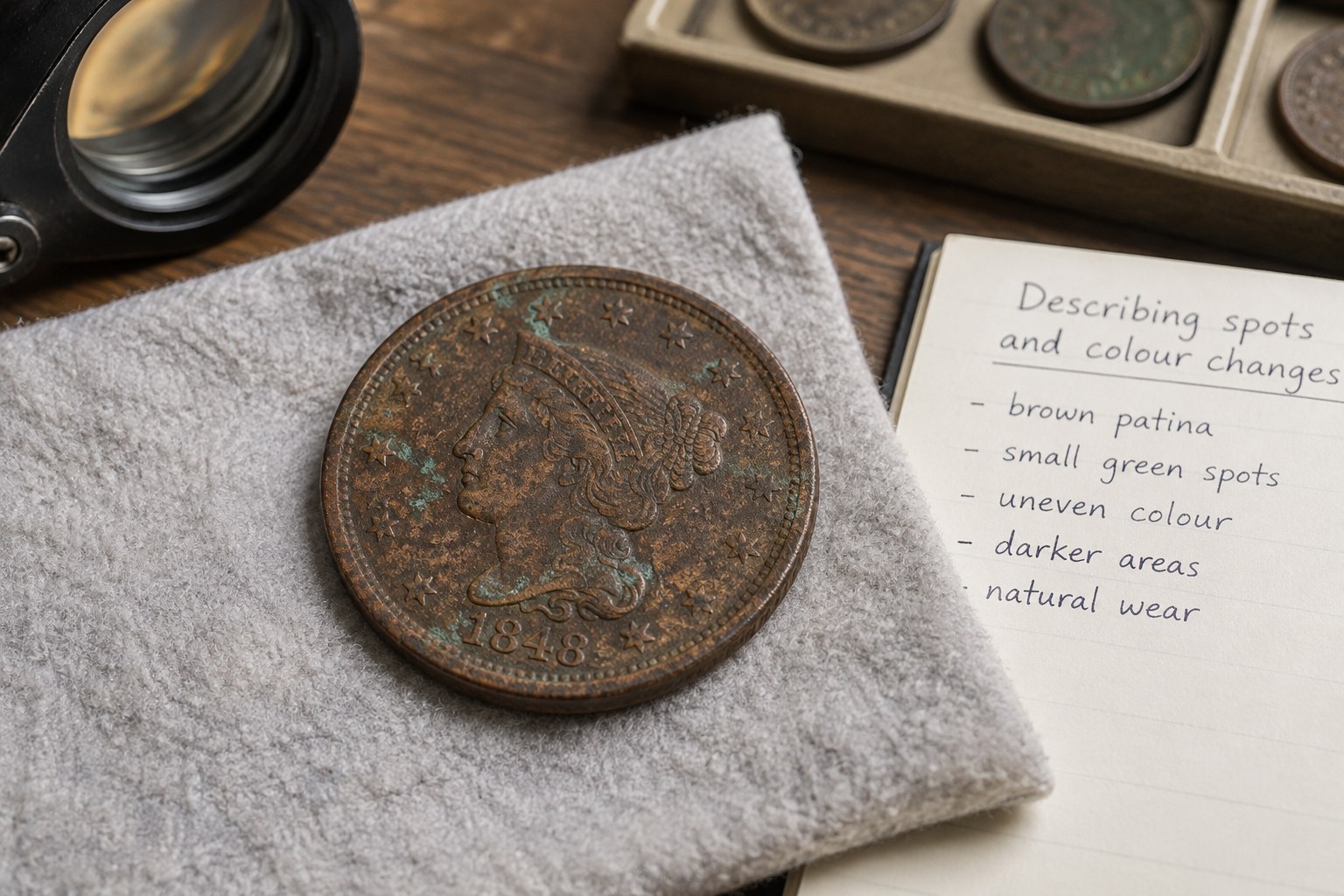
Begin with the whole coin and then locate the area you mean. Write whether a spot lies beside the date, crosses a letter or follows part of the rim. Estimate its size against an identified design feature rather than using a vague word such as small on its own. Record whether the area looks flat, raised, powdery or simply different in colour, but avoid touching it to investigate texture.
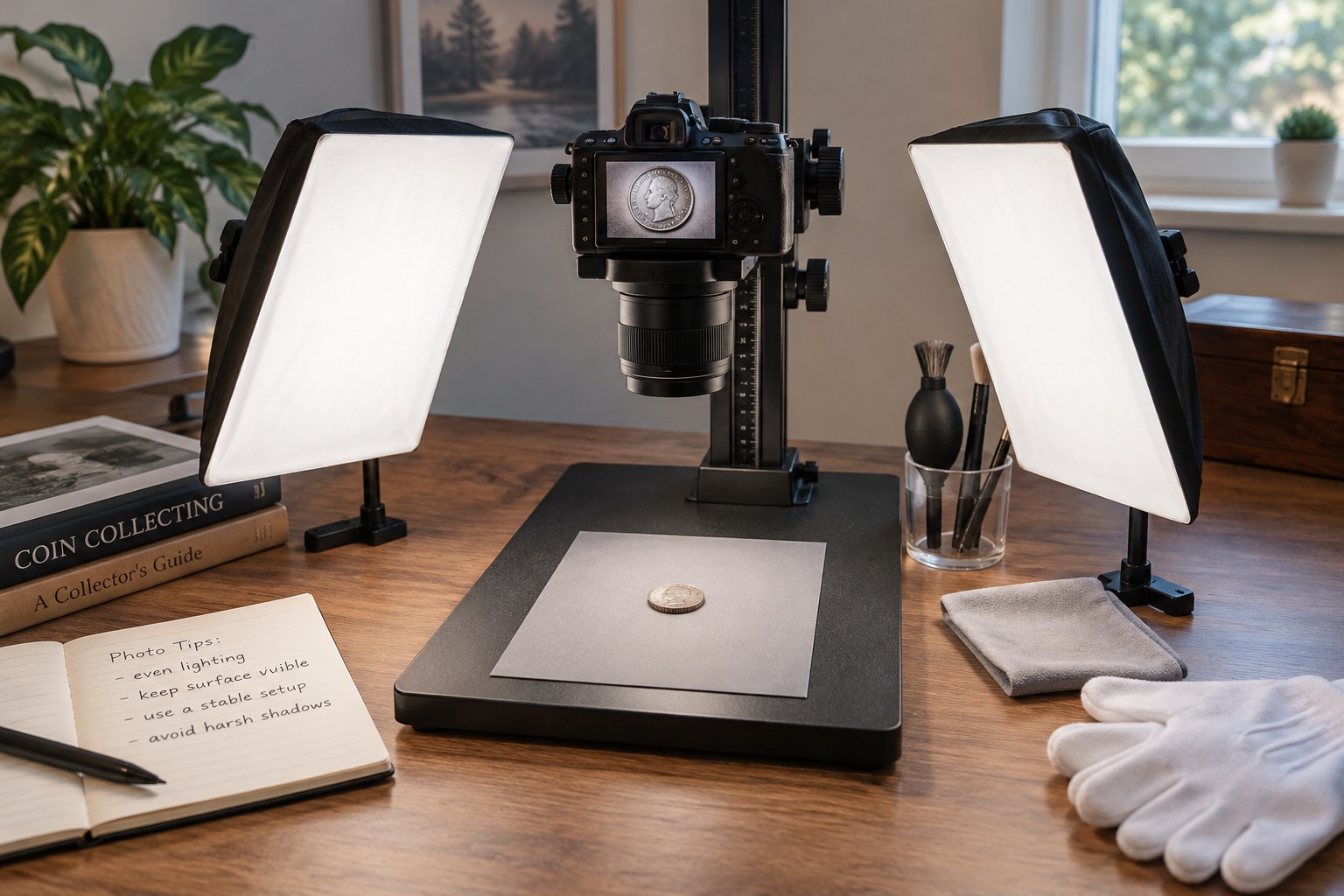
Keep colour language modest. Brown, grey or greenish may describe what you see under your current light without establishing the substance responsible. A phone’s automatic processing and reflections from nearby objects can change an image noticeably. Photograph the coin under repeatable lighting and retain the original file so later comparisons are not between unrelated filters or edits.
Distinguish a surface feature from a mark on the capsule. Change the viewing angle and examine the holder without opening it unnecessarily. If you cannot establish where the mark lies, record that limitation. A note saying visible through holder, location uncertain is more useful than a confident statement that later proves to describe the plastic.
Compare over time without intervening
Use a dated baseline photograph and repeat the view if you believe a change is occurring. Keep camera angle, lighting and distance as consistent as possible. Compare the actual boundary of the feature, not just overall brightness. A darker photograph does not necessarily show a darker coin. Record any change in storage or holder between the two observations.
Do not scrape, polish or apply a liquid to see whether a spot comes off. That changes the evidence and can introduce damage. If a feature appears to be changing or producing loose material, minimise handling and seek advice from an appropriate conservator. Provide the images, known storage conditions and any treatment history rather than requesting a diagnosis from a colour word alone.
For a listing, disclose the visible feature with an accompanying close view and explain the limits of your interpretation. Avoid describing an unfamiliar colour as attractive toning, harmless patina or active corrosion without a basis for that description. A buyer can then ask a focused question while your record remains an account of observation rather than an unsupported claim.