Describing wear on circulated coins
A condition description becomes more useful when it tells the reader where detail is missing. Broad words such as worn or good need supporting observations.
Compare the same design
Use a clearly identified example or reference image of the same issue to understand which details were intended to be present. A different portrait, denomination or production method may have a different appearance even before circulation. Do not treat every smooth area as wear simply because another coin has texture in that position.
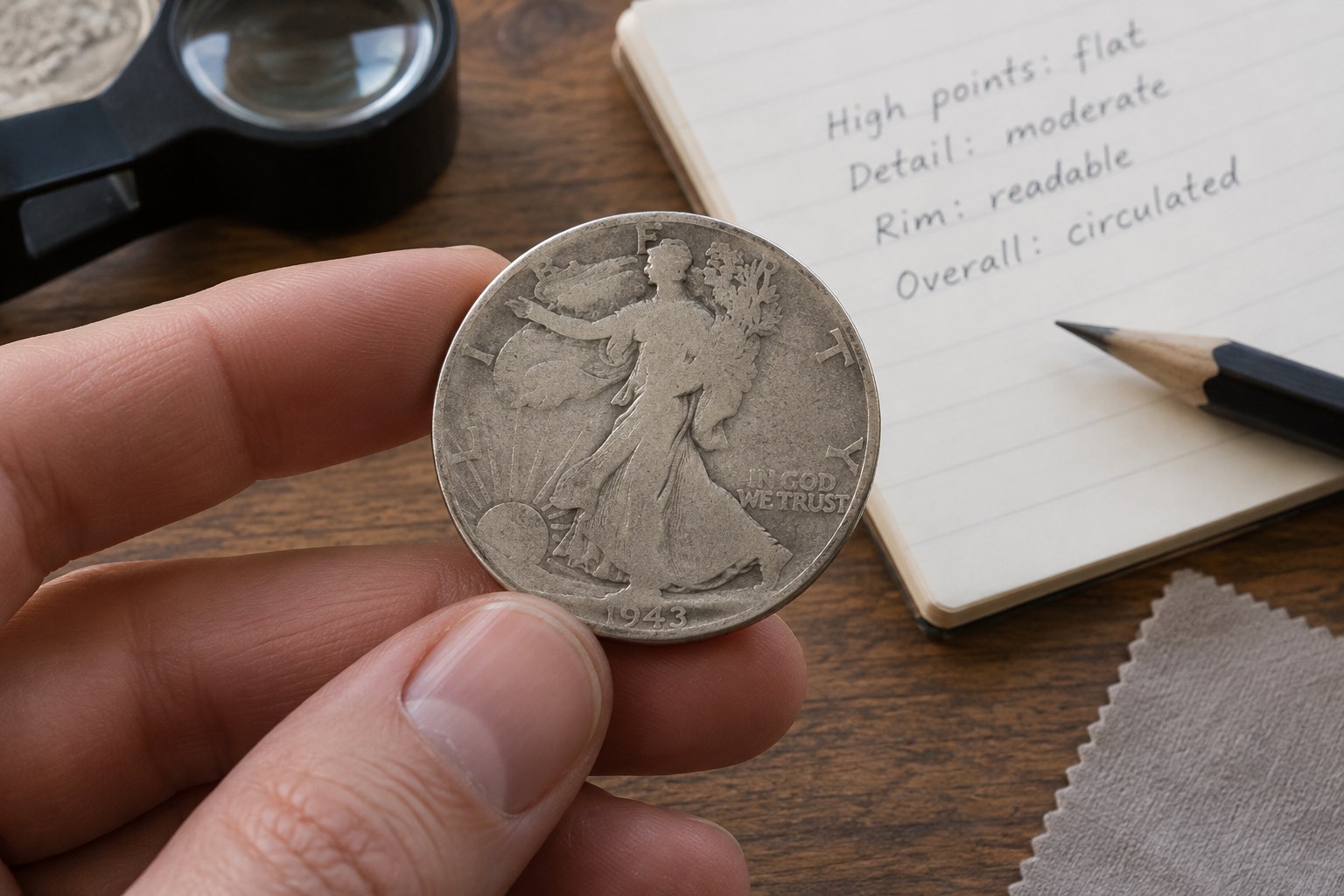
Work from the whole face toward smaller details. Record whether the main design, date and lettering are readable, then describe areas that appear flattened or indistinct. Position matters: a softened portrait feature, a weak section of lettering and an interruption at the rim are three separate observations. A short description of each is more informative than repeating an overall adjective.
Do not merge wear with other features
A scratch crossing the design is not the same observation as broad loss of detail. Describe dents, edge knocks, spots and surface lines separately. If you cannot determine whether a weak detail comes from wear, the original strike or another cause, record the visible result and leave the cause open. That is more accurate than attaching a confident explanation to an uncertain image.
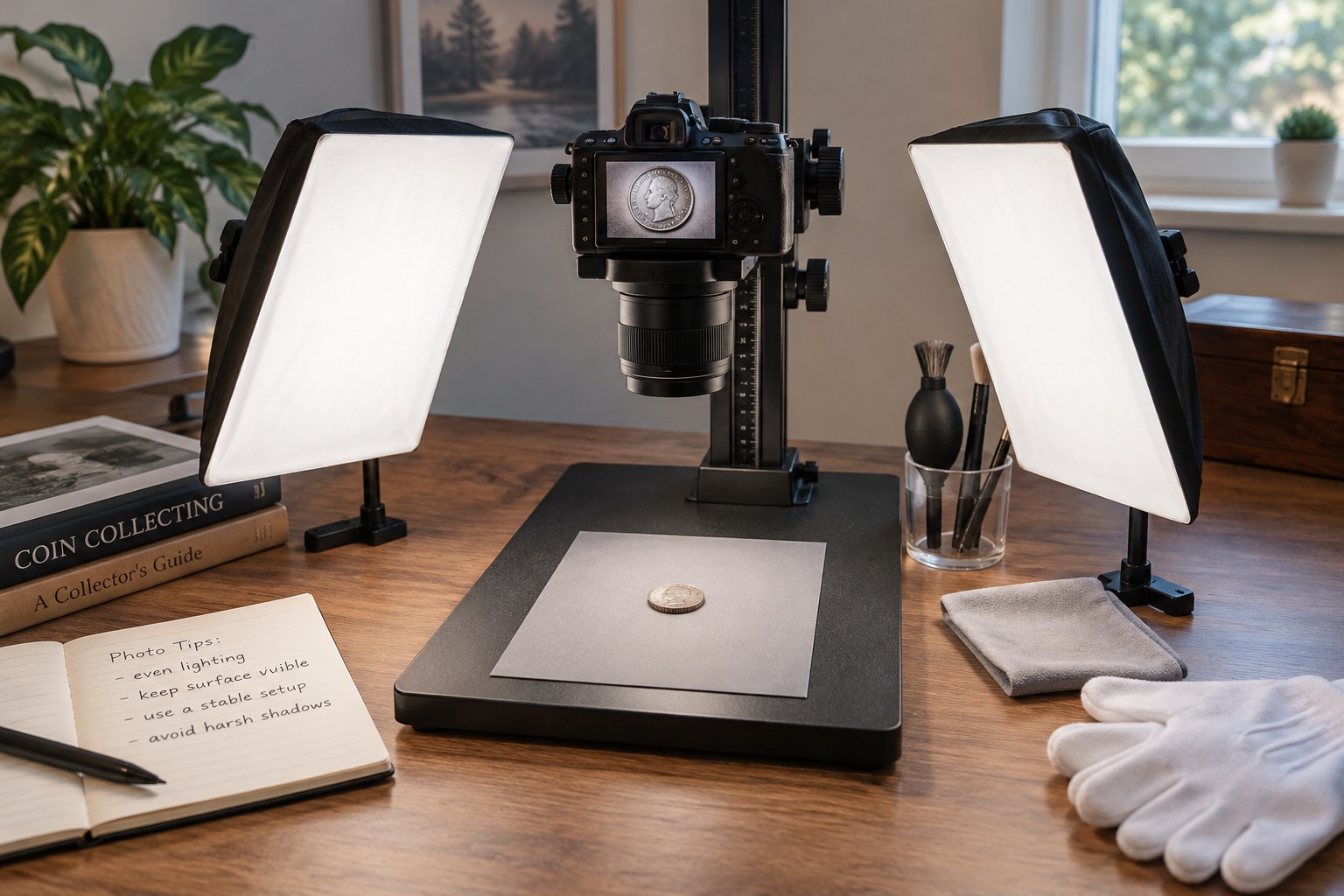
Use photographs that support the words. A face-on view shows the overall design; a second lighting angle may make a particular mark easier to see. Avoid choosing a single favourable view that hides the area discussed in the description. Label the location in a separate image if necessary, while retaining the unmarked original.
For an online listing, mention when a holder or reflection limits examination. Do not imply that you have inspected the entire surface if part of it remains covered. Likewise, a photograph can help a reader judge appearance without providing the same information as viewing the object in hand.
Keep grading claims within the evidence
Formal grade terms depend on the conventions used for a particular series and assessment system. If you are not assigning a supported grade, a detailed plain-language description is preferable to a borrowed label from a similar listing. When a third-party holder states a grade, attribute the information to that holder and show its label; do not quietly convert it into your own assessment.
Read the finished description against the images before publishing. A useful entry might identify readable legends, flattened details in a named area and a visible rim mark, while noting that the reverse was photographed through a capsule. Such specificity helps another collector decide what to ask next without promising agreement about a single condition word.