Displaying miniatures away from direct sunlight
A miniature's position in a room affects its exposure over the whole day. Check the path of sunlight before deciding that a shelf is a suitable permanent display location.
Observe the room at different times
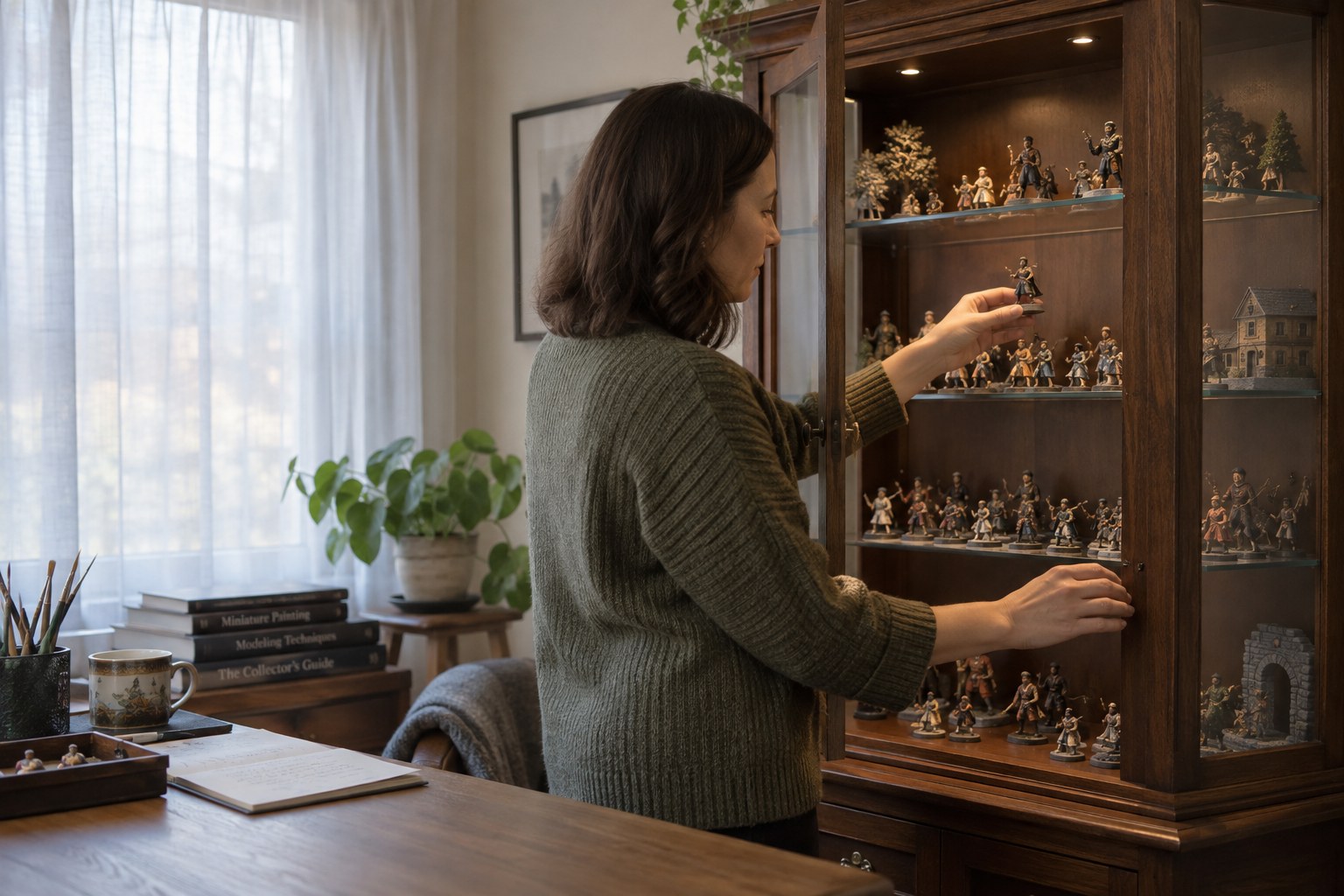
Look at the proposed shelf in the morning, around midday and later in the afternoon. Note direct sun patches, reflections from nearby surfaces and any obvious heating of the area. A location that is shaded during your usual viewing time can receive strong light while you are elsewhere. Repeat the observation when seasonal conditions change noticeably.
Consider the model's packaging and base as well as the model itself. Printed boxes, painted surfaces and plastic details may respond differently to their environment. The Canadian Conservation Institute notes that light and ultraviolet radiation can damage plastics and their colourants. A clear display cover should not be assumed to remove all relevant exposure simply because the product description mentions protection.
Move the display before adding complexity
A position away from direct sunlight is usually easier to manage than a sunny window display requiring several protective measures. Compare alternative shelves from your normal viewing position. You may be able to enjoy the model just as well on an interior wall, with a simpler lighting arrangement and less need to move blinds throughout the day.
If you use a case, check the manufacturer's actual information about its materials and light-related claims. Avoid translating a vague claim into a promise that the contents cannot fade. Also consider how the case opens and whether its location encourages people to place drinks or other objects on top. The surrounding use of the room matters alongside the glazing.
Keep a display record
Photograph the model under consistent neutral lighting when it enters the display, and note the date and position. Later photographs can help you recognise an apparent change, although differences in cameras and lighting must be considered. Do not rely on memory alone to decide whether a colour has altered.
Rotate displays according to your collection plan rather than leaving every favourite piece permanently exposed. Return items to suitable storage and update their location records. If you notice a concerning change in colour, surface or shape, move the object out of the problematic setting and seek conservation advice. Adding a brighter lamp to compensate for a fading appearance would conceal the warning rather than address it.