Distinguishing a reproduction postcard from an older print
A postcard can reproduce an older image without being an old printing. Investigate the object’s production separately from the date of the scene it shows.
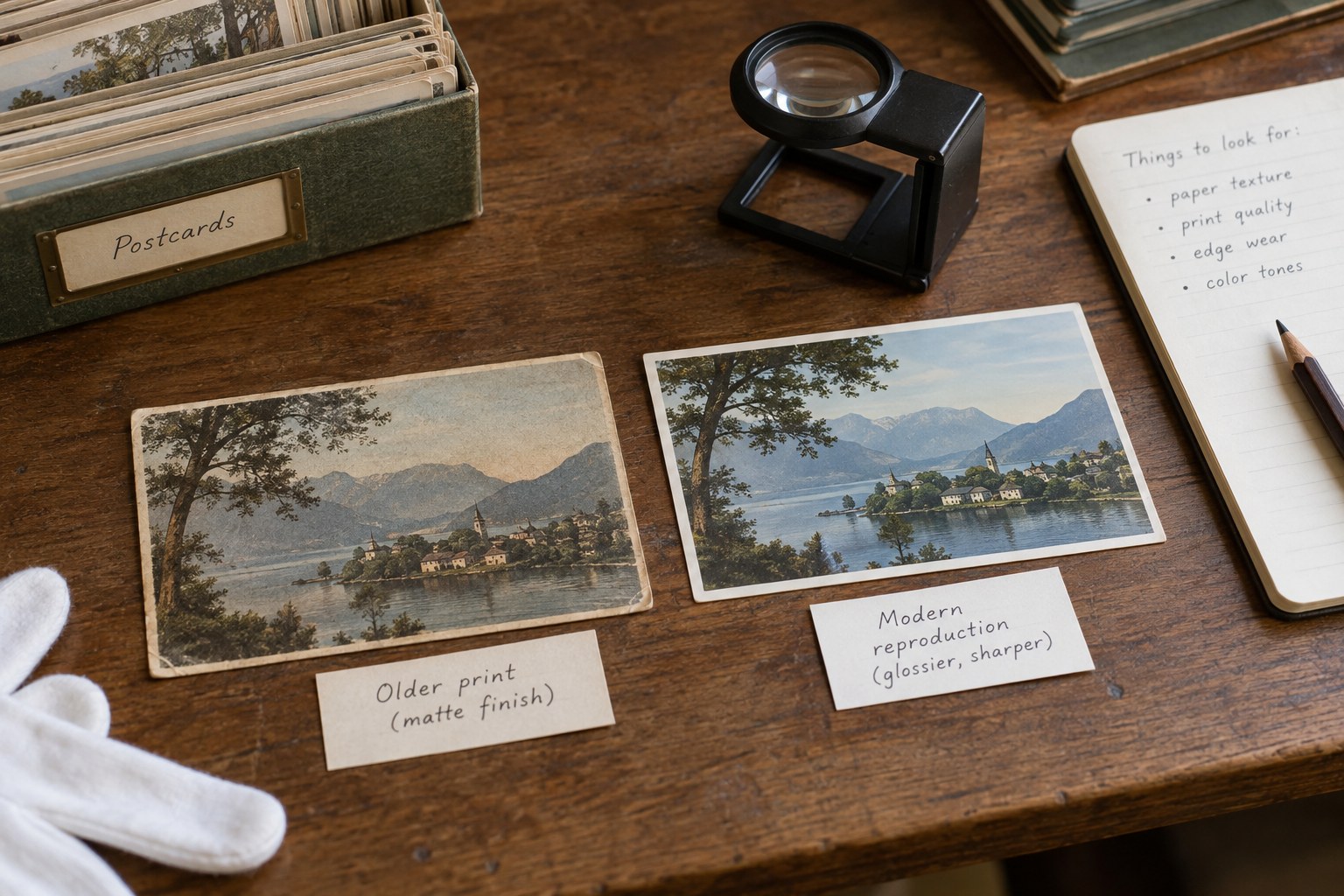
Start with explicit publication information
Read both sides for publisher names, copyright statements, series references and wording identifying a reproduction or reprint. Transcribe those details exactly and photograph them. A date printed beside an image may refer to the original scene, the photograph or a later publication; record the wording that explains its role rather than selecting the oldest number.
Keep packaging and accompanying descriptions when they identify how the card was sold. A modern museum-shop reproduction can be an interesting collectible in its own right, but it should not inherit the age of the artwork or photograph reproduced. Record the actual object and the earlier image as related but distinct subjects.
Compare complete examples
Look for institutional catalogue records or publisher information showing both sides of a comparable card. Compare typography, layout, credited publisher and stated dimensions, not just the pictured scene. The same image can appear in different editions and formats. A matching front is a starting point for research, not a complete identification.
Record which details agree and which do not. If the back layout differs, do not dismiss it merely because the front looks identical. Likewise, an online image may have been cropped or colour-adjusted, so distinguish a documented difference from a limitation in the reference photograph. Save the reference title and link with your notes.
Avoid shortcuts based on appearance
Yellowing, wear and a nostalgic design do not by themselves establish age. A later printing can become worn, and an older card can survive in comparatively clean condition. Do not use a single visual characteristic as an authentication test. Describe paper, printing and condition only to the extent you can observe them, without guessing a manufacturing process you cannot identify.
Postal use provides another piece of evidence but needs careful interpretation. Record a readable postmark separately from the production date, and keep the complete card in view. An uncertain date or unrelated handwritten note should not become the foundation of an exact age claim. Where the distinction matters to a purchase, seek specialist examination rather than relying on one online comparison.
Use a description that matches the certainty
If the card explicitly identifies itself as a reproduction, retain that description in the inventory and any listing. If the production remains uncertain, say that the image depicts an earlier scene while the printing date is unconfirmed. Do not call it original merely because you have not found another copy. A transparent description lets a collector decide whether the image, format or documented edition is what they want.


