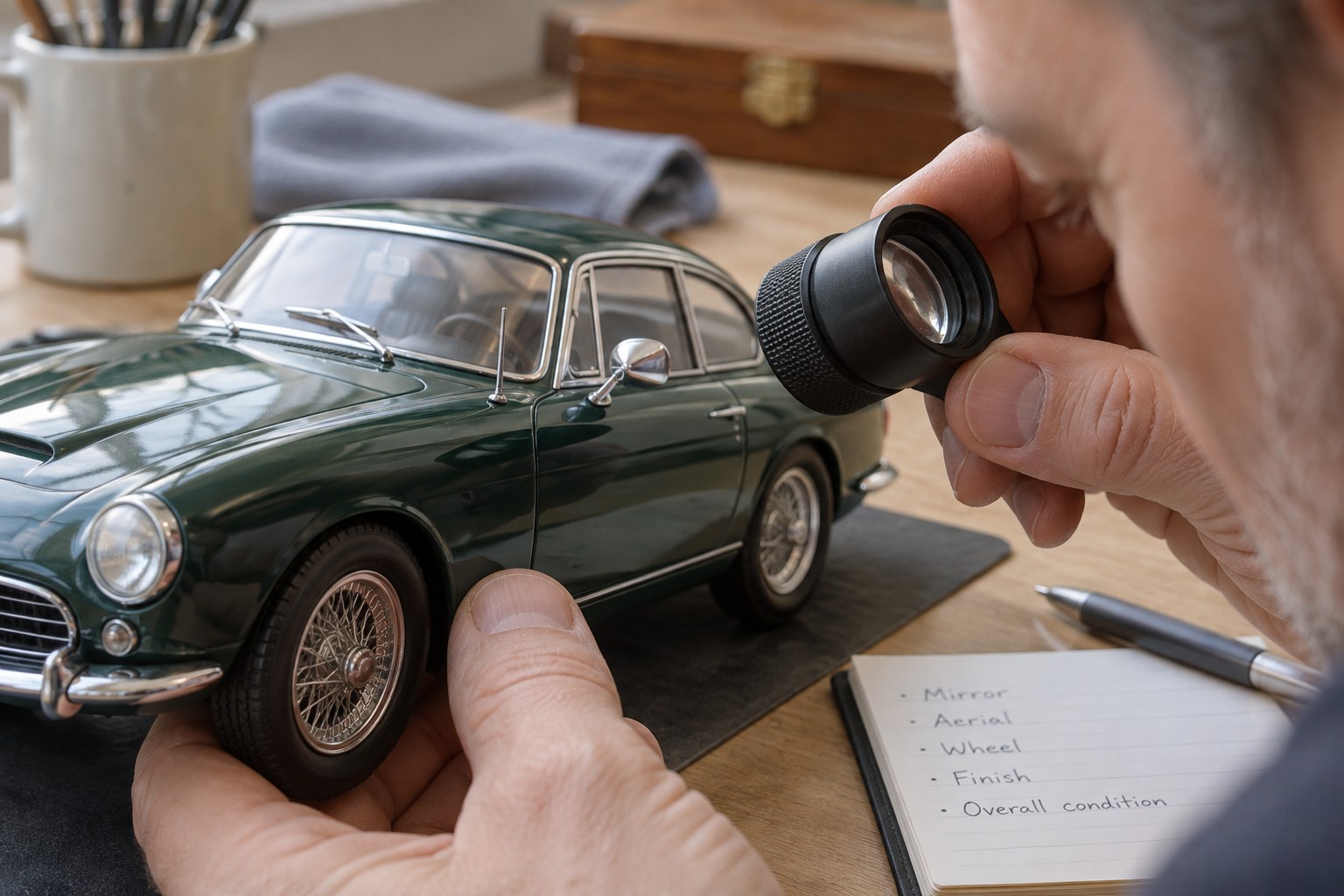
Distinguishing restoration from an untouched item
Restoration describes work done to an object; untouched describes a claim about its history. Neither should be inferred solely from how fresh or worn a collectible looks.
Break a broad claim into specific work
Ask what has been cleaned, repaired, replaced, repainted or reconstructed. A seller may use restored for a small reattachment or for extensive refinishing. Request dates, the person responsible and any photographs or invoices available. The useful description names the intervention rather than relying on a single reassuring word.
Separate maintenance from changes in appearance and components. Replacing a missing wheel, repainting the body and adjusting a mechanism have different implications for the record. An invoice may cover only one of those tasks. Read its scope instead of treating the existence of paperwork as proof of every claim made about the toy.
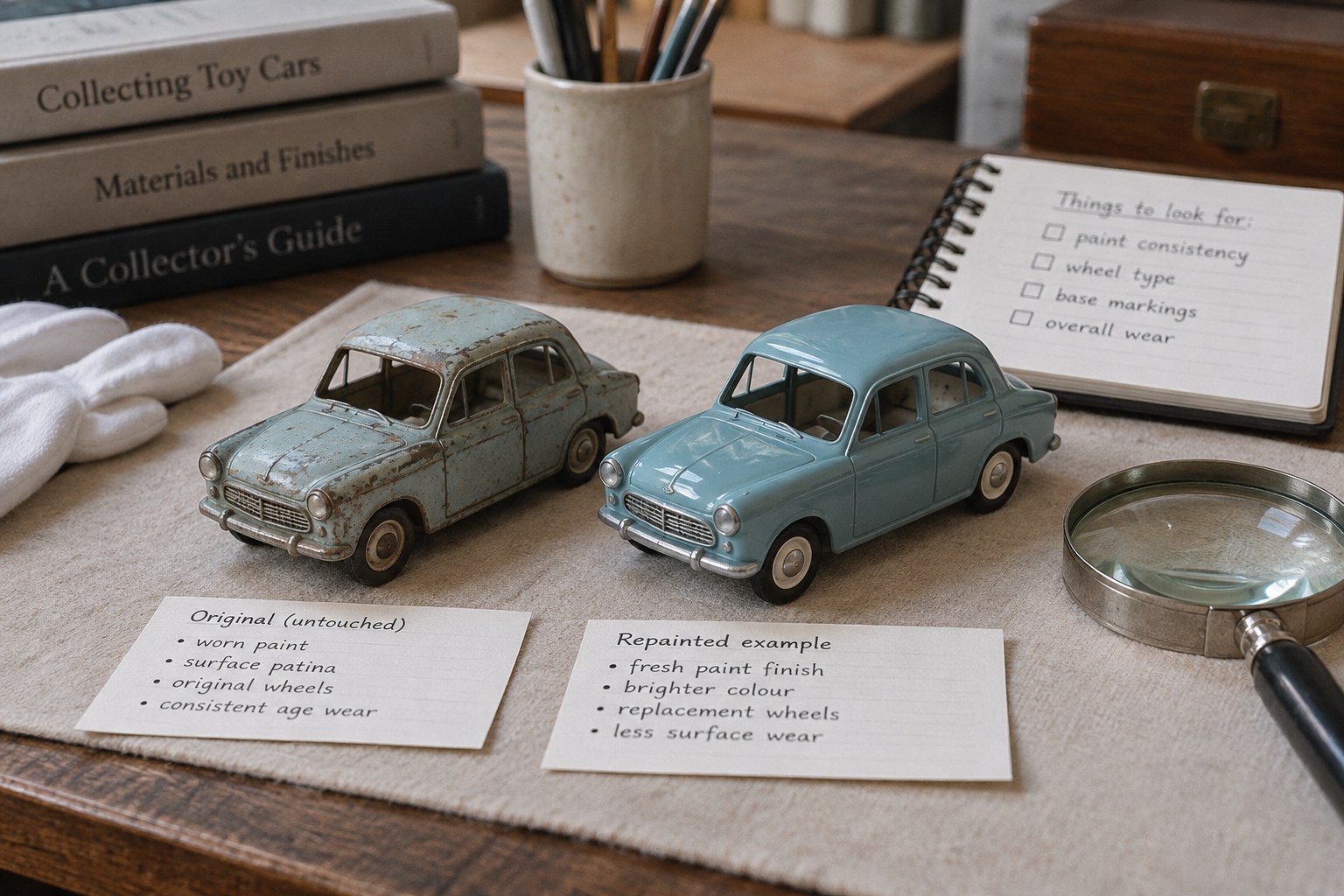
Treat visual clues as questions
Differences in colour, texture, fasteners or wear can prompt further investigation, but they do not automatically establish restoration. Manufacturing variation and later damage can also create differences. Photograph the feature and ask a focused question about it. Avoid claiming that an object is definitely original or definitely restored from a single online image.
Likewise, a polished appearance does not prove recent work, and a worn appearance does not prove an untouched history. Hidden repairs or older replacements may not be obvious. If the distinction is central to a costly purchase, seek an appropriate independent opinion before committing rather than expecting the seller's adjectives to resolve it.
Keep known facts and uncertainty separate
In your record, use one field for documented interventions and another for unconfirmed observations. Attribute statements to their source. Previous owner reports repainting in the 1990s is different from a dated treatment invoice showing that work. Preserve both if they exist, and note where they disagree.
Do not erase uncertainty when writing a shorter listing. You can explain that no repair history is known without claiming no repairs have occurred. Similarly, saying original paint based only on your impression overstates the evidence. Describe the visible finish and the information available instead.
Choose according to your collecting purpose
A restored object may suit a display or study goal, while another collector may prefer documented surviving material. Decide what matters to you before comparing prices. Do not assume restoration always raises or lowers value by a fixed amount; the significance depends on the object, the work and the market, and this checklist is not a valuation.
If you buy, retain the full account with photographs and any transferred original parts. Future owners should be able to understand the changes without repeating the investigation from scratch. Honest documentation preserves the history of the object even when its appearance has been substantially altered.