Filing postcards by place and date
A postcard may show one place, name another in its message and carry a postmark from a third. An index should preserve those distinctions instead of forcing them into one location field.
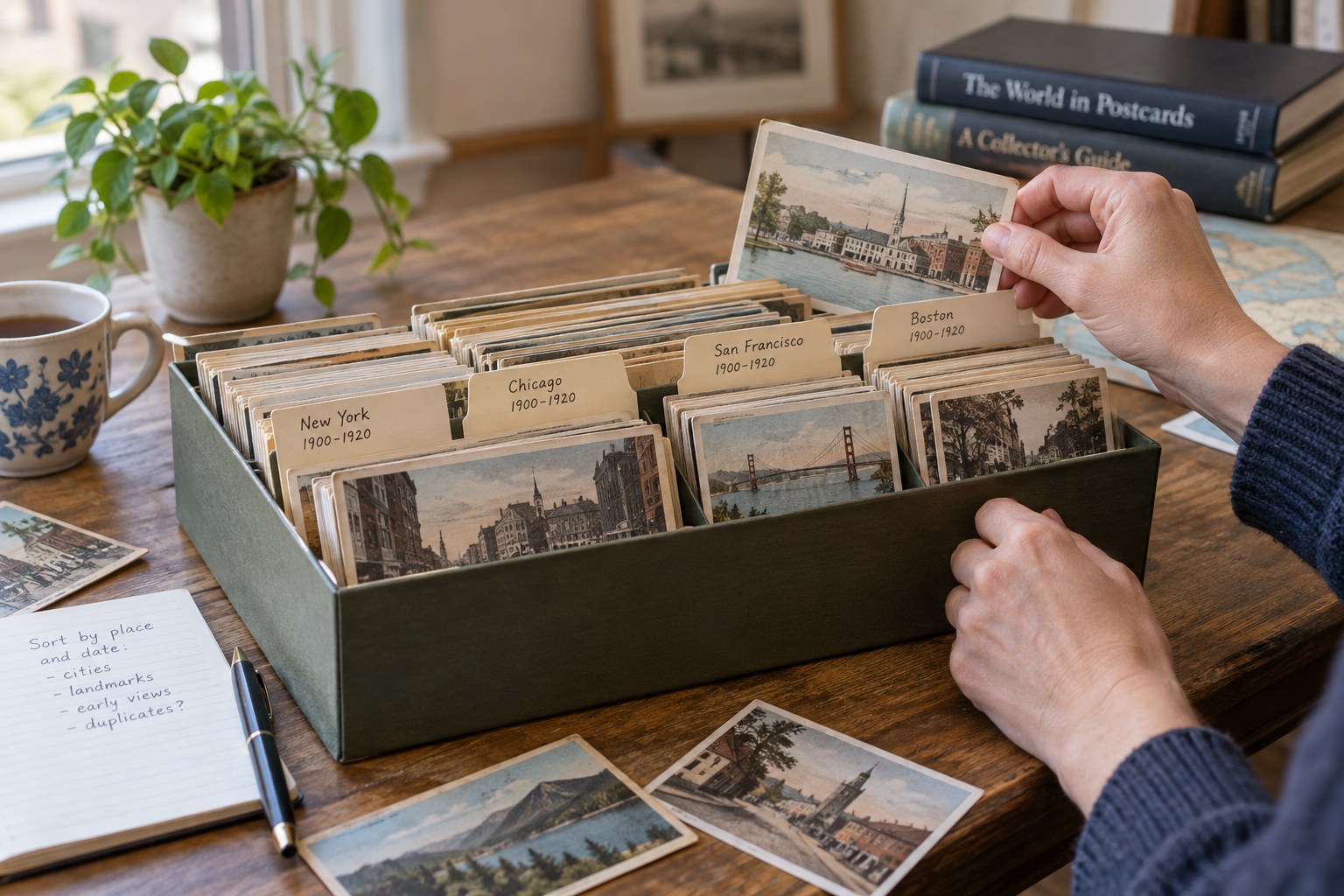
Decide what the main order represents
For a view collection, the pictured place may be the most useful first route into the cards. For postal history, the place of posting may matter more. State the choice in a short catalogue note and use separate fields for other locations. An address, a publisher’s location and the subject of a photograph should not silently become the same kind of geographical evidence.
Keep the printed place name as a transcription and use a separate standardised name for searching. Historical spelling or a changed place name may be relevant to the card. Record the reference used when interpreting an old name, and retain uncertainty if several places remain possible. A modern map match is a research step, not automatic proof.
Use several date fields
Separate dates visible in a message, postal marking and printed publication information. Add a date type beside each value. If only a broad period is supported, enter a range or a text note rather than inventing a precise year for sorting. A blank production-date field is preferable to borrowing a posting date without explanation.
Choose how incomplete dates will sort. You might keep undated examples at the end of each place group and use a separate research list for them. Explain the convention so an undated card is not mistaken for the newest one. When a date is corrected, retain the former reading in a note if it appears in older descriptions.
Let the inventory bridge storage exceptions
Assign a stable ID independent of geography and chronology. A card may move when its place is identified, but its photographs and acquisition record should not need new identities. Record the current box, divider and position or group. Use readable divider labels and avoid packing a group so tightly that removing one card bends its neighbours.
Oversized, folded or fragile examples may need separate storage. Add a reference card to the main sequence or make the location obvious in the digital index. Do not alter the object to make geographical order visually uniform. The index can preserve the relationship even when the physical format requires an exception.
Test the index with real questions
Try finding all views of one place, all cards posted there and all cards from a known year. The results should differ where the evidence differs. If every search returns the same group, your fields may be combining distinct information. Adjust the structure before entering hundreds of cards. A useful catalogue lets you ask a new question without having to reread every message from the beginning.


