Handling a coin during inspection
Good handling begins before a coin leaves its holder. Prepare a short examination route so the piece spends as little time as possible unsupported.
Arrange the landing places first
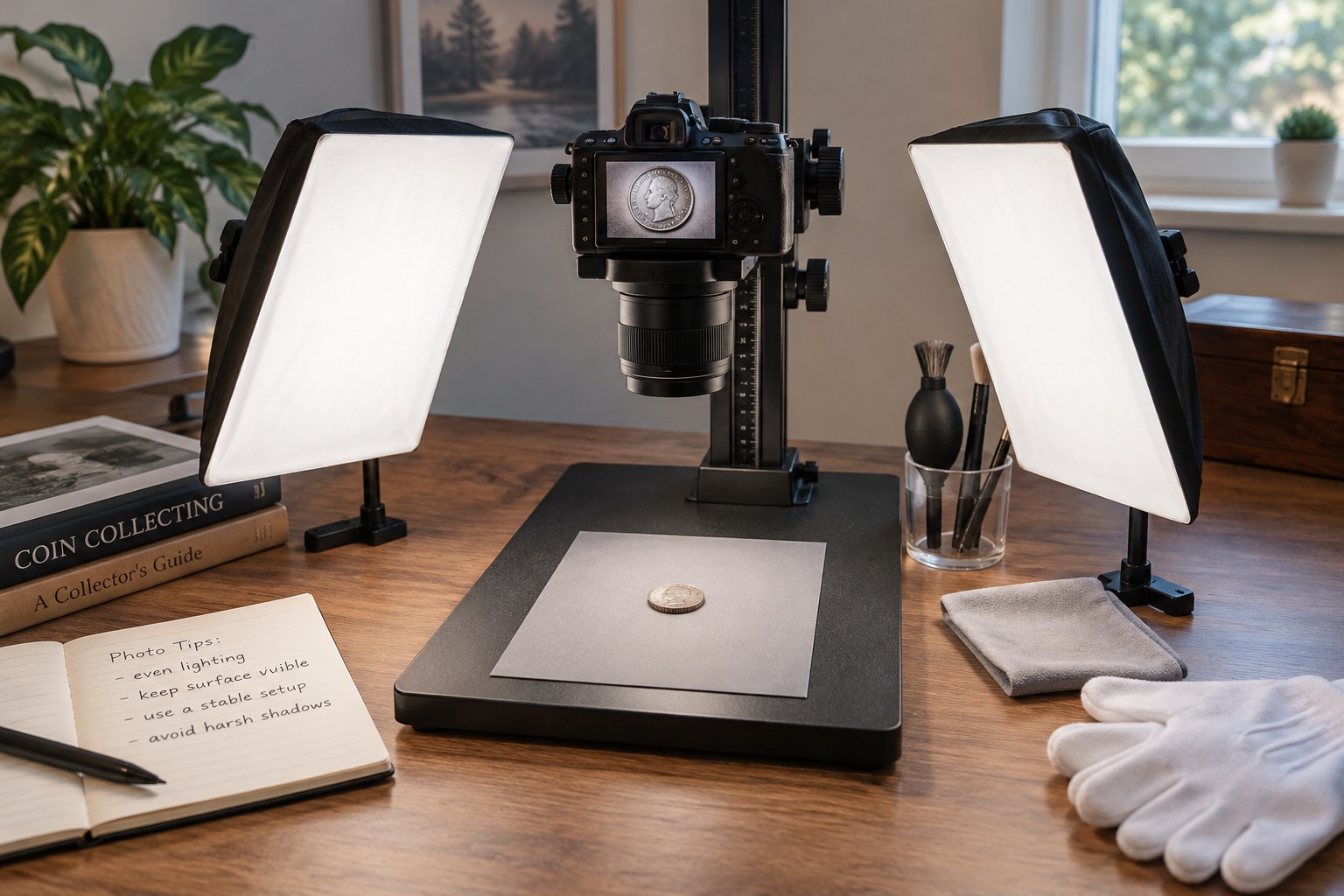
Clear a low, stable work surface and put the open holder, camera and note sheet within reach. Remove cups, loose tools and objects that could roll into the working area. Use a clean, soft surface appropriate for the coin beneath the examination space. A cloth with grit trapped in it is not protective merely because it feels soft.
Decide whether removal is necessary. If you only need to read a date or check an inventory number, the current holder may provide enough access. A sealed holder can also contain identification information that should remain associated with the object. Do not open it casually when a photograph through the window would answer the question.
Keep contact away from the faces
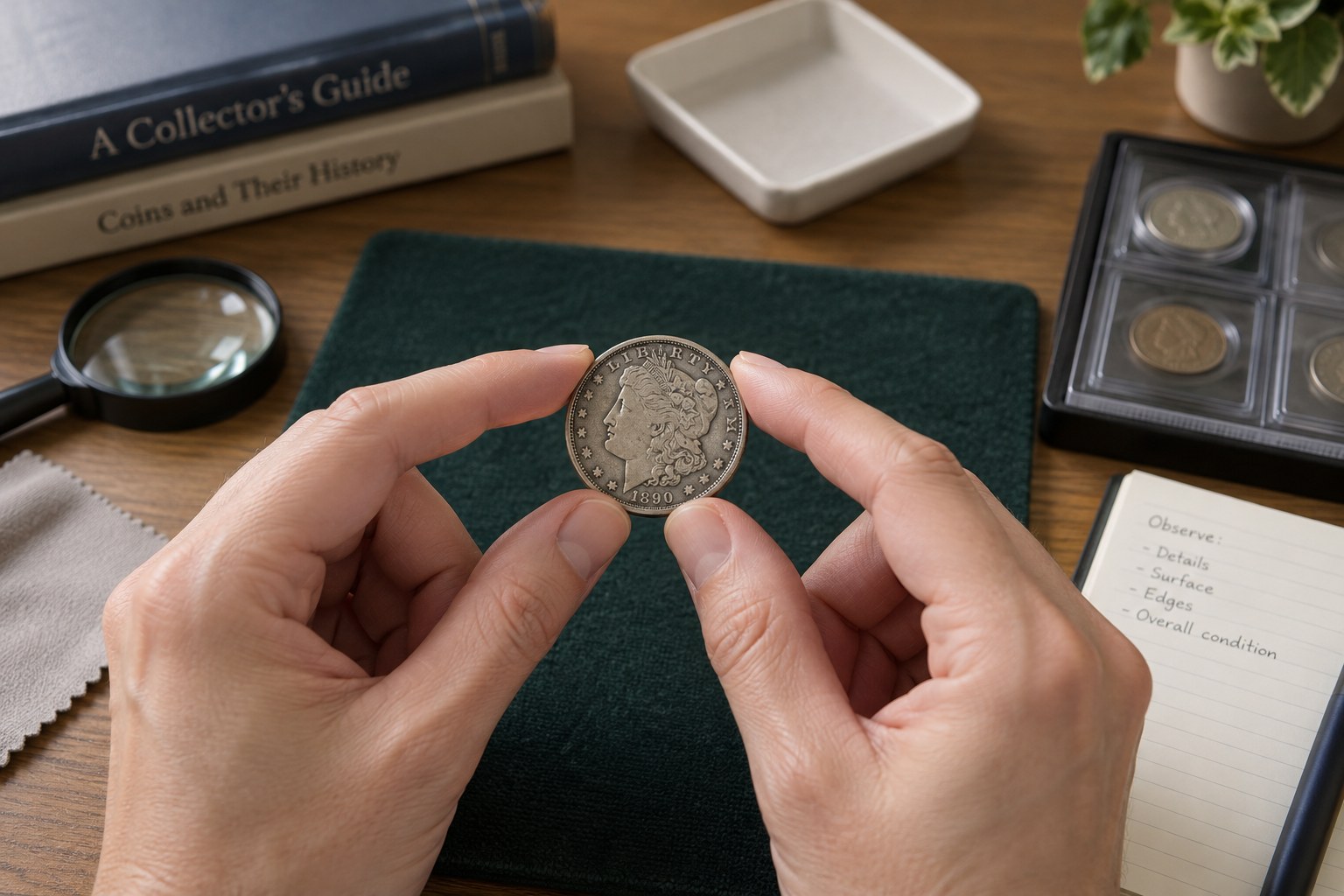
The Canadian Conservation Institute advises holding coins by their edges and avoiding contact with the faces. Consider the size and condition of the particular piece before choosing how to support it. Gloves are useful only when they are clean, appropriate to the material and allow a secure grip. Practise the movement with an expendable object before handling a small or awkward coin.
Lift only as high as needed. Rotate your hands over the prepared surface instead of carrying the coin to a light across the room. Move the light or camera into position first. If the coin starts to slip, the nearby landing surface should catch it; trying to catch a falling piece with a tool can introduce another risk.
Examine one piece at a time and keep its holder beside it. Two nearly identical coins can become confused while you are concentrating on a tiny mark. When a coin must rest on the table, use the prepared support rather than a notebook, a sleeve packet or a palm. Do not slide it across the surface to reposition it.
Finish before fatigue changes the routine
Write observations while the coin is safely resting, not while balancing it in one hand. If you need a closer look, return to the planned grip and position. Stop when your hands become tired or the lighting no longer lets you see clearly. A shorter session is preferable to hurriedly returning a tray of exposed pieces.
Before closing the holder, check that the coin sits as intended and that no loose fibre or label obstructs the fit. Restore the inventory connection immediately. Record any new mark you noticed without assuming it occurred during this examination; comparison with earlier photographs may help establish when it first became visible.