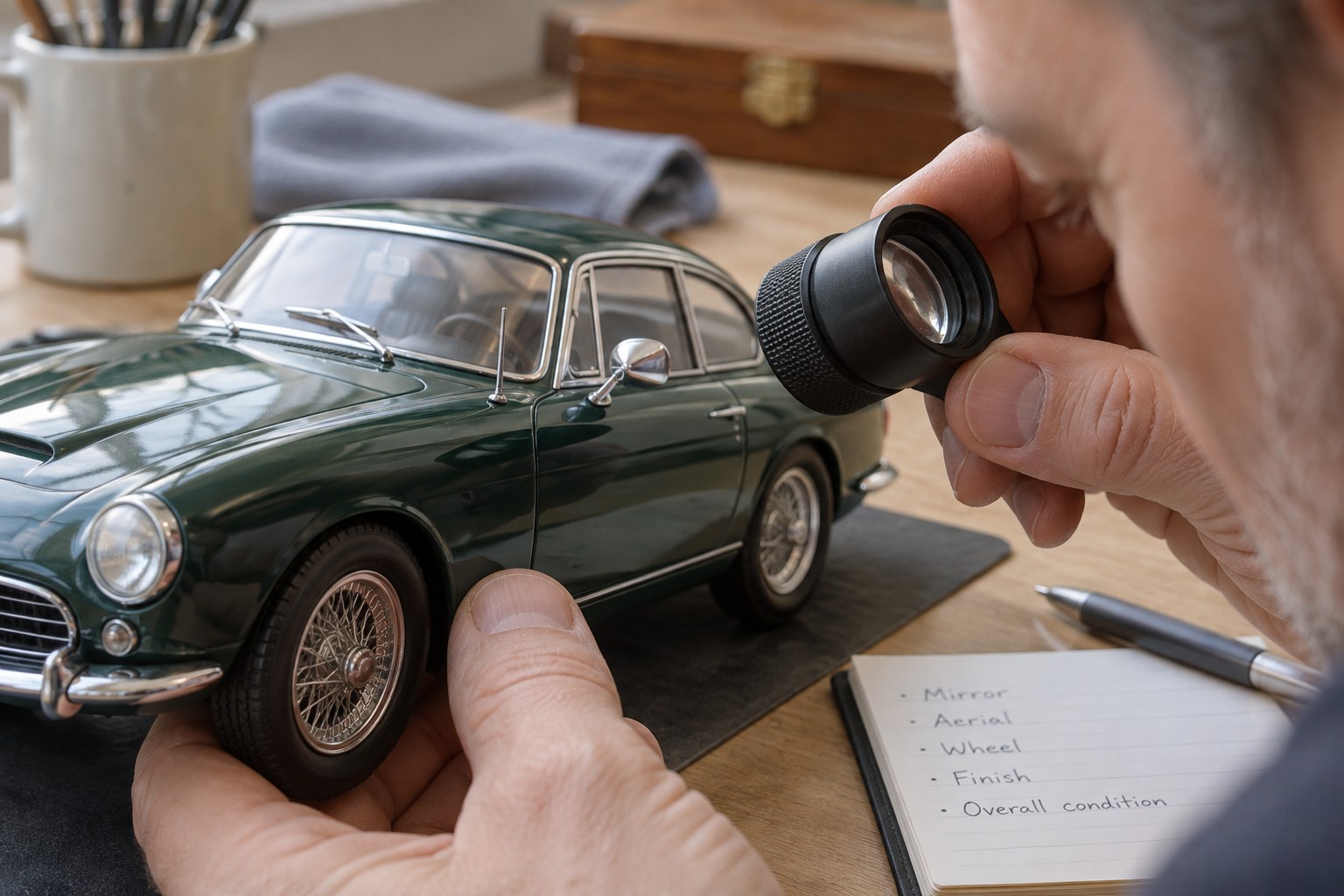
Inspecting joints without forcing them
A joint that once moved freely may not be safe to move now. Begin with observation and the model's instructions, and treat resistance as a reason to stop.
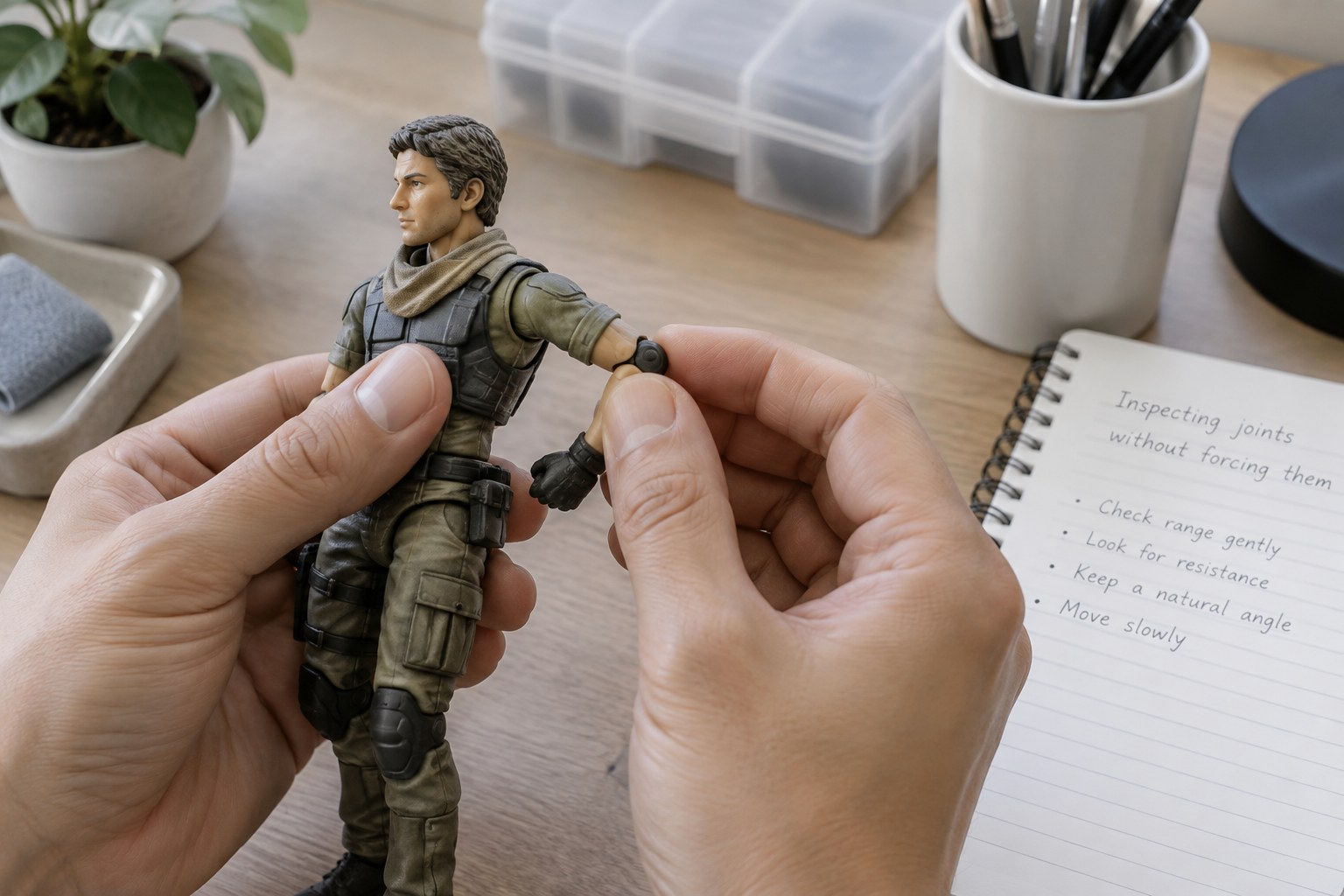
Find out what is intended to move
Check documentation for the exact toy or figure. A seam can resemble a joint without being designed for movement, and a later version may have different articulation from an earlier one. Ask the seller which movements have actually been tested and which are only assumed from the design. Untested should remain untested in your own description until there is a sound basis to change it.
Look at the joint in its resting position. Note visible gaps, cracks, colour changes, residue or asymmetry without probing them. Photograph any concern before further handling. Do not insert a tool to see whether a gap opens, and do not add lubricant or solvent to an unidentified material.
Avoid using force as a diagnostic tool
If the instructions permit movement and the object appears sound, support it near the joint rather than applying leverage through a distant accessory. Move only within the intended range and stop at unexpected resistance, noise or displacement. There is no universal amount of safe force for old collectible toys, so a generic instruction to work it loose is not an appropriate test.
A joint may be stiff for several reasons that a casual inspection cannot distinguish. Repeated movement can make the condition harder to assess by introducing new wear or damage. For a valuable, fragile or uncertain object, leave it in its present position and seek specialist advice. The fact that a display pose would look better is not a reason to force the mechanism.
Describe the limit of the inspection
In the inventory, state which joints were observed and whether any movement was attempted. Use a factual note such as left shoulder not moved because resistance was felt, rather than broken unless that has been established. Record the position in which the figure is stored so the next person does not repeat an unsuccessful test unknowingly.
When buying remotely, ask for clarification rather than a more vigorous demonstration. A seller's video can show a movement occurred at that time, but it cannot guarantee future reliability. Decide whether the figure suits your purpose if it must remain in its current pose, and include that limitation in the purchase decision.