Keeping certificates with the right coin
A certificate is useful only when you can explain which object it accompanies and what it actually certifies. Build that connection before reorganising a boxed set.
Record the set as received
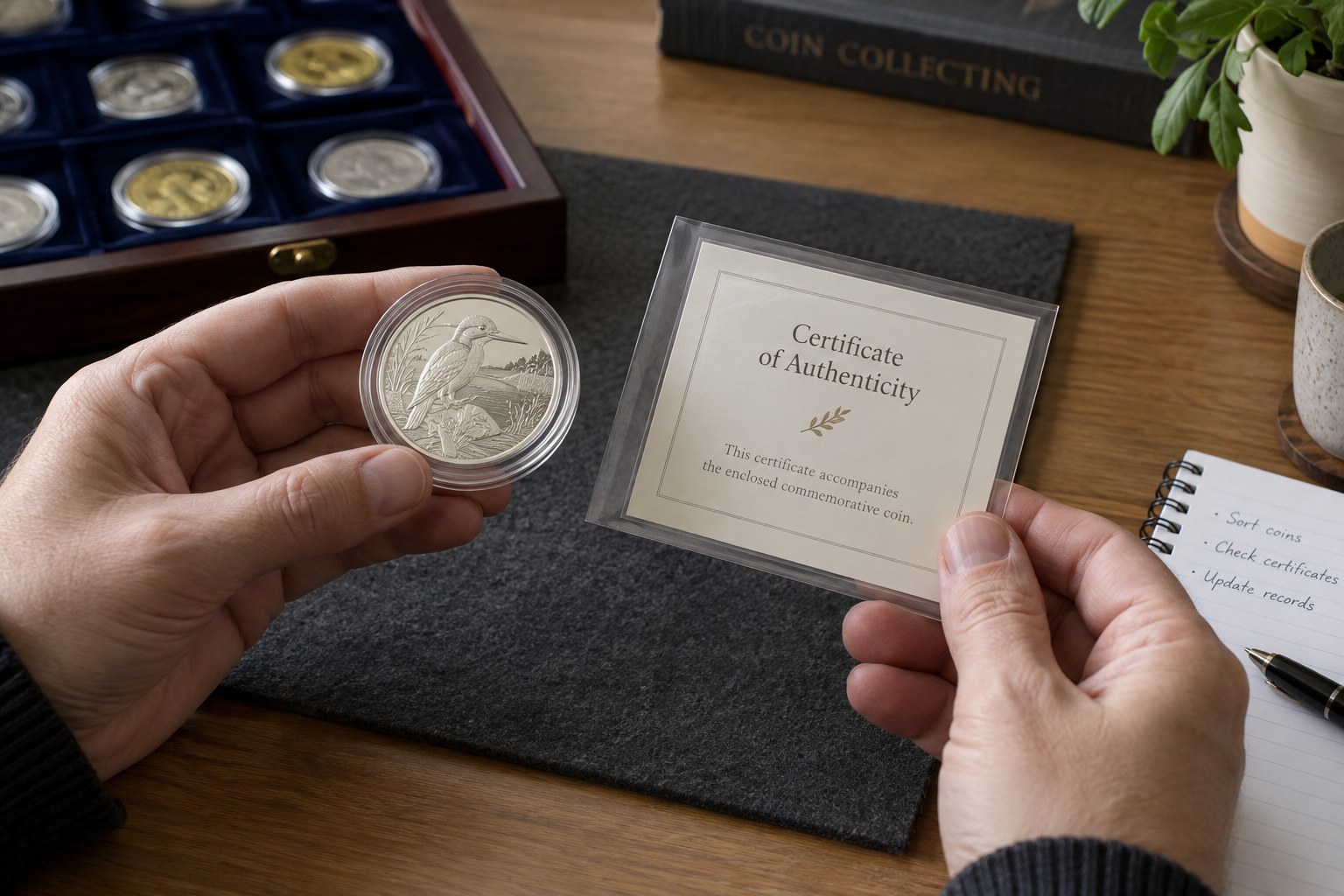
Photograph the coin, certificate, case and any outer packaging together before separating them. Give the complete group a record, then identify the components within it. For example, a coin record can link to a certificate file and a case location without requiring every component to share one storage compartment. Preserve the order in which the papers arrived if that order helps explain the presentation.
Transcribe printed numbers carefully. A certificate number, an edition number and a coin-holder number may serve different purposes; do not merge them into a single field labelled number. Record the exact wording beside each one. If a handwritten annotation is present, distinguish it from the printed text and avoid assuming who wrote it.
Describe the document’s scope
Read what the certificate claims rather than relying on its heading. It might describe a product issue, a material specification, an edition or an assessment of a particular object. Those are not interchangeable. Note the named issuer, the object description and any identifying feature that ties the document to the coin. A document that merely repeats a design description may not distinguish your example from another of the same type.
If the connection is uncertain, record certificate found with coin rather than certificate for coin. That wording preserves the association without overstating it. Contact the named issuer through an independently located official channel if you need to investigate a document, and retain the response with the record. A visual resemblance to another certificate is not confirmation that yours is genuine or correctly associated.
Create a link that survives separate storage
Put the coin’s inventory ID on the certificate’s protective enclosure, not across the document itself. In the coin record, give the certificate’s location and filename. In the document record, identify the related coin. This two-way connection helps when someone finds either component first. A photograph of the certificate can be useful for reference while the paper remains in suitable storage.
Do not fold a large certificate to make it fit a small coin box. If the original presentation requires a fold that is already present, record it; if a different enclosure is needed, keep the former arrangement in photographs. The aim is to preserve the relationship, not to make every object physically occupy the same space.
Handle mixed or incomplete groups honestly
Suppose two identical coins and two certificates are found in one drawer, but no number links either document to a specific coin. Give the group a provisional association and document the uncertainty. Do not create certainty by arbitrarily pairing them and deleting the group note. A later invoice or photograph may resolve the link; until then, the record should show what is known.
Similarly, an empty case or missing certificate belongs in the description of a set offered for sale. Avoid filling the gap with a photocopy presented as an original. If you make a reference copy, label it as such in the inventory and any listing. Keep replacement paperwork distinguishable from the material that accompanied the object when you acquired it.
Check outgoing and incoming transfers
When selling, lending or exchanging the coin, prepare a component list and compare it with the package before closure. State whether the original certificate, a copy or no certificate is included. Retain your photographs and record which documents left with the object. That small check prevents a certificate from remaining in the archive while the coin moves elsewhere, or a document from being sent with the wrong example.