Keeping replicas separate from originals
Replicas can have a place in a teaching or reference collection. Clear identification should travel with them so that later owners do not have to reconstruct what you already know.
Record the basis for the description
Begin with the information supplied when the object was acquired. Keep the maker’s description, receipt and packaging if they identify it as a replica, reproduction or modern souvenir. Record the wording and its source rather than changing it into a stronger claim. A family recollection that an item was bought as a replica should be attributed to that recollection.
If you merely suspect that a piece is not an original, use an unresolved identification status. Suspicion and documented replica status are different. Photograph any existing marks and describe their position, but do not add a permanent mark yourself as an improvised identification method. Ask an appropriate specialist when the distinction matters and the evidence is incomplete.
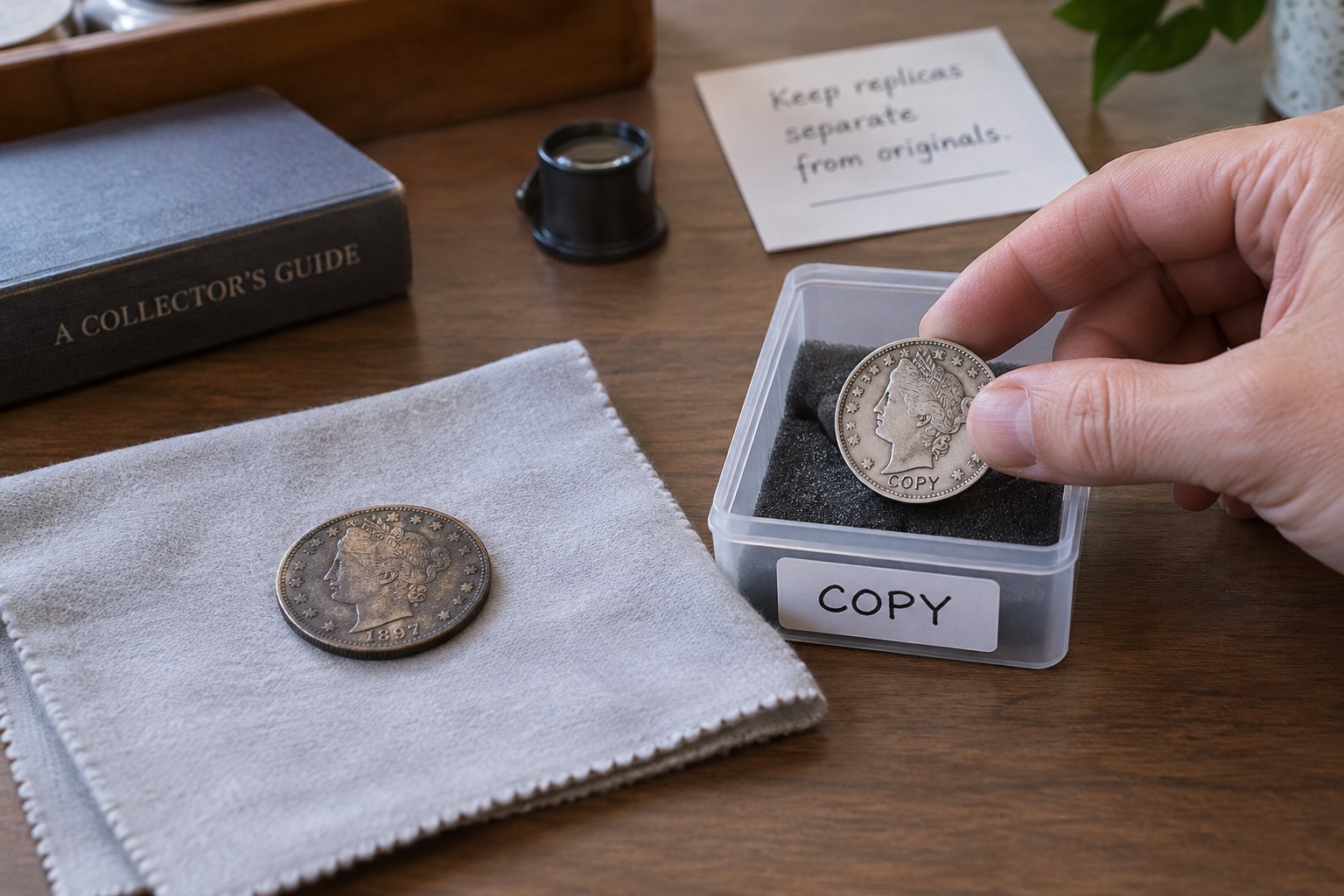
Make separation visible
Give replicas their own clearly labelled storage group or use unmistakable labels on individual protective enclosures. Include the status in the inventory title and search fields so it appears in ordinary browsing, not only in a hidden comment. The physical and digital systems should agree. A small note tucked beneath a tray is easy to lose when the contents move.
An original and a replica may be displayed together for comparison. Label each separately and keep the labels attached to the display positions or enclosures, not loosely between them. Take a photograph of the arrangement and record which inventory number occupies each position. When the display ends, return both to their recorded locations rather than relying on visual recognition.
Keep the description during transfers
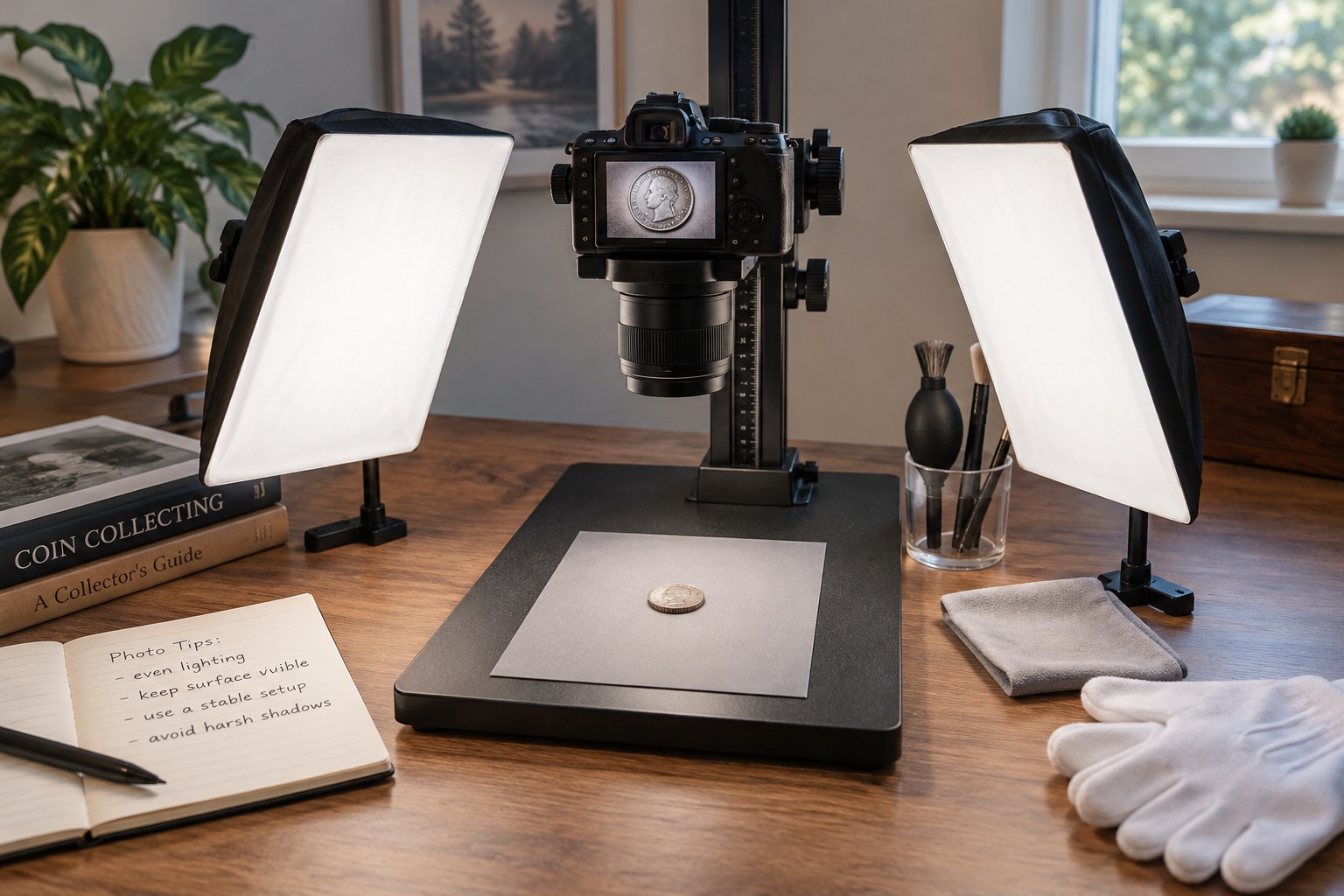
For a sale or exchange, state the replica status prominently in the title and description where supported by your records. Include clear photographs of the actual item and any existing identifying mark. Do not rely on a category choice alone to communicate the distinction, and do not photograph a genuine reference example as though it were the object offered.
Prepare a transfer note that repeats the identification and lists the accompanying paperwork. Retain a copy with the outgoing record. If the piece belongs to an unresolved group, describe the uncertainty and seek advice before presenting it as an original. The point of keeping replicas separate is not to hide them; it is to preserve information that changes how another person understands the object.