Maintaining an inventory of related documents
Letters, receipts, tickets and photographs may belong to one story while needing different storage. An inventory can preserve the relationship without forcing them into a single crowded folder.
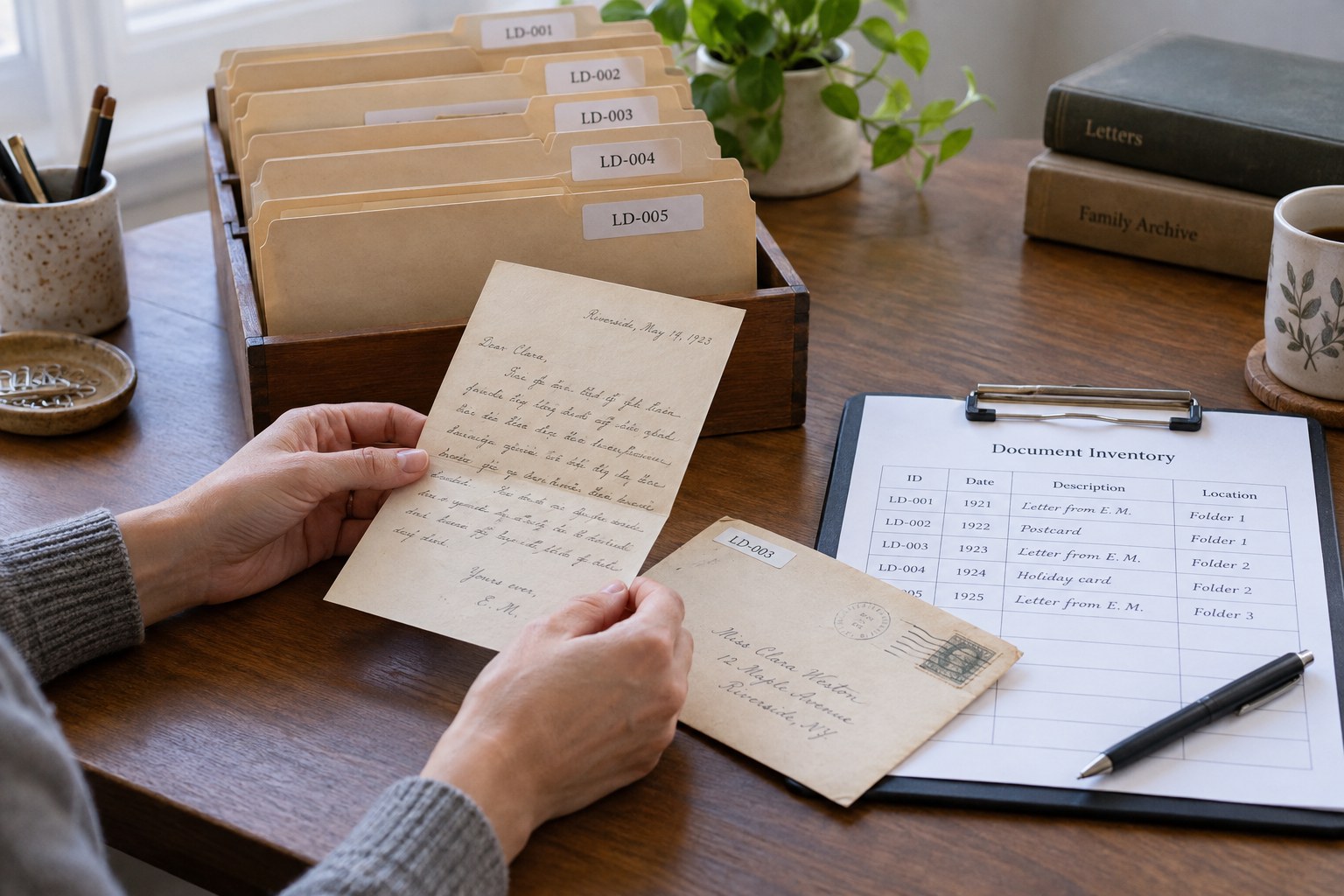
Give the group and its parts identities
Create a group record describing the shared event, person or acquisition, then assign references to individual documents where needed. Record how the group was found and whether the relationship is documented or inferred. A receipt inside an envelope may belong there, but proximity alone should not become a certainty when the evidence is unclear.
Keep the group’s original order in photographs or a simple list before rearranging it. Copy labels and folder titles as historical descriptions, even when you later improve the catalogue wording. This preserves the distinction between the former owner’s arrangement and your own interpretation.
Choose fields that support retrieval
For each item, record format, brief description, visible date, people or places named, condition notes and physical location. Separate transcription from interpretation. A date written on a letter and an estimated date for an accompanying photograph should not look equally certain in a chronological list. Use a note or status field to explain the difference.
Add relationship fields such as enclosed with, refers to or photograph of, but use them only when supported. A general related to link can preserve a tentative connection without implying a specific original arrangement. Include the other item’s ID so the relationship remains useful even when filenames or descriptions change.
Allow physical separation when needed
A large certificate, small ticket and photograph may require different enclosures and storage positions. Record each location and keep a group index that points to them. A reference copy or placeholder can explain an absent oversized item in the main folder. Do not fold, trim or attach originals simply to keep the narrative physically together.
When moving an item, update its location before starting another task. If several people use the collection, agree who edits the master inventory and how temporary loans to a desk or display are recorded. A vague location such as in use is difficult to resolve later; name the person or temporary place and add a date.
Preserve versions and exports
Save the inventory in a format you can reopen and export, and keep backups separate from the working copy. Test that image links still work after moving a copied folder. For a public or sale list, create an export that excludes private correspondence and storage details not needed by the recipient. Review the actual exported file. The private master should retain the fuller history, including items that have left the collection and the dates of those changes.


