Organising a collection by country or theme
Country and theme answer different questions. You can choose one for the shelf order and retain the other as a searchable description.
Choose the first route into the collection
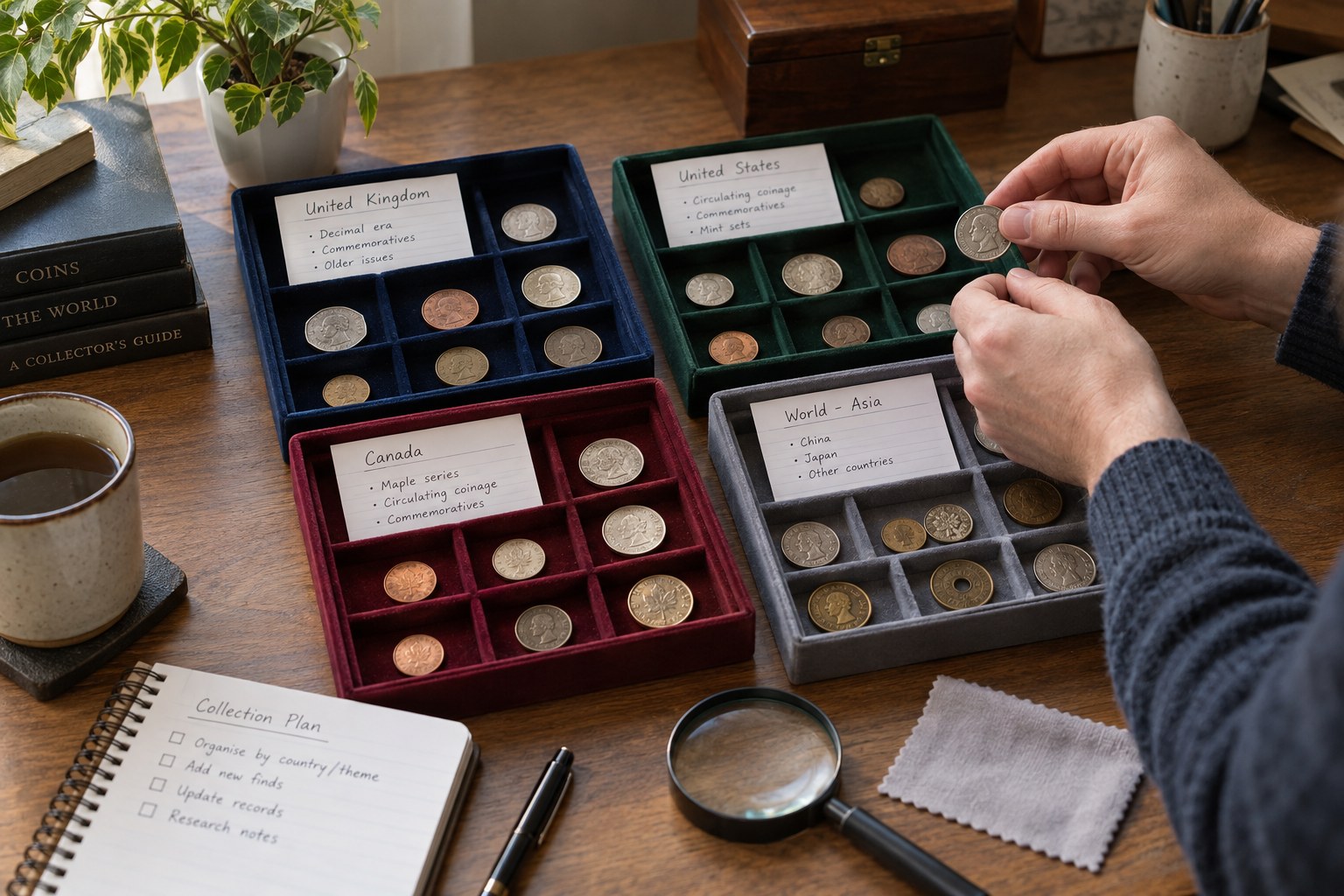
Imagine looking for a specific coin six months from now. Would you begin with the place that issued it, the animal in its design or the period it represents? Use that likely first question to select the main arrangement. A country order may suit a geographical collection, while a theme can make comparisons across issuers easier. Neither needs to become an exclusive rule for every record.
Test the choice with twenty representative pieces, including the awkward ones. A coin may show several motifs, and a historical issuer may not fit neatly into a modern country name. Write down the decisions these examples require before reorganising the whole collection. The difficult cases tell you more about a system than the pieces that obviously belong together.
Keep physical order and description separate
Assign every piece a stable inventory number and a location. Then add fields for issuer, period and theme. Several theme tags can describe one object without requiring it to exist in several drawers. Use consistent tag names: birds and bird should not accidentally become different categories. Keep a short vocabulary list beside the inventory so future entries follow the same choices.
For uncertain attribution, create a research status instead of placing the piece permanently under a guessed country. You can still house it safely in a numbered position. When an identification changes, update the descriptive field and location only if necessary. An inventory number based on a permanent sequence is easier to preserve than one that embeds a country code you later need to change.
Allow useful exceptions
A large medal, a banknote and a small coin might share a theme but require different storage. Keep their physical arrangements appropriate to their formats and use the inventory to reunite them intellectually. A theme page can show photographs and location references without forcing all three objects into one display tray.
When you create an exhibition or a temporary comparison group, record the temporary location and return plan. Do not silently replace the normal location with a vague word such as display. A dated movement note lets another person find the object and helps you restore the arrangement after the project ends.
Review the boundaries without renumbering everything
After several additions, inspect the categories that have become crowded and those that remain nearly empty. You may need a more specific theme or a separate group for an issuer, but the stable IDs can remain unchanged. Update the index and labels rather than rewriting acquisition history.
Keep a brief explanation of why the order was chosen. Someone encountering the collection later should be able to understand that a coin sits in one tray because of size while appearing in several digital theme lists. A system that explains its exceptions is more durable than one that relies on the owner remembering every special case.