Organising banknote serial-number records
Serial numbers can distinguish two banknotes that otherwise look alike. Treat them as transcribed text linked to an object, not as a substitute for the rest of its identity.
Preserve the characters exactly
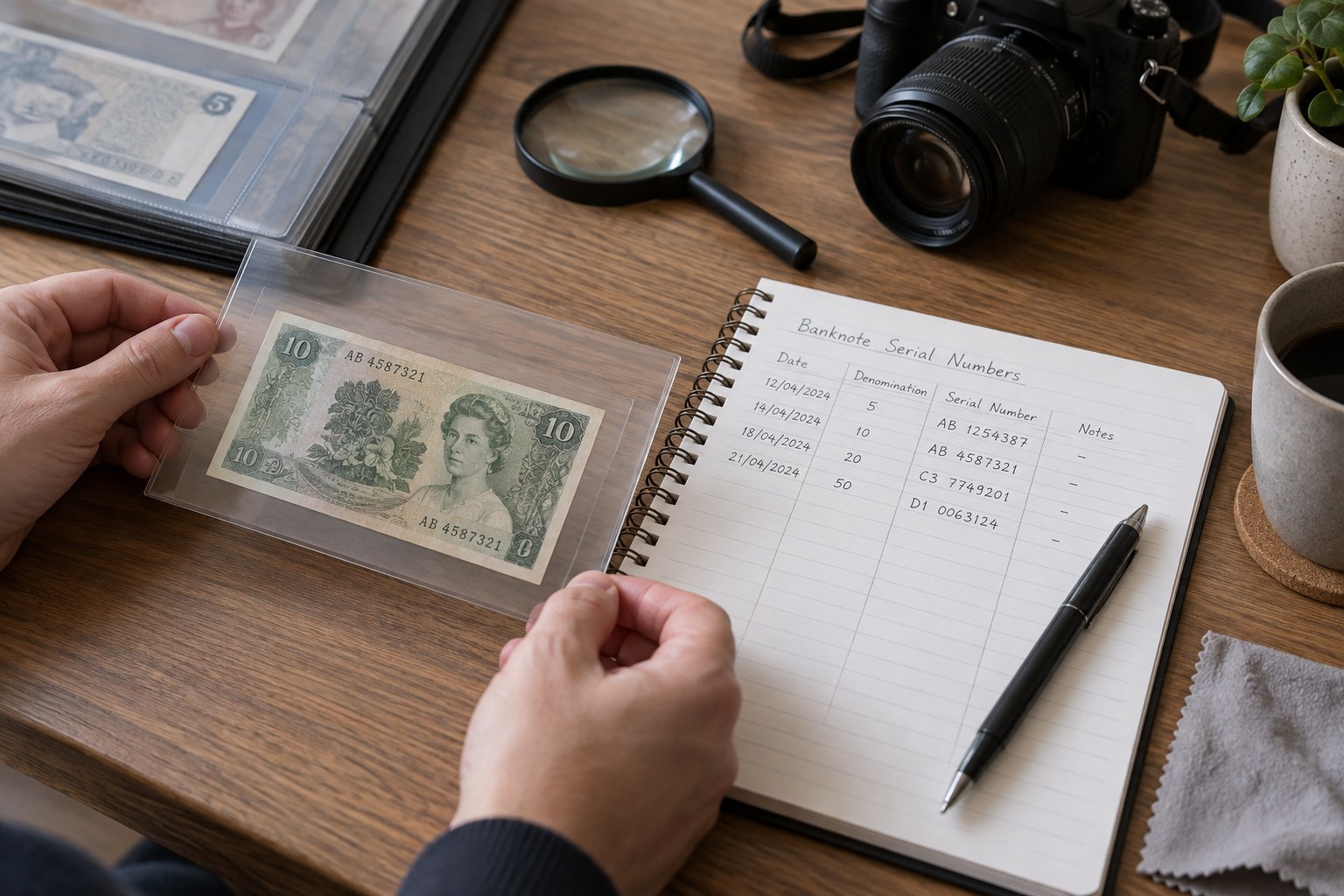
Create the serial-number field as text before entering anything. A spreadsheet may remove leading zeroes or change a long number into a different display format if it treats the entry as a calculation. Letters, spaces and prefixes can also be meaningful to the transcription. Test the field with a made-up example containing both letters and leading zeroes before recording the collection.
Copy from the note or a clear photograph, then compare the entry character by character. Similar-looking letters and digits deserve a second look. If part is obscured, use an explicit uncertainty note rather than completing a likely sequence. Keep a literal transcription separate from a simplified search field if you want searches to ignore spaces or punctuation.
Link the number to the whole note
Give each banknote an independent inventory ID. Add issuer, denomination, design or series information and the storage location. A serial number may not be globally unique across every issuer and issue, so it should not carry the entire identification job. Use the inventory ID for filenames and related documents; the serial number remains one searchable attribute.
Photograph the complete face containing the number and, if necessary, a readable close-up. If the note displays a number in more than one position, check both rather than assuming they are identical. Record what you see and flag any discrepancy for investigation without immediately declaring an error or alteration. An unreadable photograph can produce an apparent discrepancy of its own.
Use comparison views carefully
Sort a copy or filtered view of the inventory when looking for sequences, repeated prefixes or duplicate entries. Keep the master order unchanged until you understand the result. Two rows with matching serial text may be a duplicate record, two different issues or a transcription mistake. Compare images and the physical location before deleting either row.
If you are interested in patterned numbers, define your collecting rule in a separate note. A personal interest in a sequence does not establish rarity or a premium price. Record actual acquisition information separately from any later asking price you happen to see. This keeps the inventory useful even when market claims around a particular number pattern are inconsistent.
Share only the record you intend
A public listing usually needs enough detail to identify the note being offered, but your private inventory may also contain addresses, purchase correspondence or storage locations. Create an export view that excludes those unrelated fields. Review the exported file and images before sending them, rather than assuming that hiding a spreadsheet column removes its data.
After a sale or exchange, preserve the original record and change its status. Add the date and reference for the outgoing transaction. Deleting the row entirely can make an old photograph or receipt difficult to interpret later, especially when another similar banknote remains in the collection.